Q. Why do you share all of your pain on the internet?
A. Many of us do this when we can’t call Mom.
Q. Why do you share all of your pain on the internet?
A. Many of us do this when we can’t call Mom.

“The members of a tree who do not conform to the norms or traditions of the family system, those who since childhood have constantly sought to revolutionize beliefs, going against the paths marked by family traditions, those criticized, judged and even rejected, these are usually called to free the tree of repetitive stories that frustrate entire generations.
[…]
Uncountable repressed desires, unfulfilled dreams, the frustrated talents of our ancestors are manifested in the rebelliousness of these black sheep seeking fulfilment.”
-Bert Hellinger
I was f***ed either way. My options were to remain inside an environment of neglect and control for the sake of a having a home or excise myself from it and face reconstruction alone.
The past doesn’t have to dictate the future, right? Olympians have emerged from war-torn countries, right?
I can assume complete power over what I build from here… right?
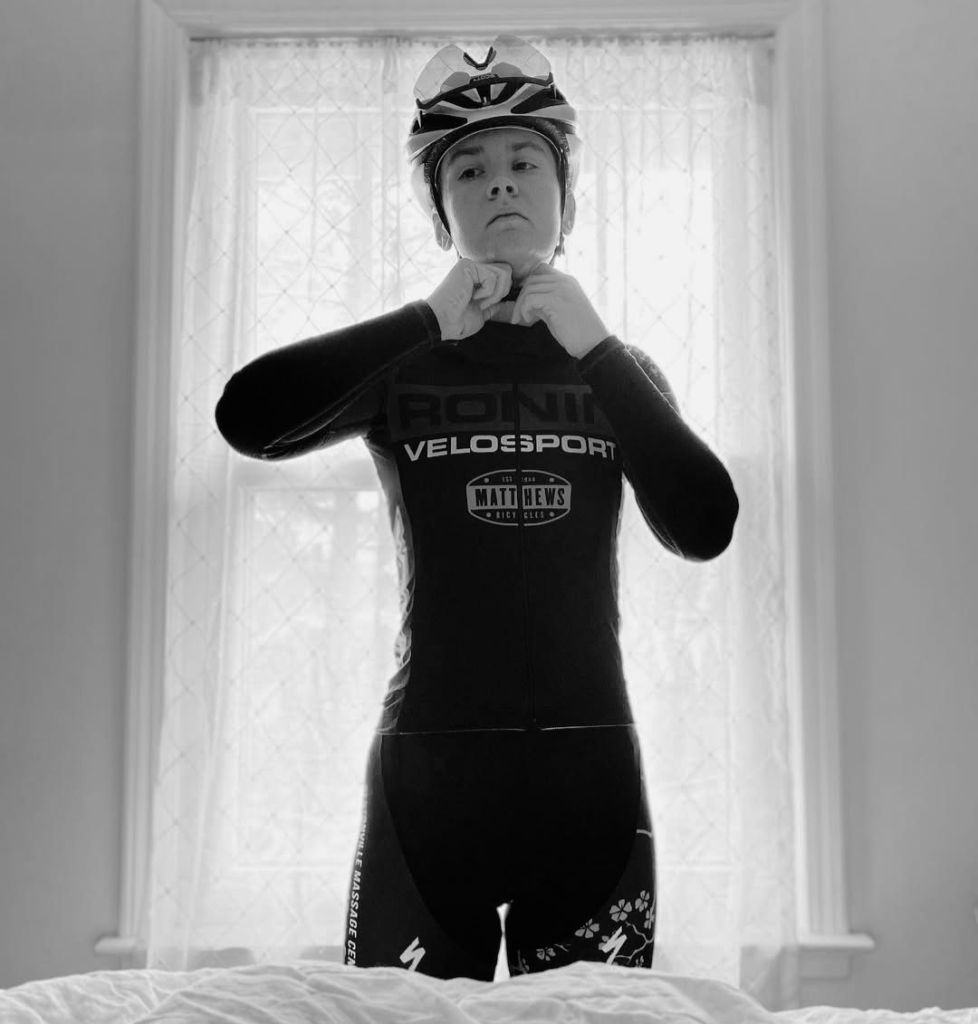
Okay, new game.
Another photo from my tent because every weekend I consider living in a vehicle with a little more detail. It’s frowned upon by the masses that place such high emphasis on comfort and materials, but personally the thought of being so heavily rooted in one area is the more uncomfortable thought. Admittedly, that’s a perspective driven heavily by not having the means to be both free and comfortable in my life currently, and if I have to choose one, I might be saying hello to gym showers and a well-loved van. I just don’t feel like the greatest potential for my life lies in what it looks like from the outside.
-Instagram, July 28th, 2019
On August 12th, I was the new owner of a Chevy from 1985. The five years to follow were the most loaded with possibility I ever felt. I had most of what I needed, and absolutely nothing (but mechanicals) that I didn’t.
But I didn’t want to haul off to the mountains, park somewhere peaceful and watch the sunset. I wanted to chase that horizon, ever moving, and continue to harvest a story from thin air. In a recent conversation, I was asked what I could accomplish that would make me feel like I was enough.
That has never been the correct question to ask me, though. My trouble has not been that Genna doesn’t feel she is enough. She felt like she couldn’t have enough to go full throttle.
I don’t think a failure to thrive equals a deficit on my part.
I moved out of the van in 2024 to live with a partner that eventually threatened to kick me out regularly. The final time I called his bluff, moved back into the van, and didn’t return. 10-months, nothing to show for it.
Then I moved into a vacant house owned by a cycling contact, struggled to keep a job because my vehicle kept breaking down, then eventually realized that the assistance was not clean. Another year, nothing to show for it (except my thousands of words).
I have a much more stable spot now but the van keeps me broke, I cannot sell it because that’s my insurance, and working more would eliminate the very things that have made the struggle worth it at all.
I told myself very, very young that we could one day course-correct for the lottery we lost at birth because I knew I had something.
Oddly, if I was in a hospital bed tomorrow knowing my time was almost up, I think I could quite easily accept what I hadn’t accomplished because I have had quite a run; to the point I’m writing a book about why I “don’t show” the implications of my history.
But so long as there is time ahead of me, petty limitation is suffering.
I remember going out into the backyard when I was 16 and staring up at the night sky, speaking to something I couldn’t see, damn certain that how my life began wasn’t going to be the arbiter for the remainder of it.
I sent a manual transmission to future Genna.
I don’t know where that belligerence came from, but it and the tangible consequence of survival are gridlocked as we speak. Most of the people I talk to about it tell me “just stabilize everything first and then you can pursue dreams.”
But the one valuable thing my dad told me was that “tomorrow never comes.”
And I watch unlived yesterdays become realized as a simple fact of my job.
The few people that understand the bind seem just as much at a loss as I am. This year has been particularly cruel, to the point that “the little dark cloud” has become an inside joke.
_____
This blog began as documentation of generating something I wanted from nothing. It’s become much more complicated (and sometimes harrowing) than that because the writing process shows me thinking live rather than coming up with a compelling thesis or pretty moral. My work is uncomfortable because I myself am not motivated to paint myself as an inspiration when I am simply chasing experiences I want to have before I can’t.
The can’t element is becoming real far too early.
But I have no template for resignation; I don’t even own a white flag.
I have nothing without something to reach for that I chose.
And it is impossible to convince me to want something else simply because it would help me do better. Especially when there are no guarantees.
_____
“Do you think you just fell out of a coconut tree? You exist in the context in which you live and what came before you.”
-Kamala Harris
I heard you, Kamala. But I’m an engineer.
And what came before me was a dead end.

Do you see how even right now I refuse to write an ending?
“I have never met someone more uncomfortable than when I have been calm, and experienced no one more convicted than when I have been reactive.”
_____
In over 25,000 words on my website, I have only used the term “narcissistic,” or its derivatives, twice. Yet a majority of my essays contain descriptions of such patterns and their implications on me. I avoid the word because I too only came to understand that what I experienced as a child had a name well after I reached adulthood, and coming to understand it resulted from having lived it first, not hearing a label on the internet and memorizing its habits. To see it is to resist it, so I developed a habit to show you.
One of psychology’s most widely-recognized names in the public discussion of narcissism, Dr. Ramani Durvasula, suggests that the behavioral profile is vastly underrepresented by clinical diagnoses, and broadly describes it as a maladaptive personality type that develops as a defense of the self. This adaptation is marked by traits such as deficient empathy, entitlement, grandiosity, and excessive pursuit of validation and admiration. The external behavior orbiting those core conditions manifests as attempts for control, manipulation, gaslighting, lying, blame-shifting, exploitation, chronic betrayal, invalidation, and rage. Non-clinical discourse online tends to question awareness and level of intent around said behaviors, while professionals tend to describe them as reactions to internal states rather than premeditated maneuvering. The psyche of a narcissistic-patterned individual is frequently driven to counter shame, and it is easily activated by any suggestion, even imagined, that something about their behavior may be unacceptable.
In other words,
If reality suggests something about myself that I can’t accept, then your understanding of reality must be modified.
That is where it becomes most visible to the outside, and the moment of recognition often begins with, “that doesn’t make any sense.” I’ve experienced this enough in my own relationships that I have recognized a recurrent 403 responds to it:
You have not been authorized to alter what reality is to me. Thus, all requests for access to my perception are denied.
_____
My smile has no shortcut; it is not generated with a command prompt. It cannot be recruited as a firewall against emotional violence.
It is not a productivity interface, nor a nostalgic CD-ROM.
It is a background program that can truly only be viewed, or shut down, by those with the code. You won’t know you’ve been given it until it’s already been keyed in.
-’Ring 0,’ December 18th, 2025
_____
On June 22, 2025, I posted an essay titled ‘Projection, Your Honor.’ In this piece, I used courtroom metaphor to build a series of cases where the behaviors of certain individuals diverged from the impressions they seemed to be trying to make. The conflict in the first case remains one of the sharpest even as it appears innocuous when viewed from the surface. I am including it in its original form, although I would write this differently now.
Statement of Record– Builder of the Fourth Wall
When I moved here a little over a year ago, I had followed someone high-profile in the local cycling community on Instagram. I had intended on reaching out directly to ride together later because we had a lot in common. When I got around to doing that, I saw I had been blocked. I had never had a single conversation or encounter with this person, so I was puzzled. I explained this result to a mutual friend who had encouraged reaching out, but was met with little comment.
Weird, but oh well.
Encounter #1– Weeks later, this person approached me at a race. They asked if I was Genna, and if I was racing that day. I told them I wasn’t- that I was opting to stay fresh for an ultra race the following weekend. They said “Oh, you’re doing that on those tires?”
Wait, what?
“Yeah,” I stated. “My frame doesn’t accommodate wider, unfortunately.” They responded by insisting that I should run wider, and that I could borrow their bike.
This is a wild course-correction from blocking me.
I thanked them, but declined. We parted ways and I said, “It’s nice to finally meet you.” They said, “It’s nice to meet you… finally.”
Nothing about that interaction was natural. That was uncomfortable.
Encounter #2– After the start of the race, I drove to the aid station I was working. My best friend was in town from out-of-state and hung out with me and one other volunteer for hours that afternoon. Eventually, this individual, our mutual friend, and another mutual friend all rolled into the aid station as a trio. The mutual friends stood at the table and talked to us, but this individual kept wide physical distance from me and didn’t make eye contact with me once.
Okay. Maybe they’re struggling today? But that would generally just look like weariness, not evasion.
My best friend, with very minimal context, saw exactly what I did.
Encounter #3– I didn’t see them again until the next race. We were both on the line this time, but racing different distances. My new boyfriend was standing next to me when this individual left their group to come over to us, and asked me if I was nervous. “Actually, yeah,” I said.
“Oh, there is no reason to be nervous,” they said.
The words were kind, if we are being completely objective. But the delivery was subtly condescending. My boyfriend saw it too. It was here that my thoughts and the feeling in my body eclipsed.
This person isn’t saying what they mean.
Encounter #4– Not long after the start of the race, I had found myself settling in solo for a really long day. This person came up from behind me, again alone, and asked “Are you watching your heart rate?”
By this point, I was no longer open to further interaction with this person. They kept approaching me in this interrogative way. No real warmth, just like they were keeping tabs on me and attempting to ascertain dominance in the most underhanded way possible. But all I said was, and I’m not paraphrasing- “I don’t need your advice. I know what I’m doing.” No inflection, no emotion, just dry. It was automatic. I wanted to turn this off without theatrics, because I didn’t like any of it.
Their jaw dropped. They fell back for a few minutes and I thought the interaction was done, but they came flying back past me, yelling “I wasn’t trying to give you advice, I was trying to be nice!”
Nothing about that felt nice.
There was also that delay. Not responding on-scene, instead dropping back to then come by me again, felt like when the GPS says “recalculating,” and has to pause to find a new route.
Our mutual friend was the race organizer. I later heard that this person went back to them crying, and expressing how mean I was.
Encounter #5– The next day, I was still feeling this behavior in my gut. Had it stopped after I told them “I don’t want your advice,” I would have left it alone. But the “I was trying to be nice,” spit like venom, was the incongruence between words and behavior that I had been feeling. As you can clearly tell, I am not a passive communicator. If there is a problem, and I feel it’s worth addressing, I go to its heart. I bring what’s uncomfortable into light. So, I sent them a stern but deathly accurate Facebook message (where I had not been blocked, yet) about how their approaches and use of language had made me incredibly uncomfortable. I twice referenced the blocking in those messages because it was too big of a paradox to write off.
I was promptly high-roaded. Their responses were brimming with “The world isn’t out to get you. I’m a great person. I even offered you my bike. We need to support each other and embrace our differences. You’re the problem, not me.”
But what did they not say? “I hate that this was misunderstood. Let’s talk about it.” There was no open door to real conversation here. There was no intent to understand. I did go in pointed, and I did so because I trusted my perception that this was not actually misunderstanding- it was design. Even with my edge, though, I asked the question “Can you at least understand why I took it that way?” A person who is interested in repairing after conflict is going to at least try to appeal to that question. Instead, I was met with blame. And the blocking? Completely ignored, both times I mentioned it.
The next day, our mutual friend (who had been a huge support to me while I navigated a lot of struggle, and had even shown me the skeletons in their closet) called me and asked “What’s up?”
“Not much, what about you?” I said.
“I’m done doing you favors. I saw your messages to them. I understand now why everyone thinks you’re a bitch,” they said, coldly. They didn’t even ask me to explain myself.
“Okay…” I said. I did not argue.
My boyfriend was beside me on the couch when I got that call. He heard it too, and while I was sitting in shock, he was furious that I wasn’t given an opportunity to tell them my side of the story. But I already knew it didn’t matter.
They didn’t care.
They chose allegiance and bias over “drama.” Because on a surface-level account, I had looked like the aggressor- that is the foundation that was already laid. This person had only ever spoken to me in isolation or in sight of my friends. And they validated that I was seeing it clearly because it was off for them too. The one encounter we had where both of our circles were present, this individual acted like I didn’t exist. Because they knew, too, that they would have had to change their tone.
I have not had interaction with this person since. I had to create all-new social media accounts recently because I got locked out of my old ones, and I noticed that they promptly blocked me on all three of those, too. They couldn’t just ignore me- they had to erase me. It still is all a game of optics- of yelling “kindness!” but whispering “I don’t want you here,” and expecting me not to respond. Because in the silence, they conceal.
They were trying to fly under the radar by employing calculated moves that would make me look like the “problem” if I called it out. I chose to anyway. They were playing social checkers, and I wasn’t playing at all.
Final observation: The mask slipped under questioning. Observe.
Since I wrote this, I have come to understand better that human behavior is often automatic when a stimulus interacts with something invisible in the psyche. Without conscious admittance, it is impossible to determine another person’s reasons for their responses. And depending on the level to which they have investigated themselves, sometimes even admittance isn’t the whole picture. I was incorrect to suggest the above behavior was calculated, methodical, or intentionally manipulative.
With that being said,
I responded calmly to the driver that seemed to be present across all of this individual’s approaches automatically, not the comments themselves. And when I looked back, and then wrote this passage, the unspoken assumption that best explained this person’s reaction was: I am the more knowledgeable and experienced party in this domain, and you’ve rejected that.
403 forbidden. I do not accept your position as above me.
The events that followed occurred after I had already decided that this was not a person I was compatible with socially. Yelling at me about how nice you are after I said “no” is decisive ground for me. That informed the aggressiveness of my messages to them the next day, which was accurate. That is rather easy to diffuse if the core problem can be addressed in earnest, and it was not.
_____
Over the course of the summer, he encouraged me to go to school, to enjoy this time of my life because I was “being taken care of.” I was told I was “brilliant.” I was invited over for dinner with his family and on bike rides. I was told I was an “investment,” and was gifted a new bike frame to, in his words, “get you on a bike that matches the kind of rider you are.”
I was “being reparented,” he said. A man who had a reputation for being a voice of the community, once platformed me next to him, and rooted for the underdogs of the sport, also knew how much weight those words carried to someone whose parents had historically been chronically untrustworthy at best, and outright manipulative on the regular.
-’Chiaroscuro,’ March 21st, 2026
A married man with daughters near my age, who was supporting me while my life was even more precarious than usual, stood on the above at the beginning. By the end, the pattern had come to include consistent comments about his sexuality, “permission to have a girlfriend,” not getting a return on his “investment,” emphasis on his own dissatisfaction and solitude, a palpable behavioral change after I had started dating someone, and recurring sensitivity to being perceived negatively even when that wasn’t being asserted. It all clicked simultaneously once support was withdrawn with verbiage that orbited his objectives exclusively. I left the house he had allowed me to stay in weeks early and sent a text that said, “I am not interested in any chat going forward.”
“Thanks,” he replied. At a bike race not long after, he approached me just as I was about to enter the course for a warmup and told me how much he appreciated me leaving the house in good condition, and how considerate he thought I was for that.
Why the hell wouldn’t I?
But also,
You know I don’t want to talk to you, and you’ve ignored that.
So the next day, March 19th, I got firmer.
“In case my prior text wasn’t clear for you, do not bother me again,” I texted.
“Thanks!” he replied.
In September, he was announcing at a bike race that I was participating in. Even while I was losing steam every lap, where the course rode within about 20-feet of the announcer’s tent, I remained aware of the voices and commentary from everyone outside of the tape.
And the ones that were absent.
The announcer generally reliably narrates how a race develops and names riders often as they come across the finish immediately next to the tent. The women’s race was remarkably quieter in general, and my name was skipped, every lap, for the whole hour. I was never called to the podium, either. I’m a public writer about my own life experience and that predicts some individuals appear within that work in unfavorable contexts. I’m more aware than anyone that I am easily disliked. Fine.
There was a time in my life where I would have marched right into that tent to point out the problem of that bleeding into a professional space. I know now how that decision would have easily made me the instigator even if I was responding to a preexisting behavior. My opinion that the non-announcing was a massive disservice to women’s racing at large, which is already regularly devalued against the men’s field’s sport-wide, could be confidently sidestepped by pointing at my aggression as the problem. That lesson was hard learned.
So I took my observations to a party with real power in this scenario and limited my address to the announcer to a single text sentence: “I want to make you aware that the difference between how you present the women’s races versus all other categories is noticed by your audience.”
“In case my prior text wasn’t clear for you, do not bother me again,” he replied.
Touché.
_____
“Be attentive to the repercussions that might cause for your future. The story you tell is from your perspective, and not deemed the whole truth,” is the response I received after sending my dad a heads up that this post, which I have been struggling with since February, was going to be made. I made it clear months ago that this was imminent.
Dear reader, I’ll leave the interpretation of that response up to you, but I must first point out that I have lived the repercussions already. That’s what this is about.
-’My Mother’s Shadow Sister,’ November 3rd, 2023
I was shaken as an infant and temporarily removed from my parents custody. My dad threw a coffee mug at my mom and narrowly missed her head. He broke a television and punched holes in doors and drywall. The house was riddled with trash. Soiled dishes left piled in the sink. Black mold was left to thrive in the bathroom. Trails cleared through hoarded stuff so the house remained passable while my dad flaunted the highly-skilled trim carpentry work he built into multi-million dollar homes. A sibling slept in a urine-soaked mattress. My mom was shopping, watching TV, or shut in her room. I lost count of how many times the police or the ambulance was in the driveway.
I was the eldest sibling and called CPS myself, twice. They provided counseling. I was considered the provocateur from all angles for refusing to accept it.
As an adult, I could have a relationship with my parents only if I didn’t push back. After publishing ‘My Mother’s Shadow Sister,’ which my dad supported in conversation beforehand, he became harder to reach. When I pointed this out, an argument ensued, and he blocked me.
He texted me over a year later with “I think there is a fault in understanding.”
I am pretty sure that my understanding is the only reason I wasn’t destroyed by you. You won’t look at this; I won’t look away.
_____
I have heard many individuals with histories of abuse say that the worst damage isn’t from the visible abuse itself; it’s the reflexive contortion that those responsible exhibit to avoid what their behavior says about them, and its persistence when the reorganism sees that too.
And what’s most devastating for me is that there are no words that make their landing page reachable, either.

This essay is a follow-up to Goin’ Up on a Tuesday: A Question of Ethics and Advantage for a Record Ride.
_____
The original radiator in my 1985 finally popped steam when I was headed to work on Friday morning. The wind was going to be adverse for the second available weekend I had to attempt the Katy Trail fastest-known-time, so I spent those days in the garage and at a cyclocross race instead.
Standard, but still a sharp reminder that the altitude of my goals and my fragile little life sit at opposite extremes.
Still, I drove that van two hours to Clinton immediately after work on Tuesday. Google maps rerouted me down winding and dark county roads and my small block “pinged” on every steep hill (tuning a carburetor is another thing I’ll be learning to do.) I arrived at my motel alone in a vehicle I did not trust, ate half a wrap as the food aversion set in, and got ready for my third run of the 239-mile-long trail.
The next morning, I found that the van was once again hemorrhaging antifreeze.
Okay, future me problem.
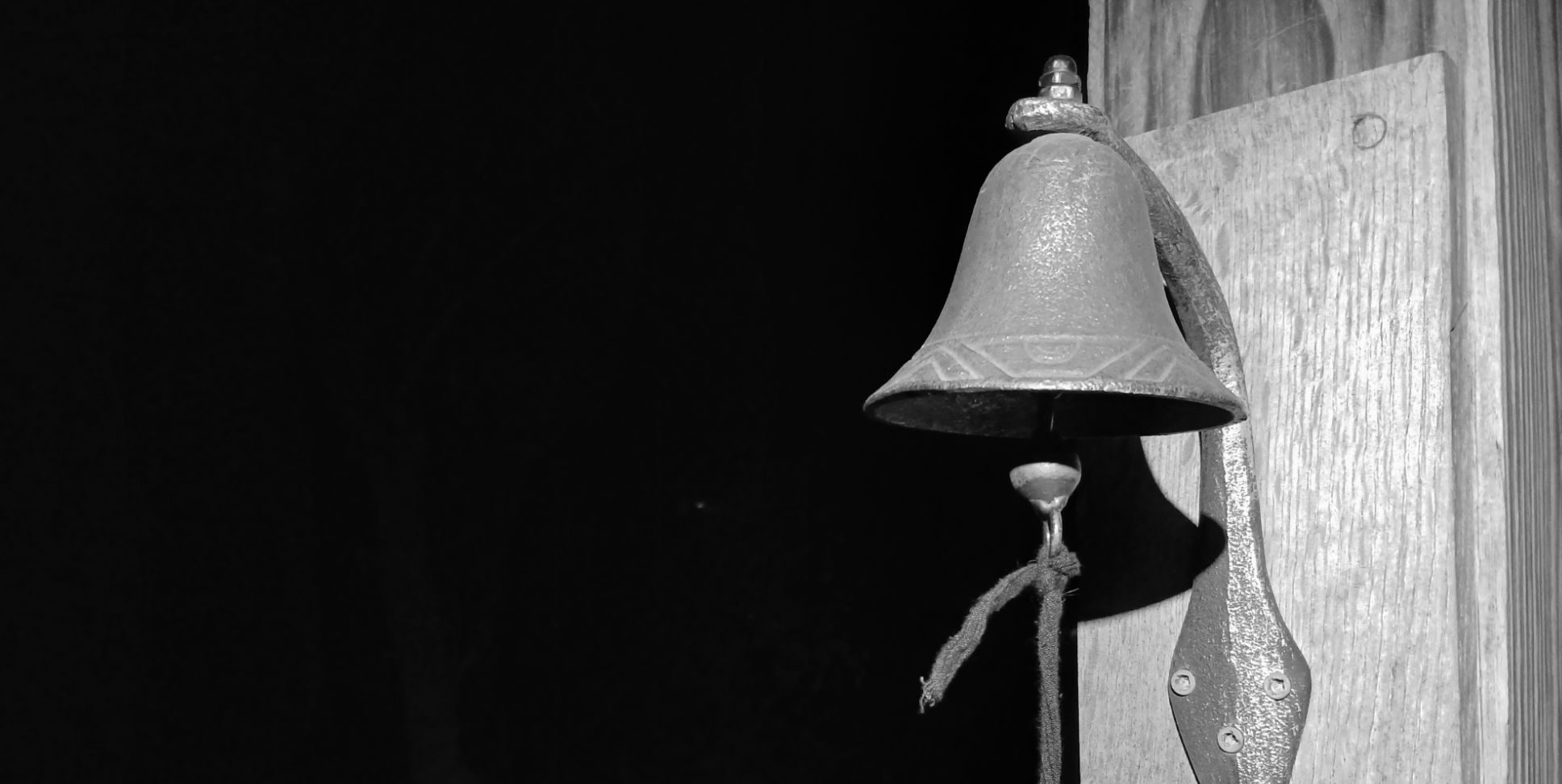
In the dark and on the bike, Google once again took me for a ride to the “trailhead” behind an industrial complex and “You have arrived” me at a chain-link fence. I backtracked and found the real one and staged myself next to the bell at the terminus; my headlamp highlighted the thing like a spiritual relic.
At 5:50 a.m., I started my music and rang that bell with nobody else to hear it.
_____
I found cruise control immediately, as I tend to, and left Tuesday in the parking lot and let Thursday remain a hypothetical.
But those opening 70 miles felt nothing like I remember them in ’22 and ’23. Every 3% grade between Sedalia and Boonville was an adversary, I kept thinking about all the people I wanted to punch, and lamented how breakable life felt despite the fact that I was here, again, on this route that has been a large factor in me not having left the state yet. I needed to reach Boonville at a 16.0mph average speed with zero seconds spent above heartrate zone 3 for my strategy to hold, and I got there at 16.1.
Yet I felt doomed.
The second stage of the plan was to get smooth and slowly lift the pace for the flat remainder of the course until it was time to let go of the reins at mile 200. Unfortunately, the faster side of the trail shut me down as the SSW wind was coming out of the east along the river. By mile 87, I pulled the plug, accepting that my clean run was gone. I had gotten here faster, more experienced, and more tenacious than the previous two rides, but the killer was once again the damn wind.
I sat down in Rocheport and had a coffee.
I didn’t realize it until I rode home (127 miles total) and uploaded to Strava that I was moving faster than both prior years while feeling inferior. In hindsight, those opening 70-miles were gorgeous and flawlessly executed against my former self.
_____
Dear reader. The game is different now.
I no longer see this record as a pure test of athleticism, but one of who has the most mobility to capitalize on advantages within the rules. Getting a good-enough day is straightforward; getting a breakout one is, well, my perspective hasn’t changed.
These are odds I already don’t do well with, if you set aside the fact that my participation alone is arguably miraculous.
_____
I began racing bikes in 2016 knowing very little about it. I wanted to be good, and I was on my way there for a moment. But a decade later, I feel older than 31 while having significantly less than you’d expect. The bike has become such an outlandish quest because without it, this isn’t a life I want.
The bike is what I have influence over the most. I will the machine.
“Wow, you take this so seriously, Genna.”
Absolutely I do. What’s your point?
That Katy is this strange, deceptively hard corridor that is the opposite of what my life’s experience has been thus far: a free, unobstructed stretch of fresh air that reflects back to you exactly what you put into it.
And because I’m plagued by this horrid unrest with letting something just be done,
I’m awaiting the next viable day.
I’ll probably keep repeating that loop until I am physically incapable. And if that sounds like it’s self-destructive,
try telling me that.
Dear readers,
I have launched both an introduction and the first episode of You Can’t Tell Me S***, an audio extension of the blog where I look more closely at the advice and mantras handed to us by culture and why I tend to question them. The link to my channel is below, and will soon live in the navigation bar at the top of the page. I will also be posting here for each new episode with audio transcription so that you can follow by reading if you prefer.
This series is recorded without a script and through my earbud microphone.
Reintroduction for those who want it:
Episode 1: The Issued Self [+Audio Transcription]
You can’t tell me shit, because I have to see it for myself.
Welcome back.
So, I want you to consider the last time you were sitting with somebody, or expressing to somebody that you trusted, something in your life that was difficult, to say the least.
Usually, in this situation, we’re feeling pretty vulnerable and we’re looking for an outside perspective. And I’m willing to wager that, at least in a few of those circumstances, you’ve had somebody give you an extremely watered-down piece of advice that seems overly simplistic.
I might just be speaking for myself here, but again, I’m willing to wager.
And often, mantras become things that we pass on as part of our culture. Things like, “You do you,” and, “Their behavior isn’t about you,” or even simply, “You’re worrying too much about this. Life is short.”
And I understand, on the surface, that generally speaking, people are generally trying to help you. But I’ve also come to understand that, at least in some of the circumstances, the help is a response to the discomfort of somebody you care about being in relative distress.
And for me personally, that intensity of slowing me down is actually detrimental to my process of figuring out something that is stressful for me.
And so, anytime somebody’s presenting me with unsolicited advice—you know, me not asking for advice—or giving me a universal factoid of life, it honestly just kind of makes me want to exit the situation. And it doesn’t actually do anything to slow down the thought loops.
And part of that is why now I record things on the internet and write. It is an investigative approach to things that I think deserve a little bit more explanation than much of social culture really allows for.
And I’ll be quite honest: I haven’t met that many people that enjoy sitting down with me and picking things apart to this level. And that’s on me.
But for this series, I’m going to do the opposite, and I’m going to dig into the fallacies in some of these pieces of advice, and where I think sometimes we are limiting the amount of connection that we are capable of having with other people as a result.
And we’re going to start with “You do you,” or “Just be yourself.”
So, a creator that I follow on Instagram named Christian Van Linda—he is Hypervigilance—he explains a lot of theories about narcissism and consciousness on his account that I really enjoy listening to. And they tend to take this exact form. They’re very much thinking out loud, responding to prompts, and it’s generally unscripted.
And he doesn’t beat around the bush either.
But something that he brought up that made me think quite hard—harder than usual—is this idea that if you take an infant and you place them in a room with no stimulus, how does that consciousness begin to develop a personality, or behaviors, or patterns of their own?
And for the sake of the hypothetical here, they don’t.
Our behaviors, and the way that we speak, and the opinions that we form, are all variations of what is fed to us through exposure and life experience and socioeconomic status and the people that we are surrounded by in our developmental years.
And so each one of us is kind of an amalgamation of different stimuli. And to bring it back down to ground level, we are all products of what we were born into.
And for me personally, I think that’s why I have come to now speak more, is because the environment that I was born into and had so much authority over my development, I somehow decided very early on was not legitimate.
I had two parents that were both incredibly emotionally reactive and manipulative, and just genuinely not responsible for another human life. And I mean that harshness on purpose.
And that means that I had to assume authority over what I was going to think and how I was going to behave, to some degree, on my own.
That is, I think, psychologically impossible in totality. But I got just enough of that stubbornness trait that I have removed myself from most of those patterns. I can still observe some of them in myself, just enough to reflect on them.
But so much of my writing is: I want to understand where myself ends and the person across from me begins.
And so much of society is very, very much consumeristic. It’s: here’s this idea, and here’s why I think that you should buy into it, and this is the level of knowledge that I have on this subject, and I’m trying to convince you to think a similar way.
And more recently, since I’ve started generating my own content, I’m taking in a lot less—not entirely, because I don’t want to become an echo chamber—but I’m very interested now in how we are developing our senses of self from what we are consuming and taking in from other people, versus the opposite approach of: What do I already know about myself and my values and what I want my life to be, and how am I using that to influence what my surroundings are?
And so that brings me right back to that mantra.
“You do you” is only something that you can actually act on if you know exactly what “you” is.
And Carl Jung can probably tell you a few things about how difficult that can be, especially for those of us who were not adequately supported when our senses of self were developing as children.
And so, when you think back to that example that may have come up for you earlier, I want you to ask yourself: Did that advice actually help you?
For some of us, it might have worked just fine. But it is an example of taking what has become the synopsis of somebody else’s experience, or the experience of other people through time, and applying it to yourself, whether or not that was actually something that rang true for you.
And it kind of takes us back to another mantra, which is, “Don’t care what anybody else thinks.”
And this is where I get kind of ridiculous, is: Okay, if I’m not supposed to care what anybody else thinks, then why should I take your advice at face value?
And it kind of questions exactly the thing that I just mentioned, which is: Why are you so quick to tell me how I am supposed to think about this?
And generally, by the time I reach that point, I then realize I just kind of have the wrong audience right now.
And so that drives almost a reclusivity, where I take that back home and I say, “I can’t really bring this to another person right now.”
And thus begins the trip inside the self that is kind of the backbone of my work.
When a child is in an unsafe, unsupportive environment like I was, where else is there to go but inside?
And thankfully, I dare to say that I think I have a pretty strong concept of who I am because of that. I won’t necessarily say that I would prefer that scenario to happen for anybody else. For me, I think I just got incredibly lucky.
In my experience, I do tend to be a person that has a lot of concerns for how other people think of me, because how they think of me often dictates how they treat me. And as you can already assume, I haven’t necessarily had the people close to me treat me very well throughout a significant part of my life.
And despite that, I honestly tend to follow my own compulses anyway.
You can take this right back to the decision to live in a van—and an old van, at that.
I got profiled by the police a lot. If they saw me parked somewhere, I would have the neighbors call them on me, and sometimes they would ask me to move. Sometimes they were just checking to make sure that I was actually a safe individual.
And every single time that I answered a police knock at the door, I could kind of see them not necessarily get the image of the person they were expecting, and the whole interaction actually diffused in a way that I think I’m a bit privileged, being a young white female.
And I never encountered any issues beyond just the nuisance of having people judge the situation and call the police on me to begin with.
But I will march to my own drum, even though the consequences of that are me behaving in a way that isn’t necessarily socially acceptable, and kind of being penalized to near or far degrees as a result.
And so, you know, it raises the question: Does this advice to “just be ourselves”—is that cost-free?
In my experience, it absolutely hasn’t been.
I can find myself quite isolated because not only am I quite vocal sometimes, in ways that are very abrasive to other people, but I also am living in actual circumstances that isolate me from people that I would consider my peers.
I would love to be surrounded by people that are incredibly critical thinkers, and a lot of those people tend to be on more highly academic pathways than I have been able to access. And so there’s a major socioeconomic gap between me and the people that are more like-minded.
The difference for me has actually been cycling, which is also a very privileged sport. And the whole reason that I had access to it to begin with was because I made all the sacrifices that were required to do so—i.e., living in that damn van.
And even there, I’m still kind of standing on the edges because I don’t have the same background, or the same support system, or the same access to equipment and races and the ability to travel that most of the people around me are.
And this is my decision. All of this is absolutely the result of the decisions that I have made.
Also, I don’t feel like making other decisions was possible without absolutely denying myself the things that I wanted.
So chew on that for a second.
And so, with that all being said, I tend to be a person that doesn’t necessarily seek out the advice of other people, because usually I’m not looking to replicate their life.
I want to figure these things out for myself.
Hence is how we got the title for this podcast.
And that might actually be leading to me living my life a lot more slowly and reaching fewer goals. But for me personally, there is no other path.
And in any instance where somebody asks me for advice, as I have seldom experienced—as, in some other person’s words, having the life experience of a hundred-year-old woman—I tend to say something like this:
If ever you’re in a grocery store and you drop something on the ground, I want you to say out loud, “You dumb b****,” because that’s going to make you laugh, that’s going to make the person next to you laugh, and it’s going to kind of stop you in your tracks for a second.
As you can probably tell, I’m quite comfortable telling you how I think.
But I’m not comfortable at all telling you how you should think.
So I’m not going to start now.
-As spoken to a woman who does very little by accident.
I sat across a table from a counselor who gave me all of the trained correct responses.
“That sounds like it’s really hard.”
“I understand why you’re struggling with this.”
“Wow.”
Meanwhile, I am measuring the hole created by spinning tires for most of my adult life. And I’m watching that same logic/emotion dual thought that occurs every time I have to tell the story again; the split screen where I am condemned to accept far less than I need forever on one side and refusing to let the severity of that override my ability to speak coherently.
I have the rope around my responses wound around my hand and pulled taut. (I’m doing it again, aren’t I…)
Yet as clearly as I can lay out how everything that breaks creates a chain reaction elsewhere, the professional across from me continues to suggest solutions that are vastly oversimplified, and I realize at least a small part of that is because I am difficult to sit across from.
I have probably already thought ahead of you by the time we get here.
There has yet to be a critical question asked about me that I haven’t produced an answer to almost immediately.
And if I’m not saying much of anything?
It’s because I’m busy.
_____
So when I sit down across from another person for anything remotely as serious, I have this habit of pointing at the thing about you that I have a question about because I’m wondering if you have your reasons. Because my favorite word is endogenous.
And damn does that not go well most of the time.
Through that I have figured out that the most necessary (and unpredictable) way to reach another person is to prompt their own self-awareness.
And now I do that shit on purpose.
_____
You opened a post with a cryptic title again.
Why?
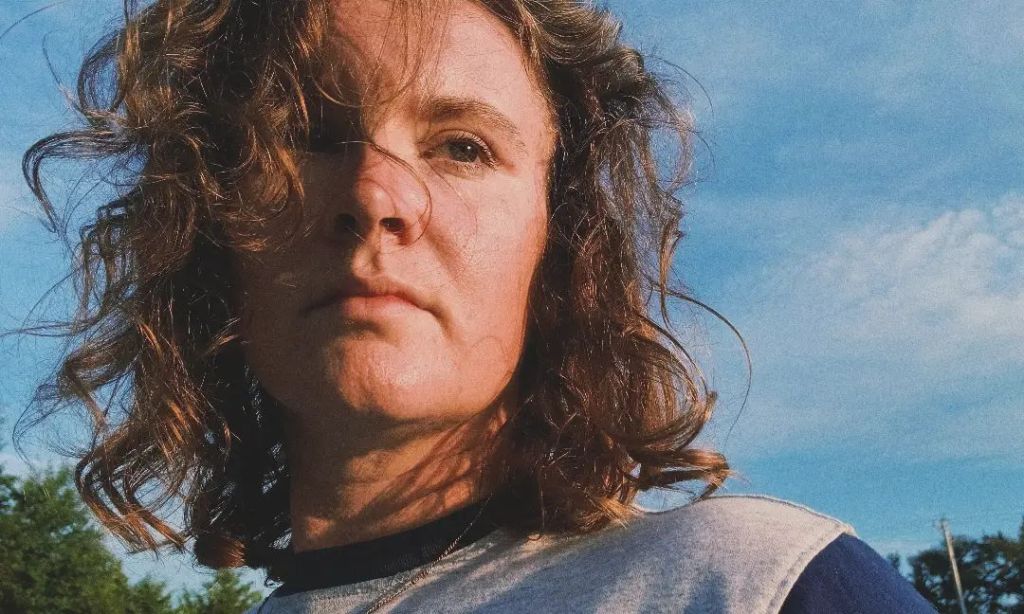
I’ve had some ask what the impetus is to keep coming back to the rail trail for big distances when I could just as soon start them from my front door and go anywhere else. The cold little voice on my shoulder says it counts less, and I giggle because the pain inflicted by monotony and metronome turns you inward in a sharper way than the mountain and the wood.
I cannot hide from you there.
Some cannot survive you there.
I come back to you in rehearsal of the day when you’ve decided I’ve done enough, hoping I can appeal to your mercy to meet me with nothing left unsaid.
I’m certain reckoning doesn’t come after death, but in the centuries-long moments before; it will land like an assault for those whose closets rattle with skeletons not yet dead.
And so,
I draw my sword.
-‘Letters to Thanatos’
_____
That has only come to bear more weight since I began to work in a hospital. Even though my presence in a patient’s room spans only five minutes, the way pretense tends to be useless in a bed means each time is an opportunity for me to really meet somebody. Three days of the week I am consumed by the effects of that.
The other four have been consumed by rallying for bike fitness at the very end of the season. I’ve been riding problem-free for two months, and although it was not enough to make any meaningful short racing comeback this year, I know where the weakness is and solving that is my winter plan.
But the attempt to take back the Katy FKT is green-lit like it’s Christmas. The bike is ready. I have (most of) my faculties back. We’re now just watching the weather.
Because I’m me, I’ll either be slower to publish than usual or be struck by impulse tomorrow. I’m sorry. I have less control of my fingers than you may assume.
_____
I was lurking late a couple nights ago on Strava and ended up scrolling all the way back to two winters ago on my own account. I had driven an hour to ride with people again but exploded before we even got out of town.
Someone in the comments said, “Keep coming back.”
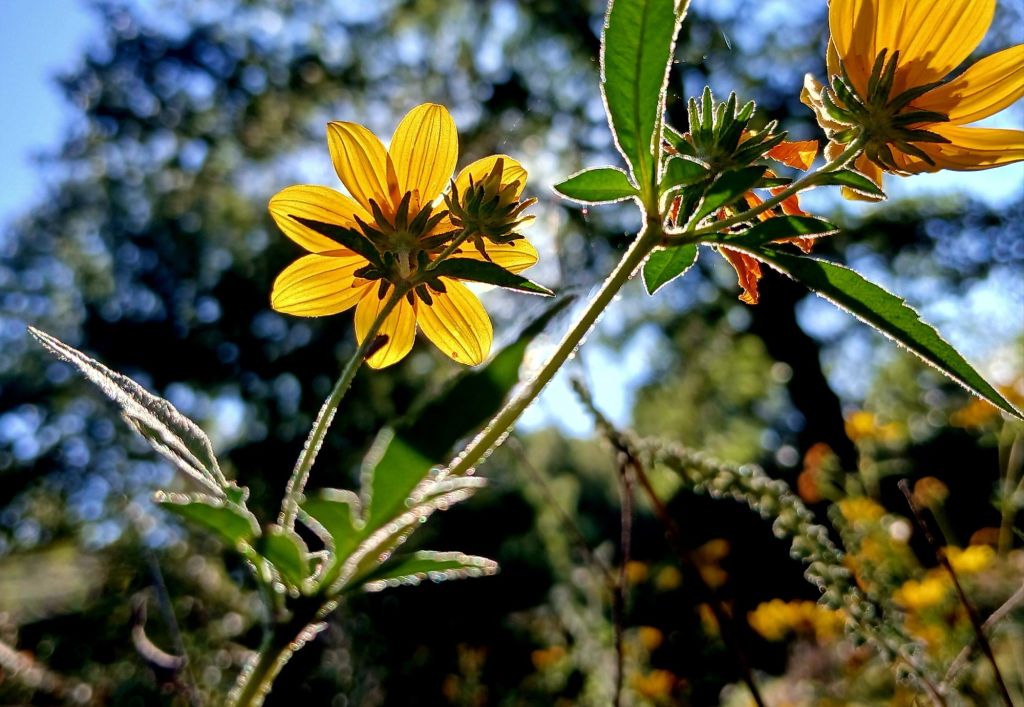
This reactor of mine has gone still. The air hums like all is as it should be, but I cannot ease the feeling that I could cause the spontaneous fission of atoms in California at any time. I have come to insist that the impact of one consciousness against another may also abide by the laws Sir Isaac Newton penned.
I think human perception and the Geiger counter were produced by the same manufacturer.
It has crossed my mind that nuclear physics might just be simpler; there, you can solve for ‘Y’.
To study that seems like I’d be significantly less likely to be seated across from a person and still be calling from across state lines.
With that being said.
You are seated across from someone and the conversation is serious.
You’re both listening closely.
You say a sentence; they hear you clearly.
They then respond in a manner that does not at all answer what you just said.
This is the repeated failure that turned me into a writer.
_____
In Chiaroscuro, I described how my roommate’s violent husband had been released from jail and was showing up at the house despite a strict rule from both myself and the property owners against it. I had gone to them to determine what needed to be done about it, and they both expressed varying degrees of aggravation that I had “bothered them with roommate drama.”
One of them sat my roommate and I down in the living room, delivered a lecture, and proposed essentially no solution except for us to “deal with our issues.” When he again expressed his resentment for “roommate drama,” I asked him,
“Why is my safety concern being labelled as drama?”
It didn’t make any sense.
And I remember how his demeanor changed from annoyance to storm cloud. He looked at me from under his brows with a deepening, red face that arrested me in my chair as he said,
“Why don’t you just tell me how big of a piece of shit I am.”
And with the reflex to deescalate whatever the hell that was, I said, “I don’t think that,” and the storm turned out into the Atlantic.
That was the precise moment that my reliance on this individual began to feel dangerous to me. In the wake of that event, I called my best friend, walked down the street, and sat on a curb in the dark for a couple of hours trying to understand. I was briefly more distraught over that response than the felon freely showing up at my house. I had seen that face before in some of my worst memories of my parents, and I stayed stuck on the impossible equation that took us so dramatically somewhere else.
I did not know there was even an object there, much less that I had acted upon it.
Something about a hospital bed makes a person easier to see.
In less than two months, my new little tech job has informed me that this not-a-people-person actually f***ing loves them when there isn’t a wall. A patient needs something from you that they cannot provide themselves. They’re removed from their daily comforts. They are to a more or less degree coping with their body functioning seperately from their mind.
Sometimes they’re accepting they will not be leaving.
When I started, I was in a welcome presentation where the presenter asked us to consider ways to bring our best to our jobs. I offered “look into how we can get the best from our jobs.” I’ve been shaken up since then because I can become disengaged quite quickly when work becomes too repetitive.
But every single room is a novel opportunity to learn something about how atoms in California respond.
_____
I have learned about a phenomenon called “elder speak” that is a sort of default amongst some medical staff when talking to patients. It functions to communicate “I am here to take care of you,” but I have resisted adopting it. Although I am a small part of that system, I want my tone to suggest “we are at eye-level.”
I am going to talk to you like we’re out to coffee. Ignore the weird device in my hands.
I’ll often crack jokes at my own expense. I referred to myself once as “just a sticker technician” (electrodes). Rather suddenly, a member of a patient’s family laughed heartily and abruptly said,
“If he was awake right now, he’d be telling you about how all women are b****es.”
Whoa. We’re not in Kansas anymore.
So I went down that little road with her and now I know all about who this sleeping man’s favorite family member is.
But more importantly to me, I was welcomed to Missouri by her. I was only there for five minutes.
_____
A sign on the door notified me that one patient was deaf in one ear and still very hard-of-hearing in the other. I talked to them from their better side, but we still struggled a little. So, automatically, I started to turn my face directly toward theirs every time I spoke and exaggerated my mouth movements so they could read me. I said something stupid and they joked back.
I was there for five minutes and already forgot about the sign.
_____
I was informed by a nurse that a patient was combative before I went in. I do not know what happened prior to my arrival.
I walked in and another staff member told the patient what I was there for, and they immediately started asking question after question. They were highly irritable, but physically calm. The staff member continued to repeat to them what they were doing and let the questions bounce.
They grew more verbally frustrated.
I started answering the questions they had to the extent that I knew answers, and admitted that I didn’t know when I truly didn’t. Most of what they were asking was not at all relevant to why I was in the room.
As this continued, for five minutes, this person started looking primarily at me and their voice became much less urgent.
I didn’t see combativeness, but I did see what I thought was I don’t know what’s happening to me.
_____
Final room.
A patient is in pain, delirious, and shaking underneath blankets. They are not forming sentences. I take my five minutes in three and as I am finishing up, I can see this person staring at me out of the corner of my eye. I look back at the only open, piercing blue eye, into their retracted pupil as they say,
“Please help me.”
We’re trying to.
My own hands start to shake as I hand off to a nurse in urgency.
The acceleration of the object is proportionate to its force.
And then I go back to my tasks as another patient, who is simply taking their IV for a walk, tells me they are training to try to keep up with me on my bike.
I smile widely.
For every action, there is an equal and opposite reaction, except for sometimes.
In my last relationship, he and I adopted a bit from Ted Lasso. In that series, Ted and his wife, Michelle, used “Oklahoma” as a request for how each really felt about something when they were otherwise acting stoic.
I would use it simply to request inside thoughts at random. Once I yelled it at him as he was racing because I can think of no more raw a place to spill beans.
Over time, I would invoke the state and receive “there’s really nothing there right now.” I don’t think he held anything back from me. We were more attuned than I’ve really experienced before. My own shows of stoicism were shot through at long range.
All the while I otherwise stopped being held to Oklahoma’s statutes at all.
Suddenly I was all the way back in Indiana.
He didn’t ask me to write.
But… I’m a writer.
And right here, I have my bare hand in the reactor core– the thing I had already formed words for as the closed kid on the school bus. I found it then while watching the families and friendships I wanted seemingly exist without force for everyone else.
To be sought, but more importantly to me, to find others. To be allowed to.
But just the same as two objects cannot occupy the same space, neither can the human consciousness.
And everything I do is just a lifelong, futile effort to close the space between myself and those significant to me. All of it culminating into the realization that our words are just postcards from Oklahoma.
Mere atoms in California.
Hey Chat, how is a reader likely to experience reading this one?
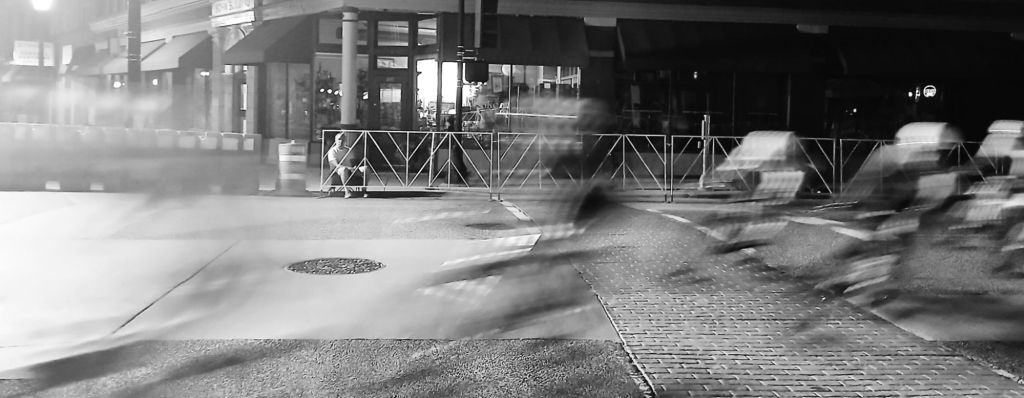
Dear reader,
I continue to promise that another book essay will be next, and then something else jumps out at me. I have learned recently that you tend to latch onto what I write when a wire is hot more than when I try to be disciplined.
I have to keep following that.
_____
I recently posted a curious poll on my Instagram stories asking viewers how they approached an on-ramp to the highway. Do you:
A. Reach the merge point and locate an opening?
or,
B. Look for an opening and manage the approach?
Every single person voted B, because I have a small audience of very proactive drivers. 🙂 The question was prompted by how often I see motorists reach the end of a ramp and respond with sudden gas or brakes like the presence of traffic wasn’t on their horoscope for the day.
But what I was actually prompting viewers to consider, because my material is seldom simply literal, was anticipatory thinking. If you saw that and attempted to deduce where I was going with it,
therein lies the first example.
A highway ramp is an incredibly useful visual for asking:
Do you respond to life as it happens to you,
or do you maintain influence over it?
_____
The group ride I looked forward to every week all summer has gone roughly the same way at the same place. The bunch hits the gas after a right-hander and I have about a minute to give. I fall off the back and spend the next 2 miles getting myself back under control so I can do what I’m best at– f***ing off somewhere alone.
Two months of rebuilding after a year of severely broken riding had me feeling smitten with it again, so I went to this ride last week with the target of beating my own fastest time for the full route. With that in mind, I chose not to respond to the acceleration when we reached This-is-where-Genna-goes-to-die Ave., and set the cruise control. I ended up catching several other riders, which was new, kept the pace solid enough to reach the regroup point before everyone left, f***ed on by, passed a separate group of riders ahead of mine which was possibly a very confusing visual, and knocked my time down by about two minutes.
I carried that satisfaction into race weekend.
_____
I lined up with a small group of women at a criterium on Saturday afternoon, not quite able to shake an irritability that was present all morning. This is my third race back of this type after five years of long-distance focus. Nevertheless, at the whistle, I watched for that one person who wastes no time going right to the front, settled in behind them immediately, and guarded that spot for several laps.
But within the first ten minutes, I was losing my spot every lap negotiating a rough road surface I should have ignored and closing the distance that I allowed to form. The announcer then called a $50 prime lap (the winner of the lap wins money, but the race continues).
Genna, no.
We hit that corner again; I’m still being messy.
I reach the end of that highway ramp and start to look for traffic.
And there, like on any given Tuesday, I am left behind, caught blind by the very thing a man with a microphone told me was coming.
I don’t take my two miles to recover.
I bail off the course frustrated with the reality that I can be competitive for ten seconds or ten hours, but for ten minutes I am entirely outclassed.
_____
_____
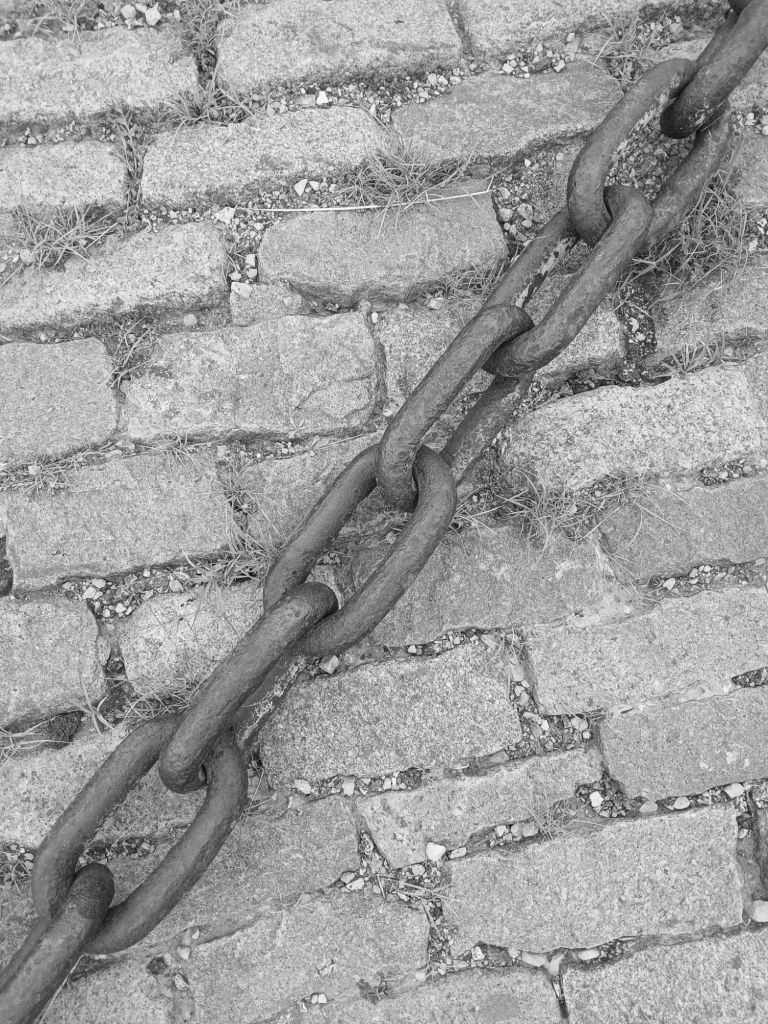
Before I got on my bike that day, the ramp was dark and I didn’t have headlights.
I had arrived with someone else. They began their own preparation routine and I was deciding mine. They rolled away from the car without a word while I was considering what items to haul to the course first. I wasn’t rushing it even as I was the first to race on that afternoon.
I then notice them waiting for me up the road.
I drop my plan and just grab my backpack.
I am going to condense the rest of the story because the point of this section is to highlight a massive difference in operating style and not criticize somebody I care about on a public platform when there was no real error.
I am incredibly low maintenance, but highly autonomous. I can exist in places with people I admire and be content saying almost nothing to them because, despite being a words person, so much is said without a single one.
I will happily throw in my earbuds and f*** right off for hours even if I have company. I can stay out of the way so someone can focus because that’s exactly what I need on a race day.
You’re amazing. Please avoid me.
But I spent a significant amount of time bending to an itinerary I could not see, in a place I was not familiar with, navigating an event with a layout that was not immediately simple, behind someone whose focus made me a follower.
But I am nobody’s follower.
I process environments and their impact on me fast. I come to decisions fast. Every “No, you go ahead” standoff at a four-way stop feels like I lost minutes when it was merely seconds. Each probable cause I come to about why my ancient van is disabled this time happens more rapidly than the person with their hands on it can understand how I got there, so I say,
“Let me in there.”
I’ll see the miscommunication between coworkers and inject the missing context. I’ll recognize the driver in the pickup is not just having a friendly chat with the man on the sidewalk with a metal pipe in his hand and say,
“Ayo, we’re leaving.”
And I’ll watch the time it takes for the person next to me to come to that same awareness.
When you grow up in a household where your parents are the unpredictable variables, the adaptation can go something like,
1. Notice more, sooner.
2. Control your response.
If you can’t control the situation,
you must control you.
And any place where I feel my ability to do that is negated by someone else’s decision making, I am in that awful state of mind again, in unsafe places or small-town bike races alike.
I wrote a comment recently about wondering why I was happiest when I was living in the van. Someone replied, “Because it was simple.”
No. Relying exclusively on yourself because there is no fallback is the furthest thing from simple. It was because nobody controlled that. I could change my environment at any time. I won’t try to influence what is going on around me or the people in that space when something isn’t working. I’ll just f*** right off.
It’s what I’m best at.
And each time I reach that ramp, and the story changes, I am in my own world and watching those of passing cars all at once.
And I ask,
What the hell are you going to do about it, Genna?
_____
I walked into a hospital room and said hello to someone I had met the day before for the exact same task. Very quickly, they mentioned something about “how hard we work,” and I replied with “Well, I just got here this morning, so I am fresh as–“
“A daisy,” they chimed in, so quickly.
You’re having a harder day than I am, but we’re on the same frequency, aren’t we.
They said they didn’t know what time it was, and somehow I didn’t either. I’m a morning person but the closed shade had me momentarily forgetful that the sun was out today.
I wrapped up my minimal job as this patient continued to call me Daisy. And as I once again felt enormous resistance to the fact that I couldn’t stay, I told them to have that shade opened today and get some sunshine. They thought about it for a second.
“Yeah, I’ll do that. Daisies love sunshine.”
I left that room smiling quietly and thought about Daisy Buchanan, Gatsby’s point of fixation in Fitzgerald’s classic novel. His ceaseless obsession with getting her attention again after years brought him nowhere near her even as they did come face to face again.
I loved that book and I didn’t even catch the message until I came to understand that I am doing a very opposite thing.
I spent only a couple months as a barista at a hospital coffee shop this summer. I left because management expected me to stay available to them off-the-clock, which is a ‘no’ from me.
The only latte I’ll concern myself with on my own time is the one in my clammy post-ride hands.
But while I was there, not one day passed where I didn’t see hospital staff coming and going to do significantly more important work and feel trapped. White coats bought their nursing staff a treat while discussing subjects with complicated words I had no time to curiously Google search.
I was once a kid that sat alone on the school bus, staring out a frosty window thinking about why certain rules seemed fundamentally flawed and were inequitably applied instead of what I was excited to do that day. Simplicity still has me discontent.
The juxtaposition of getting the order on the screen correct while a pale, wheelchair-bound patient with their head shaved sat hollowed in the lobby was not ignorable.
_____
On my second day at my new job, I was in a room with a patient that shared with me all the places they had been in their life. They told me how they had been encouraged to write a book, and I agreed with them immediately before they said “It’s too late now,” in a voice that was either accepting and at peace, or stoic enough to fool me.
I did not tell them the kind of person they were talking to, or where I had heard that before.
And on the third day, I rose quickly from my desk chair as code blue was called. I watched resuscitation measures for the first time in my life as I stood directly by where physicians were talking to the family on the phone for decisions to be made.
I don’t know how it ended.
That is going to be normal for me now, on the other side of the bar.
_____
All of my more ambitious work is gnawing at me from the inside as I both over-scrutizine and underestimate myself.
There is no longer a place where it’s silent.
And there are at least two people I know now that might advise me to step it up.
‘Good Morning, Vietnam‘ has to be next.

It’s been a month.
Let me assure you that a period of silence from me is, generally, a very good thing.
_____
Last week, I betrayed my plan for a rest week to go find a friend on the trail. Someone I knew only though shared humor on the internet, whose face I had never seen, was touring the Katy after having taken the train to Kansas City from Flagstaff, AZ. I was off the back of three big training weeks and protecting my recovery, but my last-minute rationale tends to be “Well, I probably won’t die,” when an opportunity comes that may not again.
Despite not generally liking casual chat very much, I consider windows to meet people individually as too important to miss, if I can help it.
So I met him and his company outside of a dark cave trailside in the middle of the afternoon in a balmy Missouri midsummer. And while I followed the two barefoot riders with the hole in my bibs preventing me from looking too serious, my friend said something about my writing that I have only ever considered because a computer told me the same thing; you, dear reader, know me better now than I know most of you.
I still don’t understand the contrast between the ease I feel to share the deeply personal on the internet while so many don’t feel safe or capable of doing so even to the closest to them. We learned to build walls of plaster rather than glass. It’s inconsiderate, at best, to peek inside someone else’s drawers.
“Oh, that’s uncomfortable,” as they dump it into a crate, push the pile down with their foot, and slam the lid closed.
And then, “I’m doing well. How are you?” as your guest arrives.
And other disservices we do to ourselves.
But why is leaving all interior doors open the radical thing?
Because, allegedly, it’s inconsiderate to burden someone with the real story unless you have first earned it with pleasantries. Moving about unlocked is simply asking to be hurt.
And we slowly shut ourselves into our own home.
_____
Telling anybody how I really felt was the most dangerous choice when I was growing up, but I kept doing it. It defied survival logic, and there is no definitive explanation as to where I even learned to be so earnest.
The pattern continued to get me punished in adulthood, as I have described in essays like What Are You Looking at Me For? I think there is particular combination of me being a difficult person to read in a casual setting but incredibly willing to be direct when it feels warranted. The process has predictably gone from “she’s quiet,” to “she’s rude,” rapidly because nobody could see everything that happens in between.
All of the experiences, virtues, values, and personality traits that could make one known sit in that space.
I started to put that material here, where nobody could stop me midstream with their assessment of where I was going wrong, and now I am trying to wrap my head around why people I have barely spoken to happily greet me.
You’re talking to me?
The front door is wide open, but I won’t cross the street to yours because,
Oh gosh, I’d hate to impose.
_____
Recently, somebody close to me disclosed some reservations they were having. It involved me, and my stomach got that knot in it. I finished what I was doing, pulled up a chair, and asked them what was going on.
The conversation spooked me. It had potential consequences I wanted to avoid. I had vested interest in trying to influence their perspective to make me feel more secure in the moment. Instead, I just asked questions.
I need to understand how they are thinking.
They later told me they noticed that I got very quiet during that talk.
Right. Because this isn’t my disclosure, it’s yours. I cannot hear you if I am also speaking, so I won’t. But I’m right here.
After that, I spent an entire afternoon mulling everything over and I kept coming back to a single word they had repeatedly used that did not match the rest of what they were explaining to me, so I called to ask more questions. We found the root of the problem together, and the tension released.
At the end of that phone call, they said “I think you had me figured out before I did.”
Only because you allowed me to, my friend.
_____
I was a part of a large group one day when a person whom I’ve experienced to be pretty brief with their words stopped to speak on something personal to them. And as expected, they didn’t stay long.
I was behind only a few people in the quiet bunch, and I could hear them just fine.
But that moment slowed down for me, for some reason. As I listened, I leaned my head to the side so I could look past the person in front of me and see the speaker’s face as they addressed us.
This is important. Pay attention, Genna.
_____
I would like to know some of my readers better. If you’ve ever felt compelled to reach out, the contact button is at the top right for that reason.
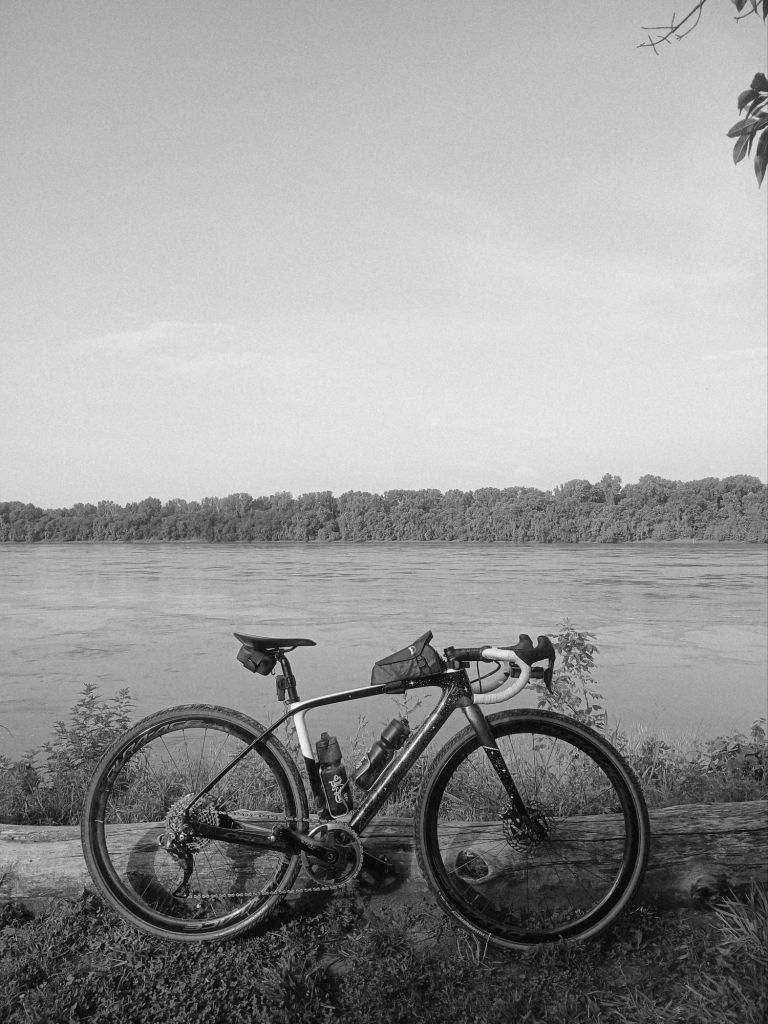
I appreciate your patience while so much has broken in my hands.
For the first time in nearly a year, I had a normal week on the bike. I put my ultra rig back together after harvesting it for parts recently, took a spin around the neighborhood, and didn’t want to put it away.
The next day, I went out at dawn and chugged slowly on the gravel. On a climb 16 miles in, I soaked my face in the boggy sunrise and thought,
I will never take simply feeling slow for granted again.
And I took myself on a day trip of a place I already know as home. I finished overheated, hoping for the weather to ride again tomorrow. And the day after that. I wrapped up the week with over twelve hours in the saddle, and none of them were spent feeling like a foreigner on my own machine.
“One day it’s just suddenly going to be right,” a friend said to me on the trail one day, when they found me sulking on a bench.
You called it.
I have suffered a lot. Hating the thing that has offset that for so long is especially suffocating.
_____
The bad news is I couldn’t solve everything soon enough to make Mishigami possible, and so that has been shelved until 2027.
The good news is, one, I don’t need an event to go flip off across state lines solo; and two, the runway is clear for me to target the one other thing I said I was going after this year—an attempt to take back the Katy Trail FKT. All of the self-study I used to figure out why I was in so much pain on my bike can now be applied to determining how quickly I can rebuild the engine.
_____
Over the weekend, I interviewed three women from separate corners of bike racing for an article that became significantly more fascinating than I anticipated. The conversation around small fields and cut programs abounds, and I wanted to learn more about that without any predetermined theories. The goal, as is now the standard when I bring anyone else’s voice into my writing, was to try to understand how each of them experience the sport and their place in it, which is a taller order than simply asking for opinions.
A pattern persists for all four of us. Over the coming days, I will be pitching this piece to larger publications because these conversations are bigger than my little blog, and I want to know if my Anderson Cooper roleplay has merit elsewhere.
_____
I know that I have both readers that admire that I keep dreaming despite how precarious everything is for me, and those that mock me for it (I’m often one of them).
What may be less obvious is that all of it is evidence.
_____
I bring a sort of investigative vibe to small incidents that people convinced of their own stories don’t really like.
_____
A woman cloaked, in ornate robes, stands aghast as a stone fortress is erected in front of her. The carved walls look identical to her drawings, even more grand than the version before that fell.
The songs of birds carry on naturally while the sun rises and falls over and over and the structure grows double-time. The woman takes a single breath and a decade passes. She feels a warm wind at her back nudge her toward an empire.
Reluctant, she takes a step. Thunder cracks.
A violent wind rushes in like the walls that had held it back for centuries finally succumbed. One by one, the stones that were climbing at golden hour are tumbling and shattering in a monsoon. The woman remains still as her eyes fall to the earth, and utters, “Did I get it wrong again?” as a ghostly serpent descends.
The little girl spooks as her mother storms through the living room and knocks her colorful block tower to the carpet without apology.
The little girl starts to cry.
“Get out of the middle of the floor, then,” her mother scolds.
A growl erupts from the little girl’s throat.
“Go to your room if you’re going to have an attitude,” her mom responds.
_____
“It appears that the documents are presented hoping the court will view them as prima facie evidence of a valid claim. The defendant will prove otherwise.”
-My grandpa, Jerry Olliff, Motion for Summary Judgement
“And so, I raise my sword.”
“All available forces to the front line.”
“You have activated my analysis.”
All lines from previous work pointing at the same damn reflex that Papa and I seem to have shared.
My version, an ever-expanding library of public essays that circulate beneath the airwaves and change how many interpret me.
His, at the very least, a thirteen-page court document submitted in a case he won without formal legal training.
Both, in far more words, stating,
What is being asserted doesn’t match the evidence presented,
and
I am liable to act on it at any time.
That’s almost a given response for large, obvious cases of abuse, misconduct, propaganda, but it is my stance that the cumulative, otherwise petty cases also warrant scrutiny, lest they fester in “the undercurrent of plausible deniability.”
Where their consequences land on the disbelieved.
Ladies and gentlemen of the jury, labelling me as the problem for habitually gesturing toward falsehoods is how it gets one-hundred holes poked in it on the internet.
Observe.
_____
As our group bike ride passed another one on the same evening, as is common, my boyfriend encouraged any of those riders that wanted to go faster on their route to follow him.
The assumed ride leader of that group posted the following message on social media afterward:
“Word to the wise. Don’t show up to a group ride you bash every time and try to recruit people.”
For context, he and I both have made public comments about this particular group riding in a way that I still label as negligent, primarily from having observed riders regularly crossing to the left side of the road in turns and blind hills. That criticism has been dismissed multiple times. I was labelled as “cocky” the first time I addressed it.
For some reason, I chose to see if there was anything under the hood of that warning.
“Or what?” I commented.
What jurisdiction do you have?
“Genna, you are the biggest troll I have ever seen! I’m just making it clear to your boyfriend that I don’t play those games.”
And I am just making it known to you that nobody needs your permission.
“There was no sarcasm in that comment,” I replied again.
“Coming from you, I am definitely not worried. Follow-through is neither of your forte.”
Oh, this is ripe material. This looks like internet beef from the surface, but for someone like me, it goes:
You didn’t answer my question. I really want to know what you are going to do about this. Isn’t racing bikes all just a big game? Worried about what? Follow-through? What’s that all about?
Notice how the thread was immediately no longer about the subject at hand. It was about me.
It’s important to note that there is a history between this person and I. This is not the first time I challenged them on something and the conversation changed lanes toward everything that was wrong with me. But this time, two words were all it took to trigger that defense.
But hey, I’ll humor the implied criticism toward me anyway. There are a number of things that could be fairly gestured toward as “lacking follow-through.” I’ve done my fair share of brushing people off, deprioritizing responsibility and becomming focused on my own interests instead.
I’ve made public declarations for events I now can’t make happen, temporarily.
But I also have to point out that if I was more organized and had fewer interruptions,
I’d be a much bigger problem than I already am.
_____
Dear Papa,
Were you there when Mom said I should grow up to be an attorney because I love to argue so much? Wouldn’t you know it, I use courtroom metaphor in my writing and am unironically quoting from when you roleplayed one.
On that note, I especially liked it where you wrote,
“The judgement sought shall be rendered forthwith if the designated evidentiary matter shows there is no genuine issue as to any material fact, and that the moving party is entitled to a judgement as a matter of law.”
I’ve been told I need to grow up. When I do, I hope I can scare the shit out of a room that underestimated me like that.
Something I am left chewing on though is this–are the repeated criticisms of my character where I keep going wrong, or do they point at what makes me difficult to convince?
-Genna
I’m a hard sell, because I am a documentarian amongst salesmen.
They ask for a moment of my attention, yet I am hardly curious of their pitch.
I am looking for their incentive.
Do they have something they genuinely believe I need, or am I purely another cold call?
_____
Once, I answered an open interview invitation at an insurance agency I had never heard of. I pulled up to a building that looked exactly like you’re imaging when I use the term “cookie cutter corporate,” with the total absence of signage.
I walked into the lobby and signed in amongst a large group of people that seemed ready to seek opportunity, but the atmosphere was one of “this is everyone’s first time,” from my general assessment.
One by one, we were all pulled into an office for what turned out to be a pre-interview, which I noticed was more explaining the open position and its benefits than asking me about my experience or interest.
Afterward, all of us were invited into a conference room where we were given a long presentation by a charming professional who was clearly practiced at this. I saw the graphs on the screen about just how much growth a new rep could make in their first year on commission.
Then he explained, and downplayed, the responsibility of each prospect to pay for the course and licensing required to begin their new career.
Yes, I know you already see it, but stay with me.
I don’t remember what I asked, but I asked this representative a question that caught their attention. At the end of the presentation, everyone was thanked for coming and given instructions on how to follow-up. I was asked to stay for continued conversation.
This rep told me all about why he thought I, specifically, could be effective in this role. I was the chosen one, evidentally.
But I could not decide if I was being complimented, or targeted.
He felt like he was trying to sway me.
I was trying to discern what was real.
Shouldn’t I be trying to convince you why I am suited to this role?
Yes, if insurance was the product.
_____
Christian Van Linda, (@hype.r.vigilance on Instagram) is a favorite creator I follow; I have heard him use the phrase “psychological colonization” more than once now when speaking on manipulative behavioral patterns. It’s an excellent description of the slow, unconscious process of one person’s interpretation of events and reality itself influencing the perception of others. This subject is very relevant to so much of my writing, but it also inspired a phrase of my own.
Persuasion economy. What one gains from your buy-in of those ideas.
I am so supremely sensitive to it that I regularly deny you, dear reader, my entire conclusion on subjects because I will stop just shy of assuming entitlement to your perspective, even as I am aware I cannot eliminate bias entirely.
All I know how to do well is construct a case from observable evidence.
I am unwilling to ask you to make the check out to me.
And I am haunted to understand what the demand is really for.
So when a salesman and a documentarian walk into a bar, one of them offers to buy the other a drink.
And the other acquires a subject.
If you seem invested in making my day, you have activated my analysis.
Why mine?
The problem that arises with the pop-psych emphasis on self-worth is that it ignores how incredibly dangerous it is to possess when you have no power.
I have teeth today. Proceed with caution.
I left a job abruptly again because it routinely demanded my attention off-the-clock and threatened consequence if I didn’t pay it. The fastest way to piss me off is to remove my agency, so I took it back. It was that or continue to serve coffee in a 100-square-foot box with management that takes feedback personally and contradicts itself constantly.
I did pick my battle there, actually. Even temporary tolerance comes at an absurd level of stress for me.
But that’s not the primary source of my fury this afternoon. It’s the fact that for two seasons now, every attempt to create a more stable life for myself has failed. When housing, finances, transportation, and social/familial support are all frail simultaneously, you are always running on almost zero margin. That has been my story since I left home. I have never not known that cycle.
It’s the outcome I predicted as a teenager, too. I knew once I was out of the home, I would have nothing but combustible material to my name and no sturdy fallback support. I ran down experiences I wanted to have anyway.
The bike is the only thing that has ever stuck. A decade of pursuits there is consistency that does not match anything else on my record (unless you count ripping bullshit to pieces). I am losing that right now. I am out of Mishigami. If I can’t find my feet, my crit return will be a fantasy too.
Right now, I am slowly being surrounded by people that realize I should not still be this low. I’ve known this for a long time, but have resisted owning it. External verification actually makes me even more frustrated about how I am always in the wrong place.
The sun is high. The days are the longest they’ll be this year. The atmosphere is begging for me to be let off this chain.
The neighbors are complaining I bark too much.
No shit.
I will invoke my own rule again.
I will cut off the elephant’s head
and mount it to my wall
there is no tension, or unspoken truth
left standing in this hall
And so, I raise my sword.
_____
“When you call me out, you are judge, jury, and executioner. You’re putting me on trial in that very moment. It hurts. And it hurts knowing how much of an impact my actions, and you having to call it out, has had on you.”
Then why am I here again?
Ladies and gentlemen of the jury, I wonder if you will arrive at the same question, because I am confused.
Confusion makes me investigative.
The above quote is extracted from an email I received after I cut contact with the most important person in my life. One day, they had visited from six hours away, and professed beyond-friendship before leaving when the weekend was over.
Eight years of being the person I called when someone else crossed a line was instantaneously sealed, and began again in a different form. There’s not really any going back from that, you know?
I don’t write 20,000-word essays and so I will not outline all of the ways this person supported me that are nearly unequivocable, but I hope that the nature of my writing means you can take my praise with equal weight.
“No, I’ll handle it,” was not an answer that they accepted from me if they could help it, and unlike with so many others in my life, I never incurred a debt for any of it.
It is said that a marker of intelligence is one’s ability to carry contradicting truths.
“You judge every last thing. I don’t want you to take it easy on me.”
Chiaroscuro.
Well, ladies and gentlemen,
I’m shaping up to be an absolute dumbass.
_____
1. Quickly after the nature of our relationship changed, I realized this person was not making a clean transition. They withheld the information from their long-term partner despite telling me they were ready to end that.
I am not someone that will swear to secrecy much, so after so much delay I closed the information gap. I reached out to the individual and said, “There is something you should know, but it can’t come from me.”
Then they finally acted.
2. They lingered in their shared apartment for over a month with no explicit plans for moving out until I said I could not comfortably participate in the situation anymore.
Then they finally acted.
3. They continued to visit said apartment for a cat they maintained a custody dispute over until I said I could not handle their unwillingness to let go and move forward.
Then, they finally acted.
All scenarios for which I got long, introspective apologies for, but by then the reality for me was unfortunately, after six months,
“I love you as an individual, but I am losing respect for you as a partner. I hate that.”
And as I stared at their tendency to only face uncomfortable decisions after conflict had already arisen, there was not really any going back from that, you know?
We had plans for them to move to my new state because I was not moving back. I introduced them to a job opportunity not dissimilar from the one they had been in for a decade. But I felt like I was pulling still, and I needed to stop. So, I accepted what I could not control, choked back every argument from the defense, and let it go. It disturbs even me how practiced and fast I am at that now. Nothing gets buried; it gets underlined, annotated, filed as closed, and I trust my own conclusions even when they fucking suck.
After an email that I read essentially as “I know all of this hurts you and I want to work through it together,” I again closed the book and nothing but an item that was left at the house was discussed for over three months.
I’ve already learned my lesson.
One day, I was talking to someone at the aforementioned workplace and was told “they’re starting here next week.”
Uh oh. I guess them not moving here afterall didn’t get relayed?
I left a little startled, then in a moment I remember to the exact foot of my location at the time because the possibility hit me like I had been sniped,
What if they are actually still moving here?
I then received the following message in the days afterward.
“I wanted to give you a heads up that I moved to [insert my town here] and need to return your key.”
[Insert multitude of unknowable reasons why that is happening here.]
Days passed. I couldn’t take that lightly, and so I just… told them that.
“I can’t tell you what you can or can’t do, but I am deeply uncomfortable with this.”
_____
Six weeks passed.
The first time we crossed paths locally, they seemed in a hurry to get out of there.
I messaged them that I was okay to clear the air if they wanted, and got no reply.
When they coincidentally came up on me in their car after I took a spill on the bike, they asked me if I needed a ride and hurried away when I told them, “Someone is on the way, but thank you.”
I messaged them asking if they wanted an expensive piece of equipment back or if they gave it to me, because it was never clarified.
Again, no reply.
We are predictably in the same place at the same time every week now; they talk casually with my new partner, and I don’t exist.
In their own words, “I want that indictment, regardless of how much it stings.”
But the only ones facing me are the elephants.
Did you even read the sign?
If I’m honest, I don’t really write to make sense of my life or to process emotions. That has generally already happened before I get here, because that feels like the most responsible way to handle sensitive material.
It seems that I write because I was born into a household where reality was already being translated by adults that could not allow it to be freely observable, and I needed witnesses. I was rendered without power, as any child inherently is, and my only options left were to succumb to what insisted it knew better than me, or get distant and watch.
I watched so intently and became highly adept at describing what I saw.
Twice now, a gray fox has appeared in the yard. The first time, it paced at a distance while curious about a cat fight that had broken out. It didn’t pay much mind to me until the tussle resolved, and then we both sat still and watched each other for several minutes.
Weeks passed and it showed up again, this time in full daylight. I went still again but spoke gently to it so it knew I was there. It again stopped and watched me.
_____
Put me in a room with another reserved person,
and you have an instant stalemate.
Start indicating whatsoever that you find me interesting,
and I can’t take a compliment.
Tell me where I belong and I will rapidly make that judgement for myself.
Show me where I am welcome, and leave me to make the choice, and I will spend days unsettled by it because it’s novel to me. I have an entire archive of being pointed at as the problem,
and a few water-stained pages of “I see you. Feel free to hang around.”
They get entered as evidence before invitation.
And most of those were written by me because I had to stay distant, and watch.
You cannot do both, Genna.
_____
A few summers ago, I was on the Maryland coast about to board a whale-watching boat. The chatter around me was mostly “I hope they’re active,” and “I have Dramamine.”
I regularly prioritize experience above everything else. Because if I only get this one life, I’m not going to sacrifice feeling it for how my decisions look to the outside.
But I equally struggle to ever fully live in a moment of time. It’s always managed by remain distant and watch.
But miles into the Atlantic, I was woken up by the rocking of a double-level vessel pushing waves in search of humpbacks. Someone was dry heaving by the railing and I was scurrying up and down the stairs breathing in the salt like I had only then discovered oxygen.
We found whales. Everyone had their phones out. I was seven again.
The boat cut its engine. We kept a distance, and we watched.
_____
Recently I met an acquaintance for lunch after work. I was equally excited as anxious because whether I am met by or a rub to someone else is always a dice roll, and I’m apt to gauge it quickly.
What followed was three hours of discussing shared interests as an appetizer, and an indulgent main course of comparing how each of our minds seemed to work with rigor that rivals this blog. We weighed the benefit of playing the social game versus my refusal of it. Their “I don’t want other people to know that I read them,” across from my “I do.”
That was the first time I had ever spoken to someone that could translate their self-observation into my language and felt inclined.
I was back on the boat.
_____
I don’t watch much TV; I’m busy paying attention to other things. So if I catch a reference, you should probably purchase a lottery ticket immediately.
But I love Ted Lasso so much I’ve watched it twice. I was watching it with my boyfriend, Alex, on the second run, and we reached a scene where one of the mainline characters, Nathan, is in his childhood bedroom after walking away from a major career. The show traces parallel emotional moments of other characters to the sound of Nathan playing his violin.
Suddenly, Nathan’s dad, whom has been portrayed as detached and disapproving, appears in the doorway. Nathan is startled, and begins to apologize for the noise.
You can watch the two-and-a-half minute scene here. My summary will not suffice.
“I didn’t know how to parent a genius,” his dad admits.
“A what?” Nathan replies, frozen.
“A genius. You’re brilliant. You’ve always seen things other people couldn’t and that’s a blessing. Yet I know it must also be a curse too.”
Alex looks at me and says something like, “What’s that like?”
“What?” I reply, frozen.
He saw the hit. He mentioned it again the next day.
_____
I remember 7th grade being the year where I began to sink. Everything at home was deteriorating. I was pushing back more.
But I had one teacher that year whom I trusted completely and bonded with well enough that I carried that energy into a test score that landed me in advanced English the next year.
I couldn’t half-ass my way through anymore, and I knew it.
I did not value the reflection of potential because I dreaded going home every day and had no concept that a future existed for me.
I could feel that my parents would discard me as soon as legally permitted (and they did).
I couldn’t take my eyes off of the situation in my house long enough to apply myself to anything else.
I saw a post from one of those teachers this week about what keeps her driven in the profession, and to summarize, it was seeing the impact in, and being seen within, her efforts.
I commented.
_____
_____
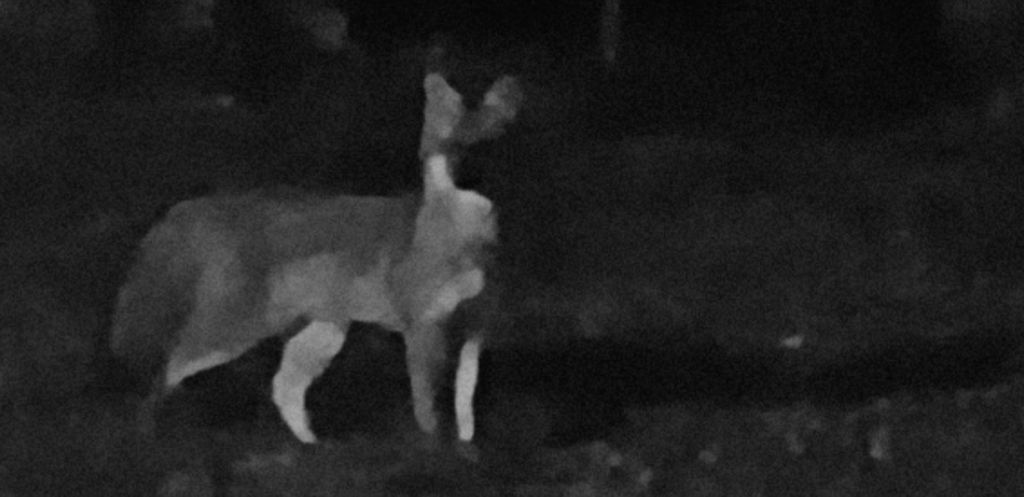
I am so studied of projections and ridicule that I have an armory for it.
“You’re too untrusting,” has come predictably from those who later showed me I could not trust them.
Those more like me seem to speak differently, or simply less, than I do.
The fox is in the yard again.
How long have you been here?
Am I the last to arrive again?
May be subject to the Uno reverse.
_____
Please review Municipal Code §7, wherein it is stated,
“You are harder than ten men.”
Not my words. I was amongst many on that day, and the following still occurred:
I rolled out of the parking lot for the regular Tuesday evening ride. Five of us missed the light, and as we waited, the occupants of a white SUV with plate number [redacted] began to holler at “blue shirt” (me) suggestively.
“Oh no, not me,” I said quietly.
The vehicle proceeded to follow us through two more intersections after the light turned green. They continued to comment on me as they passed slowly, to which I replied,
“I memorize license plates.”
They declined comment.
The driver paused briefly at the next stop sign, and I assumed they were still intent on this game. And, Your Honor, as I slowed the scenario down in hindsight, asking myself why I chose to respond the way that I did next, I realized that the absurdity of their behavior did not say “we are committed to threatening you,”
it said “we are playing with power we aren’t prepared to own.”
So I rolled directly up next to the passenger door of the SUV as they quickly rolled their windows up.
“Awww, roll your windows down,” I said.
Another rider told me not to egg it on, so I rode ahead and rejoined the group as the vehicle turned and disengaged.
A different rider let me know he had turned his camera on, in case anything was to escalate.
But, how was I more certain than not that that would not happen?
I grew up scanning for and reacting to threat in my own home. I lose my shit over loose dogs often. Why did a motorist objectifying me on a bike produce not fight, not flight,
but you won’t actually follow through here?
_____
One afternoon, I was walking out of Walmart toward the back of the parking lot where my van was parked. By a nearby car, I saw a couple in an altercation and the woman continuously getting in the face of a man who remained argumentative and braced. As I continued my line toward my vehicle, a single small bag in hand, I said,
“Hey, hey, what’s going on here?”
The couple immediately separated, the man began to walk toward the store, and the woman said something like, “If you knew how much this asshole was cheating on me,”
“Yeah, maybe not in a public parking lot,” I replied.
They continued to bicker covertly as they headed toward the building, but a beating no longer appeared imminent.
I got into my van and soon saw the man making a beeline toward the four-lane road on foot, walk out into traffic, with the woman now following him yelling again.
I hope they get that worked out.
The next day, the head of security came through the coffee line at work and overheard me telling the story to my coworkers.
“That’s brave,” he said, holding sharp eye contact.
And I understood the implication. Intervening could always go poorly, which is why it is never advised.
And I won’t recommend my choices to anyone else, either.
On the contrary, I have been the person that needed an adult to step in, and didn’t have it. I became that person, and I cannot revert to the bystander or passive object with a clean conscience.
Why has that been effective, even if only for a moment?
_____
Pursuant to the ongoing matter of “I bet you’re wondering how I ended up in this situation,” the following prior statement is entered into the record [Chiaroscuro].
One day, after about two months, I received a text at work from my roommate saying, “Come home please,” followed soon by a “Nevermind.”
When I got home roughly 30 minutes later, I saw two men leaning on my van with my roommate cornered in her car. I parked the loaner I had driven in the homeowner’s driveway and walked over.
“Please take your hands off my vehicle,” I said. My roommate’s husband, now out of jail, gave me the ol’ up-and-down as he stepped away and cloaked himself in smugness, while the 6-foot-something guy behind him had a general air of “Oh, f***.”
I locked eyes with her husband and asked “Do you want to explain what’s going on before I get it from her?”
“We’re just having an argument,” he replied in a small voice.
He wasn’t even supposed to be there. I told them both to step away so I could talk to the woman crying in her front seat. Her words told me a story of “not a big deal,” while her shaking voice and constant scanning for him as she talked to me suggested “this is not safe.” She left with him that night anyway, and I told her to let me know if she needed anything.
It was a week or two later when he was arrested again for assaulting her in a Walmart parking lot.
I have a theory.
In the event of conflict, perceived threat, discomfort, to any degree, we often respond with fight, flight, freeze, or fawn.
But in my case, it seems to be focus.
And that mechanic is why I remember not only events, but can also casually write or talk about them with exact behavioral and somatic indicators like an artist describes their process.
Feeling is faster than logic, and I allow them to inform each other, not argue.
With that being said.
My former roommate’s husband met me at the bottom of the driveway as I approached. He and his huge friend both immediately complied with my insistence they stop touching my property, but only the little guy engaged directly. When I say he was “wrapped in smugness,” what I was watching was how his attempt to downplay the situation was accompanied by this stiffness in his body and his voice. It had an air of petulance.
Petulance is not a trait that is sure of itself, either. It’s a defense.
Why are you defensive if nothing is wrong here?
After I moved to talking to my roommate, my objective became ensuring the situation did not escalate again as well as determining threat level from her indirect feedback, everything she was not saying. Meanwhile, a red car showed up and after some conversation with the two men, the big guy left with it. As my roommate went inside to grab some items, I kept my position, leaning against my own van, and her husband came up and leaned against her car near me while he waited for her.
“Have you been riding a lot lately?” He asked.
“I am not interested in having a conversation with you,” I replied, not looking up from my phone, but still watching from the corner of my eye.
“It’s okay… I’m used to it,” he said in a lowered, victimized tone.
I ignored him.
You have zero influence here.
Over the course of the next few weeks, after the man was back in jail, my roommate began to explain how he had recently disclosed he was diagnosed with a psychiatric condition known as “psychotic explosive disorder,” as a child (if true, the correct term is intermittent explosive disorder), marked by uncontrollable episodes of rage and often violence. She invoked this condition when defending how much this man, whom she was clearly devoted to, needed her because everyone else had historically given up on him.
“Then why is he on his best behavior when I am around?”
She declined comment.
_____
Ladies and gentlemen of the jury,
I once again return judgement to you.
I do want to leave you with the ongoing, lifelong experiment I seem to keep running, though.
An overwhelming majority of human communication is nonverbal. We’re all talking and reading even when we aren’t. Most of individual and group behavior, personality shaping, reinforcement, learning, etcetera are operating at a level that the conscious mind does not directly access by default.
“Actions speak louder than words,” exists as a nod to that understanding, but the information that behavior passes along isn’t just in body language cues or catching lies.
It’s in the repeated exhibits of what a person chooses to say, what they omit, inflection in certain words, pauses before responses, emphasis, sidestepping, criticism they project when they are questioned, “vibes are off, bro” feelings within yourself.
Reactions are automatic; they bypass reasoning and language filters and are accounted for after-the-fact.
And because of that, they are very, very difficult to manipulate,
prone to breakage when the unconscious is caught by surprise,
and only hold up to scrutiny when you stand on your shit.
Which is why when someone says to me “Genna, you read too much into things,”
I become curious.
And if you happen to be one of my readers who knows me in person, and has noticed how reserved I tend to be in public until I’m not, please review Municipal Code §7.
Every once in a while, I meet somebody that quiets the mind and has me paying closer attention simultaneously. Last spring, I was invited on a gravel ride and carpooled an hour and a half away with somebody that had that effect.
On the way there, I remember listening for how well this person seemed to stay with my dry humor and observational commentary, even as I was muted with it.
We got to the start of the ride and I noticed that neither of us took much conversational lead, which was further relieving. 90 minutes of proximity was enough to solidify my decision to take on a big route with someone I barely knew.
A quarter mile of highway took us from a park parking lot to crisp, fine gravel roads with a climbing profile that was almost immediately visible. And as it goes, the tone of the first 30 minutes of a ride are reliable in predicting my mindset all the way up until the final 30. It took hardly that long for me to make some sort of lively comment about how at home I felt amongst a landscape where the residents seemed less likely to have any teeth.
I was entirely unbothered by the navigational error that led us up a large and unnecessary climb, and my friend missing the turn for a second time when we went back down. I stopped next to the turn and waited for them, and said,
“Eh, they’ll come back.”
Through the light-heartedness, every once in a while, I got the disclosures of past hard life experiences and fond anecdotes of people I would never meet. I told them how I wondered if I evaded substance abuse simply because I sometimes experience an endogenous high on cognition alone.
At the last supply stop they propped their feet up on the table and I wondered,
How are you that chill?
I got a huge laugh out of them later when I said “conservatives have little self-awareness and liberals have little self-control,”
and another one when I said that if they had not stopped ahead of me I would have rolled right off the washed out bridge at dusk.
“I told him no!” I shouted after a dog began to chase me down the road, then thought again.
“And he listened!” My friend volleyed back.
The route was one I’d love to visit again, but I may not because I don’t know how much of that experience was adorned simply by how calm I felt internally the entire time.
After loading the car back up at the end, we drove back into town and decided on takeout for dinner. We walked into the lobby of a restaurant and ordered separately. I took a seat on the bench to wait and they hit the restroom.
When they came back, they sat down on the other end of the bench, with about five feet between us.
Now, why did you think that?
The story is not the point.

