On a quiet street, a lone figure approaches a weathered Victorian home. The roof over the porch is sagging, the paint peeling, boards and railings brittle and bleached from countless lonely summers. Along the roofline, gargoyles are perched, and all are missing their heads but one. The surviving creature looks out into the lawn, its mouth gaping as if cast in stone the moment before cataclysm.
The figure steps carefully toward the delicately carved double doors with a large moving box in hand. They step inside to survey the molding ceiling, the bubbled wallpaper, and the fireplace caved in on itself. A large hole in the floor groans in the corner as the wind creeps beneath the house. After setting the box down softly, they begin to pull out collectibles of bronze, glass, and light. They set sculptures on the dusty mantle just as golden hour licks them through the windows. An exotic rug is rolled out in the foyer. A replica of a Van Gogh is mounted over cracked plaster.
Someone from next door delivers a vase of fresh roses with a card that reads “I’m so sorry for your loss. Welcome to the neighborhood.”
And the figure places the flowers in front of the hole in the floor as the moving truck pulls up to the curb.
“But where light is sourced and directed is the marginal part of the picture. You have to also notice where it isn’t to appreciate the entire image.” -10/18/25
I spent one night in a youth shelter after insisting to my case worker that I needed to be out of the house. I remember nothing about the conflict that drove me to that conclusion, but it’s arbitrary against the longstanding pattern in that environment.
The building felt sterile, detached, and the other wards of the state were like cold little lab mice. Their immediate needs were met, but there was something missing for all of them. I was allowed very few belongings as I was placed into a white room with the door left open, and harsh light beaming in from the hallway all night. Any younger and I could have confused this place for prison.
The next day, it was determined that there was no verifiable reason for me to remain outside the home, and I was brought back. I climbed out of the car, somber, tense, but watching. It was then that one of my parents said something to the echo of “Are you done throwing a fit?”
I pulled my brand-new glasses from my face and shattered them against the concrete stepstone.
I looked my dad in the face as he stood entirely still in the yard. Within moments of his teenage daughter returning from the quieter of two oppressive places she did not feel safe, a man who was known to react aggressively and engage in frequent, looping fights with anyone who reflected him negatively was in one of the calmest states I had ever seen him. He didn’t ask why I was upset, or even what was wrong with me. Instead, he watched me snap in silence and without expression as if I was a dog on a chain.
The person with the real power need not flinch.
_____
My mom and I were engaged in another loud conflict in the living room one evening. I saw her as the central antagonist in a household where arguments would accelerate quickly, and as I grew older, I would point at the behavior that only seemed designed to provoke reaction. One moment she’d be light and engaged in banter. The next, she would go unresponsive to a comment or a quip, and my muscles would calcify. From here, she’d scoff, or narrow her eyes at me, and sometimes, my dad would respond with a grenade, like
“What is your problem?”
And the whole room would go up in flames—each of them spitting fire until she would retreat to her room for the night, either before or after something would be thrown, broken, flipped, or I would step into the middle. It wasn’t effective, but I was growing into someone who could not remain idle. When I raised my voice at her, she’d at least be pulled out of combat with the person with the record of physical violence and take it out on me instead. I’d raise my shield as she’d shrill about how little I knew, how “sarcastic” I was being by speaking up.
Even as I was dead serious.
During one particular fight, though, something I had said struck a nerve deeply enough that she stepped closer to me than she ever had. Rage consumed her face with those narrowed eyes encircled red. Like she had tripped a wire, I slapped her on the cheek for the first and only time. As my mind screamed that I had just made a critical misstep on hostile soil, she froze. Her face softened slightly, in a way that seemed to say this isn’t what was supposed to happen.
I don’t remember that I was ever disciplined for that, yet I had been for much less.
During this same period, I do remember the exact moments when I would begin to cry as her verbal assaults landed on me, and the first night that I did not. She lost authority over my emotions once I stopped showing them to her. The pause was palpable then, too.
As my power over myself grew, she became even less predictable. Even as I can hardly remember the subjects of our arguments now, there is but one appeal I made to her as I tried to contact the part of her that was still my mom.
“You’re supposed to be our role model!” I shouted.
“No, I’m not!” she yelled back.
The command over who I was going to be,
was permanently forwarded to me,
as my dad became oddly docile on the couch.
_____
In late winter of 2013, when I had turned 18 but had not yet finished high school, my parents kicked me out after another dispute. I moved in with a boyfriend I had only had for a couple of months, and his family. Not long after that, my dad called me and said that I could return. But I had noticed that there was again no trace of awareness that anything about their behavior was a problem. They spoke like I had been forgiven.
So, I said no. I knew this was not a misunderstanding, and it would not be a one-off event. Now, I had no legal protection from a roof over my head being contingent on my silence.
My dad said he’d give me the documents to the car that my grandpa had given me once I had insurance in my name, but the insurance agent could not issue a policy without the documents. He only gave them to me once enough pressure was applied from other adults.
After all of it though, he told me I could not say I was kicked out because I was given the chance to come back, and I chose not to. The sharp, quiet little voice rolled in like smoke through the cracks to the sound of this is your fault.
And my mind called all available forces to the front line.
“Through the ether, my peace is dispelled by the wrath of How Dare You, an invisible cobra that spits venom anytime I remember what I had and through it recognize what was stolen.” –If You’d Known Me When I Was Older
“The ground keeps moving. The snake moves beneath black dunes and I am immobile with my blade across my chest.” –A Foundation of Sand
“Something is changing. My base isn’t sand, it’s… magma.” -A Letter to My Readers
And Mount Etna is covered in snow.
_____
I don’t write what I feel, but what I observe. I don’t just watch what is happening, but also how it implicates everything around it.
I learned the value of this early. Emotional appeals did not prevent the chaos I grew up in, but staying tuned to how a room operated let me parse what was mine and what was not.
Stating things plainly also let other parties know I was not manipulable. The fact that this habit made me the target of displaced blame changed nothing, because I had to choose between being sane and being liked.
_____
Saying the quiet part out loud isn’t necessarily a trait I need anymore, but it is what makes my writing effective. What remains felt but never spoken for many is on auto-dictation for me. Every once in a while, I write something that I think should be obvious while also weighing the chances that it doesn’t make sense to anyone else.
Those essays predictably garner the fewest website reads and are forwarded via email at 3-4x my subscriber count. That is exactly what just happened with We Interrupt This Program.
My social media links get very few likes. My follower count is not climbing. I rarely receive direct feedback to anything I produce, and the almost silence could be mistaken for indifference. Internet culture trains you to take all of this as a hint that, Honey, you ain’t got it.
And then, I zoom out and see that people come back steadily month after month, whether I’m publicizing some big project or not.
In a world consumed with hype and reaction, my material is taken underground.
_____
This is a statement of trajectory.
I am aiming to have the manuscript for Reorganism finished by June. I do not know what to expect from the publishing process, so I can’t estimate a timeline for that yet.
This season, I will step back into criterium racing, then switch engines to target the Mishigami Challenge in July and take another run at the Katy Trail FKT.
The blog will continue to serve as both an ongoing documentation of my pursuits as a cyclist and a backbone to a long-range career as a writer and a speaker. I had planned this as my objective after attending college for the first time, but I was spinning tires with the bureaucratic process of even getting admission. This thing has traction now.
If you want to support my growing body of work, there is a link to my Patreon in the navigation bar. Subscription to the blog is always free through email, and Patreon is where you can help me keep it free of ads as well as access additional spoken content at least once a week.
I turn 31 this week, and I’ll spend that day doubling down on motive. Last season wasn’t what it should have been, and I learned countless words and actions that do not work for me. I’m memorizing the ones that do as we speak.
If a friendly gesture that is not returned as expected prompts a negative reaction, what was the real intent?
_____
In 2023, I was almost exactly in the middle of my first fastest-known-time attempt when I passed another rider stopped on the edge of the trail. Minutes later, this same person rode up next to me, looked over, and started to speak. I didn’t hear what they said, but replied,
“I really want to ride by myself today.”
This person looked at me for a moment longer and then dropped back, without protest.
On another solo ride, someone else approached me from behind and settled into my draft, without a word. After a moment of internal deliberation, I silently turned up the gas until I was on my own again.
While chatting at a trailhead with a friend at the end of another ride, a stranger approached us with questions like, “Where are you ladies headed?” and at one point, physically stood between her and I. This individual took the cue from my minimalist replies, in sharp contrast from my friend’s warmth, and went on their way.
These three interactions prompted an appeal on a relevant, regional Facebook group where I asked that, as a collective, it be considered how we welcome ourselves into close proximity to unfamiliar people without invitation.
I looked back hours later to see that the post had gone just a little viral, garnering over 300 comments with reactions all over the map. A significant number of people understood my point, while another group pointed out, fairly aggravatedly, that people were just trying to be nice, while simultaneously mocking my decision to say anything about it.
I received one direct message reading, “Go back to Indiana. In Missouri, people are friendly.”
_____
Here is my position. My work regularly carries a priority theme of autonomy and social agency that challenges cultural norms. I am regularly misread, and the following is written from that perspective. The themes discussed in this essay are supported by current published work in social psychology.
_____
I came across an Instagram reel recently that followed this premise—a cyclist encounters another, greets them, and responds with satirical grievance when the other rider does not respond.
The comment section mostly stays at the same level of humor as this creator. Some examples of those that break that pattern are:
“Those are passive haters.”
“People should be less afraid to be positive.”
“I’ll give them the benefit of the doubt. They probably had earbuds in.”
“Not sure what some people’s issues are. Being nice costs nothing.”
In my case, it’s,
I am able to think the most clearly when on the bike, alone, and I don’t experience greetings from strangers as mundane pleasantries. Instead, it reads to me as,
*Snap*
“Pay attention to me.”
I wave, or nod, or exclaim, “Hello!” to those I recognize when I am not in that zone. When I am, and I choose not to break it abruptly, it’s implied there’s something wrong with me.
But I don’t keep score if anyone responds or not.
_____
Professional cyclist Jonas Vingegaard crashed earlier this week, on a solo training ride, while attempting to create space from an amateur rider that was following him.
A quote from the fan was published in an article posted by IDL Pro Cycling on MSN.
“Jonas crashed when he tried to drop me at the Queen’s Fountain, and when I stopped to ask how he was, he got angry with me because I had followed him. I don’t do this for my work; I’m an amateur like most people, so I don’t understand his anger as a professional.”
This scenario echoes current and historical discourse around fan interactions with public figures. What I see in them are larger, more news-worthy examples of the same social assumption that operates within my above anecdotes—you are assumed available for interaction any time you are in public, and narrated as the questionable party if you respond against that expectation.
In this article, fellow professional rider Paul Penhoët asks the following question:
“Why don’t they just ask if we mind them staying close?”
_____
I have proposed this same idea before, with the caveat that a person’s honest answer, or lack thereof, be accepted even if it provokes internal disappointment.
The brain has a predominantly unconscious process of sorting behaviors into “positive” and “negative,” or if you’re more critically minded, “it depends” buckets.
They said “Hello,” let me sit at their table, join them in their workout, have a conversation with them at work, so they were nice.
They did not reply, declined conversation, said they were not comfortable with someone being so close to them, so they were not nice.
It means that forward motion is authorized internally.
The mantra predates this blog by nearly a decade, and for most of that time, it primarily revolved around bikes.
But I have determined more recently that it’s also the language of a self that has always operated from endogenous permission because the authority structures in my life were historically sources of harm. Seeking support, guidance, or simply conversation from the real world was unreliable and cause of conflict, so I stopped.
And even more recently, I’ve become privy to the idea that when I remove the firewall by writing or speaking to a group, I encounter the very agreement between inner and outer worlds that I was denied as a child.
The one that, if it had been present the whole time, might never have driven me to look so closely at me.
The fact that I am so cerebral means that I am frequently a cat that keeps to the edges in public settings. That is, until I am asked to speak to them.
I have had the privilege to speak to regional civic clubs on four occasions now, and have been able to see the live impact my material has on people that I can only view through confusing website statistics with my writing.
“Firstly, thank you for having me in to speak to your organization today, because in doing so I am getting to fulfill a childhood purpose.”
Knowing, in my young torment, that one day I wanted to express what I learned from my experience, through watching how behavior operates in a family structure well before I should have had to understand that, and now actually doing it,
is something I am going to be chewing on for… possibly forever.
And when I contradict myself by being outspoken in some settings, and quiet in others, I’ll say,
so is the weather station at the summit of Mount Washington.
When asked what I wanted to be when I grew up, I answered that I wanted to be a jockey. But I was the tallest kid in my class by the fourth grade, so even then, I quickly accepted where I did not belong.
When I was still new to bike racing, a fellow cyclist that worked as an exercise rider in Kentucky showed me a door if I wanted it.
But in that world, just like any that revolves around horses, balance and momentum are ironically the first to be sacrificed if you want to stay employed.
I decided to not set myself up to fail.
_____
I am speaking to another local service club tomorrow and I know that amongst the questions I’ll receive after condensing a decades long story into 20 minutes, I’ll again be asked,
“How do you support yourself?”
And I’ll have to answer the same way I have been, with some version of “I’m scraping by,” that makes less and less sense to both me and the room the more people I meet.
Last winter, I was called to interview for a receptionist job. I sat across from a hiring manager that asked me more questions about who I was than about what was on the impossibly weak résumé on his desk. At the end of that interview, he said “I really want to offer you the position right now, but I’ll be honest, I’m worried you won’t stay. I think you might be better suited to a sales role here that you would be more engaged in, but we don’t have an opening at the moment.”
It was the most complimentary way I’ve ever been written off.
_____
An online cycling publication recently replied to me that they are interested in article contribution from me after I sent a pitch in my current period of unemployment. This is number 3/4 that has responded with a soft green light, but there remains a caveat.
Accompanying photo quality is paramount, and I have a $200 phone at my disposal. My participation in races this season already has a question mark next to it from a resource perspective, as is usual. A real camera hasn’t been on that list.
_____
Last summer, my van went down and I spent weeks riding 80-miles-per-day to a job that inevitably cut my hours back for performance issues. I couldn’t continue sustainably.
Then, I worked for another horse barn that fired me on-the-spot for calling out for fatigue. That was undoubtedly residual from season-long burnout that also knocked me out of racing (and feeling like myself) for the rest of the year.
The résumé now tells a story of a person that has predominantly physical work experience, quickly fades while there, and does not stay anywhere very long.
The Reason for Leaving line isn’t a friendly box for the truth, “Working under chronic survival conditions while still reaching for higher rungs” if you expect even a preliminary interview.
_____
This fall, I intended to pivot toward being a student instead, to which a university said, “Only prospects who graduated high school after 2020 can apply without test scores and yours from 2012 are no longer valid. You’ll have to retake the SAT at 30 or enter through the community college door that will require significant commute time to meet all prerequisite coursework.”
Okay, thank you for letting me know.
I look over my digital shoulder at the quietly growing readership that comes to this blog—the sprout of a long-range career focus that I already intend to build with or without credential. I think about how manageable it would be for me to manage work, courseload, commutes in my 13mpg 41-year-old van, ultra-endurance endeavors, and maintain even basic interpersonal relationships without unconditional family support.
And I wonder if I could be as present with them there than somewhere shoveling horse sh** in all weather for minimum wage while my mind mistakes the requirement of zoning out in monotony as existential threat.
_____
Meanwhile, I’m mirrored as “brilliant” by some parties while the thoroughbred throws itself into the bit and I have but one forefinger on the reins.
She’s coming into the final furlong with a rider that can’t stay with her.
The crowd will praise the jockey for the good showings,
and call an inquiry if something looks amiss.
The number one rule in equestrian sport is “It’s never the horse’s fault.”
May God have mercy on the rider who is put on the wrong one.
Someone told me recently that it surprised them that I still care what anyone thinks. I replied,
“What people think of you informs how they treat you.”
I spent so much of my life in waves pulled upward by the storms of people that quiet waters served only as a brief respite—time enough to reinforce the hull again in a frenzy.
I told them that, “If I get to a point where I don’t feel like I have to worry about that anymore, I’ll be-“
“Unstoppable,” they said.
I was going to say, “The Joker,” but I digress.
_____
I landed here by accident. I moved the van from Illinois to Missouri’s capital in the middle of the night with no plan in 2024. I drifted for a few months before moving to the rural town of Salisbury for nearly a year, and came back to Columbia in the van desperately clinging to agency I felt I was losing.
I had lived on the edge of three major cities in that van, and in all of them, passing vessels were indistinguishable from serpents at a distance. And in return, I was only identifiable as the transient.
But here, I started to see beacons and flags raised by those in range, and I signaled back in a language that more of them understood than I had experienced before.
I’ve come into the harbor reconciling how “Hello” sounds more like “Welcome,“ than “You’re not from around here, are you,” in recent months.
What may be a gentle coastal wind for many,
is loud like cannon fire for me.
So I prepare to make fast, before I truly even know what the hell that means.
“Fake it ’till you make it,” does not work for a person whose survival has depended on orientation to cold truth.
And I’ve already received my rejection letter from the Dissociation Association.
_____
The person I was riding with that day pulled ahead up the climb, and I felt my body raising its fist at me despite both of my hands staying on the bars. I throttled down and said, “You’re okay. Stay with me.”
During this ride, I had been thinking about impending change I did not want. I was looking loss strait in the face even as the power to choose otherwise was firmly mine. Yet between the relief of getting out on the bike and the confrontation of reality that could afford to wait for those two hours, I descended. And as I crested the hill where my friend had paused to wait, I held an entire reckoning behind an unaffected face as I said, “I’m holding back a meltdown again.”
I am permitted to ignore nothing.
I remember how my previous boss spoke over me as I shared something in earnest by saying, “You have to compartmentalize.” I have met more people that are downright professional at this than I can count.
I know well that between the hours of 9:00 and 5:00, you must shelve yourself for the sake of the job. Life is not happening during the day. If you can narrow your focus like a laser to the task, there are no problems to solve until you’re relinquished to be human again.
Yet I also understand that if I had learned to do so, I would have had no defense against inheriting blindness.
I would not be a person I can live beside, and speak to without torment.
_____
My investment in writing Reorganism came from observing my habit of interrogating complexity—witnessing opposing truths operating in tandem and in combat.
Emotion versus logic.
Movement versus statis.
Watching versus looking away.
None are reliable rules; all are unannounced variables.
I’m not sure I’m willing to shut down the lessons just to appease the most efficient one.
“They don’t make movies about your kind of success.”
No, we write books.
Coming this year.
Early into adulthood, people I spoke to about my history would make comments like, “Well, you don’t show it.”
I attributed that result to having developed in spite of a childhood of neglect and instability, but as the years passed, I couldn’t put my own questions about that on the shelf. I habitually tracked my own internal states, annotated my thoughts, and edited my live responses to others before making them. Yet, as I kept optimizing, I saw that I was still not in sync with many people at all.
I have updated my assumption with a theory—that the way my mind and body staved off an insurgence, rather than complied with it, was an adaptation.
Reorganism is a map of that resistance, written from inside the machine.
My smile has no shortcut; it is not generated with a command prompt. It cannot be recruited as a firewall against emotional violence.
It is not a productivity interface, nor a nostalgic CD-ROM.
It is a background program that can truly only be viewed, or shut down, by those with the code. You won’t know you’ve been given it until it’s already been keyed in.
Lately, only I know how frequently the status light has been green, and I seem to have forgotten which keys abort the sequence.
_____
A few months ago, I had a new bike built to semi-retire one that still lives by the grace of God and has tire limitations. What followed was over a month of adjustments to try to solve back tension to no end, so the old frame was rebuilt with new components. The trend continued and several more months of pain and stress stole what remained of my season.
The problem was sourced through rounds of conversation with two professional bike-fitters, AI, and research on the physiology of track sprinters and… golfers, that revealed an uncommon motor pattern that is underrepresented in bike-fit literature. Essentially, my comfort and power transfer depends on an anteriorly rotated pelvis and very little thoracic spinal flexion, thus making me intolerant of a more standard, compact form.
In layman’s terms, most people are Porsches, and I’m a Peterbilt—long and incredulously unsuitable for sharp turns.
The more interesting part is the potential of correlation between that profile and the pre-cycling history I have outlined in my writing. I plan to expand on this at a later date.
For now, the end of me flying out of my rocking chair and rides cut devastatingly short has arrived—just in time for my exclusively solar-powered self to enter my annual inward retreat.
_____
All is extremely quiet on the western front.
I am not dreading the holidays for the first time since I was a little kid, and someone was mysteriously on the roof of Papa’s house jingling Santa’s bells on Christmas Eve night. I’ll only have one person over, and no tree.
I’ve changed directions again because a whole system told me “No,” and another might just slow me down. I found a few lines of code that suggest something more aligned could be initializing.
And my face isn’t as much of a transmitter as my words are,
but you don’t yet know the zeal at my core,
and I’ll forward that data no sooner than it has been earned.
This might be my final post of 2025. I’m not entirely sure, because I’m not consciously in charge of the timing of my writing. The engine fires on its own—if I don’t jump in, it goes rogue.
I had planned to finish The Microcosm and use it as my first-year finale,
but I have divergent plans for it now.
_____
Before I started to write online, my mind had been trained to expect retribution for not just recounting my experiences, but for having perception of them at all. Noticing behavior, its impact on me, and stating it with normal human emotion—or more recently, without it—got me a first-class ticket to being told that I had expectations of others that were too high. That I was “sarcastic,” “holier-than-thou,” and, my favorite, “a PR nightmare.”
I got enough distance from most of that in the van that in January, I finally set the jar of worst-case scenarios to the side and just started making something tangible of everything that made sense to me, even if it never did to anyone else. After all, no air strikes were deployed when I posted my first essay about my childhood in 2023, and after I moved to the Columbia area, someone I had never met before rode up next to me on the Katy and acknowledged me for that piece.
So I wrote about meeting Lael Wilcox, and then about bike race plans that were promptly knocked off the shelf. I leaned into letting myself be hopeful again on my 30th birthday, and personified Gratitude as a peer rather than a debt collector. I finished a short story based on ideas I had as a teenager and tattooed under my collar bones.
Then the plot thickened; I stayed at the wheel partly because I let myself use this blog as an SOS signal to avoid the “What did you do to put yourself in this situation,” response that used to come when I asked directly for help.
Somewhere in this timeline, Aaro and Michelle Froese placed a quiet bet on me, and I initiated the rebuild protocol again.
My mind started to reorganize, and I felt emboldened enough to start writing in a way that exposed me even further. I documented patterns of manipulation, and eventually, attunement so others could see the social risk calculation I had to develop at work.
I publicly failed more bike objectives than when I was homeless and documented exactly where I found my limitations, yet no one told me I had “punched above my weight.”
I wrote a bomb, and no one retaliated.
And as my momentum increased, something I can’t explain started happening.
Others I hadn’t officially met started to greet me on the trail. Request my attendance. Forward my most philosophical essays—the ones I thought were most likely to get me labelled as “reading too much into things,” and “pulling things out of my a**.”
In other words, I showed new people who I was,
and they treated me kindly.
Absolutely no one has said “you shouldn’t be the way that you are,” or treated me as a problem to be dealt with in over a year.
And I’ve had enough time to consider the forces that have allowed me to stay whole,
that if at any time someone names me as “The b***h everyone thinks I am,” my survival isn’t hinged on correcting the record.
It’s nourished by the curiosity to say,
“Explain your reasoning.”
_____
I have my next resolution ready for New Year’s Day.
And it’s bigger than me targeting the 2026 Mishigami Challenge.
I arranged to speak with Tycho at length about his recent self-supported Katy Trail fastest-known-time. We had met before, on a gravel road, at a group ride, at the start of a race,
yet still hadn’t really met.
I shook his hand as he arrived on the coffee shop patio, and asked him,
“How much have you already talked about this effort?”
He hadn’t much. He explained that because of the athletic altitude of a 239-mile bike ride, most of his daily social circle couldn’t relate to the demand or the story of it. And so, with that, I replied,
“Well, my intent here is to document the details of the ride itself— but also—how you experienced it, and who you are as an ultra-athlete.”
He didn’t twitch. At a point in the middle of this interview, he described himself as having “a ridiculous amount of self-confidence.” Everything before and after that remark was exactly level with real self-possession—no inflation despite ultra disappointment earlier in the season.
I asked for this interview also seeking permission to observe how another person who had built their life around a bike thought.
This is what I learned.
_____
1. Base Camp
There seems to be a theme of those who gravitate toward ultra-distances walking right up to the eye of something that could maim them, and just… shrugging.
I couldn’t hear much preservation instinct as Tycho described a solo, through-the-night ride to Hermann and back (approx. 130 miles) when he was a teenager, on nothing but water and gas station snacks at the halfway point. He described another trip from Clinton to St. Charles (225) on 25mm road tires in 18 hours and 29 minutes, in his senior year of high school, after quitting organized sports and entering a period of personal crisis. He had grown up riding, lifting, and running, and the bike became the independent proving ground for a person oriented forward.
After describing his lifelong athletic resumé and one prior failed attempt at an end-to-end Katy trip, he said,
“And those were my biggest rides at the time. There aren’t that many opportunities to ride over 225 miles,”
and then, “I don’t even remember what question you asked me.”
He had also forgotten to mention he was the youngest person to complete the full trail in one day at the time.
_____
2. Gas Money
The Central MO Circuit is a 340-mile, mixed-surface ultra race that had its inaugural running out of Columbia this year.
Just as I had, Tycho went into this race expecting to push straight through the night. He and eventual third-place finisher, Josh Cowley, were riding together until the halfway mark in St. James. There, Josh checked into a hotel and Tycho forged into the dark solo.
He explained early that his strategy was simple—continue to move forward while most of the field was opting to sleep, positioning himself squarely in the event either of the two riders ahead stalled.
He then described that around midnight, the course routed through a wide, unrideable creekbed. He hesitated in his decision to cross rather than find a detour as the temperature dropped into the low 50s, but ultimately decided to stay on the official course and walk through.
The last step dropped Tycho into waist-deep water.
After exiting, he hiked through brush for 15 minutes into a backyard before finding the road again, and riding into Gerald at roughly mile 210. With temperatures now dropping into the 40s, he squatted at a gas station for an extended period, shivering in wet bibs. Around 3:00 in the morning, he rolled out again. Roughly 20 miles later, he reached down for a bottle of carbohydrate mix, his primary fuel source for the race, to realize both of them were absent. They were still sitting on the gas station countertop.
“Up until I reach down and don’t have those bottles, I am racing.”
He then told me that his one rule going into this event was that no matter what happened, he was not going to drop out at night.
“The decision you make at 4:00 a.m. is not really the decision. The person that is making the decision is physically, emotionally, and after leaving those bottles behind, borderline spiritually drained.”
He made the call instead to set up his bivy in a field, and crawl into it with an emergency blanket, which he described as quickly becoming a ‘trash bag full of water’. He rested for a couple of hours, dejected and pushing back against thoughts of,
“What did I do to deserve this?”
45 miles after daylight, without a dry item on him, he arrived in Hermann to “wither at another gas station.”
[Description of severe saddle sores—using zinc sunscreen as anti-chafe cream—redacted]
The roads on the way out of Hermann had an unforgiving climbing profile. Tycho stated that to modulate the pain he was in, he had to continuously shift his position on the bike under torrential load, compounding the ache already present in his knees—from the distance, and hip—from trying to sleep on the bare ground.
At mile 270, he retired from the race.
_____
Tycho expressed how positive the response was to his 270-mile DNF, and this was the moment where I found we had met the same ghost.
The one that breathes bitter air into your lungs while onlookers drape you in roses.
And then the more experienced part of the circle enters the room with,
“Good job, but-“
He spoke at length about the feedback he received for going out too hard, as several had put it. For being bold, and capable—but just not being quite there yet.
One side tells you to feel accomplished;
the other signals not to.
And there you are, in purgatory.
“The story of me at the Central MO Circuit is not the story of me as an athlete.”
Right, and that’s why we’re here.
_____
3. Aperture
“So, just to rehash this season, not that it really matters,” he said, and then began to list results from a handful of regional gravel events in his second year racing, his first with the intent to be good: A second, a fifth, a twentieth, a DNS, and a DNF. He described these results as ‘pretty okay’ for their respective event sizes.
“I said I am going to do what it takes to be good this year. If it works, I’ll keep going. I’d say I passed that test,” he affirmed.
And then he added, “Someone would say that I didn’t win a race.”
Upon the cancellation of his next target 12-hour event, Tycho homed in on chasing the Katy record. He beat Roger Orth’s time by just under five minutes, in 13:32, elapsed. The details of the ride itself, in his own words, are as follows:
Hard to put a ride report together for such a long ride. It feels like so much and so little happened. Main points: -Hit a raccoon about 20 miles in, no clue how I held it up; it made pretty solid contact with the back of my front wheel. -Rained hard from Sedalia to Boonville. In Sedalia it was a full-on storm, really dark sky, massive winds and driving rain. Visibility ended up being a huge issue. Glasses were fogging and obviously had water droplets; glasses off was spray and rain straight to the eyes. Ended up crashing really hard on a downed tree I couldn’t really see. Tried to pull a bunny hop and completely ate it. -Rocheport to Jefferson City I was riding into the wind, and totally lost my mentality. I legitimately wanted to pull off and just go back home. I thought there was no way I could beat the 13:37 mark at the point. Hurting all the way down. In Jeff City, I got a nice tailwind and it really pulled me back into it. At that point, I was still just thinking I’d be finishing the ride but there wouldn’t be anything at stake. At mile 140 I started thinking I could do it. There was some kind of religious pilgrimage thing a school was doing with groups of 30 or so kids marching down the trail, which was bizarre.
Fueling strategy: In my opinion, self-supported isn’t a huge disadvantage over a fully supported ride. On flat ground, the extra weight doesn’t matter. I ran a 3L bladder in my backpack that I was using for drink mix, with two one-liter bottles of water. My whole plan today was to maximize my run rate. Hard to say how many grams/hour I ended up with because there’s still some mix in my pack. I started with 36 servings of Tailwind, one package of twin snakes, one package of Kroger blue raspberry ropes, two packages of fudge Pop Tarts, one sleeve of saltines, one cheese and mustard sandwich, six SIS gels, and a full pan of homemade rice crispy treats. Only thing left was the inches of mix left in the bladder and one Pop Tart.
Tire choice was Enve Hex 44. No complaints.
_____
He shared how much he leaned on music during this ride to lock him into his rhythm. During the section of intense rain, he described his thought process was one of, “Why are you slowing down to see? You don’t need to see. You’re just riding straight.”
He lost his only Airpod after his collision with the downed tree, and faced both silence growing and the prospect of beating the record slipping away as the trail surface slowed.
I asked him what his go-to music was on rides like this, and he said,
“I have a little bit of everything, and I’m almost always deriving some kind of meaning from it. One of the songs that really stuck out to me during that ride was Paul Simon’s ‘Duncan.’
“One of the lines is like… he’s just laying under the stars, thanking the Lord for his fingers, because he’s just playing guitar. And in the moment that came on, I was like, re-shift your focus. You don’t have to be out here riding as hard as you can all day long. You get to be doing this. It is aprivilege to suffer.”
_____
Something that had been eating at me since I had read Tycho’s initial description of the ride was this:
“How the hell did you carry an entire pan of rice crispy treats on you?”
And he proceeded to explain, like a true strategist, that he had molded them into a dense mass the shape of his top tube bag.
From here, he continued to answer many of my other questions well before I asked them. I realized how fortunate I was that the new record-holder was also a person that held nothing back. He admitted to me how unstructured his story felt because so much of the day was difficult to remember—like it was primal.
Memory comprised of just riding hard, and 13 hours of thought mostly erased except for the internal argument with the impulse to stop.
But there was one last thing I needed to know, and this one was a little bit selfish.
“Do you think, with the year that you’ve had, that any part of the FKT attempt was driven by a desire for redemption?”
And he said, “No.” Because he already knew what was in him despite the story the results of the season had told.
“It was Marthasville where I got my last resupply, and where I was like… if you don’t fuck up, this is yours. That realization in itself is scary, because that’s when the pressure starts. If anything happens, you lose it. I was looking at beating it by a second. But as I got closer, I could just feel it. I thought… I’m not letting off of this. At that point, I did realize it was just me versus me. The ghost I am chasing is behind me.“
And I know this passage will likely not hit anyone else with the meteoric impact the source material struck me with tonight,
but it belongs here. Now.
_____
Tonight, Papa came up in a reflective conversation with AI. If you have not read my prior work mentioning him, Papa was my maternal grandpa who became my true father attachment when I was removed from my parents’ care temporarily as an infant. I lived at least part-time with him and Grandma until I was about 10- the rest of that story has already been told.
I was on a multi-day bike trip in Missouri when I received the phone call that he had suffered a stroke, and that he would not recover. I returned to my van on time, loaded up, and headed straight back to Indiana. The thing is, I had already planned to visit him on the next day- Kentucky Derby day, May 6th, 2023. He was on hospice in his home, in a deep coma, when I arrived. He had been given days, up to a week, left with us. I so desperately hoped he would wait for me before he left.
He passed within two hours of my arrival, after I entered his room and said,
“I made it, Papa.”
Our relationship had been strained for a while, but we had recently begun to recover. I was his granddaughter, but he had always said he considered me another one of his children.
And I did feel that.
In the months after our reunification, we started to communicate through email. I had asked him, before ever having created this archive, if he was okay with me including him in the story I knew I had to write. During this session with AI tonight, I revisited these emails. And, on the same day that I am confirming the signature of the slow, steady readership growth of this blog, I reread this:
_____
He never got around to writing his memoirs.
Attached to that email was a file I somehow missed until tonight. Reading his words vehemently provoked this piece.
Please make note that language in this writing is from an older time, and not a reflection of my own.
A True Christmas Story
On Christmas eve 1959, this Private First Class, was stationed at Fort Campbell, Kentucky. This was my first time being away from home at Christmas. I made my way to nearby downtown Clarksville, Tennessee, not for any particular reason. This was before malls, shopping centers, and big box stores, and all shopping was done downtown, especially in smaller cities. Making about $76 dollars a month, I had just a little change left near the end of the month. I had a cup of coffee in a diner that cost 10 cents. I then wandered along the streets window shopping. I had no money to spend for presents and no one to buy for. I felt so depressed and lonely. One store had Christmas music on a speaker above the door. The song that I have remembered to this day was O Holy Night sung by the Ames Brothers, a popular group then. I stopped and listened until the song was finished playing, then ambled on. I was unsuccessful at suppressing my tears, and did my best to not let it be seen. After all, a soldier was not supposed to cry. I used my last bit of change to ride the bus back to the base, then walked over a mile to my barracks. The barracks bay, normally holding about fifty men, was almost deserted. Many had gone home on leave. Some were on duty, others were at the local beer garden or elsewhere. In the barracks bay were now six men, one from Canada, one from Puerto Rico, one from Oregon, one from West Virginia, a black from Ohio, and I was from Georgia. We got together and played cards and other games. Then we began to sing Christmas carols with croaking voices, no musical talent among us. Lots of laughter. We were happy and no longer alone. In this diverse group I had found what I didn’t know I was looking for. Companionship.
The Sequel
I now realize that when I was young I was sometimes thoughtless about the feelings of others. As I have matured, it has gradually dawned on me that humans, young and old, are inherently in need of companionship, if not full time then part time. It is important for ones emotional health, and even physical health, to know that someone cares. There are many people that have no one and are lonely, especially the elderly. This feeling is more prevalent near Christmas as people are remembering loved ones lost and the wonderful times they had together that will never be again. If you know someone that may be lonely do something. Invite them to dinner. Have them for coffee. Call them and chat a while or even email them. Let them know that somebody cares. It will do wonders for them, and it will do wonders for your soul.
_____
In the two and a half years since his passing, I have processed my grief from every corner accept for one.
He knew I was coming.Did he wait for me? Did he hear me?
And tonight I learned that in all matters of what science knows about humans at the end of life, I can now safely assume that he did.
“Cathedral Nouveau,” 2023, cropped. Watercolor and ink on paper.
Just before dawn, an owl flew right up to the towering pane of stained glass and scraped the soldering with its talons. It crashed into the pane again and again, whilst the glow from behind the opaque window set fire to the bird’s eyes. As its shrill echoed off of great stone walls, the patron saints below watched the tired owl perch on the ledge and wondered,
Why does a creature of the night
slam up against the light?
And as the saints crossed the threshold, past the doors of mahogany and iron, the owl descended. She tore the gold tassels from a banner, and tied them around her neck in a delicate knot. She cracked her beak into the wooden barriers, as if to knock them down.
When the doors opened, she looked up at the man in the white robe and gold tassels with those burning eyes. The saint paused for a moment, then reached into his satchel. He leaned down, biscuit in hand, gently offered the bird reprieve for her strange arrival, and returned to the nave with the doors closed firmly behind him.
The owl hurled herself into the air, those metallic strands loosening as she traced the perimeter of the cathedral. She scanned the structure from all sides, observing it like liturgy she could either bury herself in or burn. The tassels released themselves from her plumage and were tossed away in the cool air as first light broke, and her molten watch met the wrought iron cage of the aviary.
A falcon, adorned with a leather harness and a capsule for a scroll, perched inside the dome with icy eyes fixed on the owl as she circled. The owl landed at the foot of the door to the aviary and knocked her beak into the gateway once again.
A bird handler opened the door and watched silently as the owl walked herself past her feet, through the vestibule, beneath the falcon’s perch,
and found herself an inkwell.
_____
Today, I was about to submit my application to the University of Missouri as a first-time, first-generation student. I wrote a free choice mini essay fully confident that option was my ticket, just to reach the ‘submit’ button with an error essentially telling me, “You still don’t fit into any of our boxes.“
You’ll have to try another way.
Without rattling off the growing list of systemic barriers I have encountered trying to reach higher education, under survival conditions and finally not, I am unaccepting of being disallowed access to opportunity that the outside world insists on repeat I belong in.
For the first time, I’ll agree with you openly.
And for that reason, I have to play the game this time, but once I’m in through the side door, I’m going to highlight every crack I fell through that people with less of a vengeance might just submit to, and challenge them.
Of course I don’t jive with boxes- I’ve been sharpened.
And so, since my little admissions essay has been rendered obsolete, yet remains relevant to future posts I still have living in my drafts, here is a piece of The Microcosm.
_____
“Please see me as who I am, and not who you think I am.”
I mixed another three parts paint, one part mineral spirits in my cup and continued painting the bands of malachite over my old van. I ignored the drips of ultramarine on my running boards as I covered the grey that was singed with rising rust. My hands did not stop buzzing for minutes after grinding the rot away from behind my taillight lenses, and the 1985 small block Chevy looked ready for the scrap yard with the grill removed in preparation to be sprayed black.
Over the 68 hours inside of two weeks it took me to paint a classic, I remembered my nights parking on the streets of Louisville years before. Neighbors would call the police periodically, and I’d answer that dreaded knock on my side doors with a contained “Good evening, officer.” And I recall that each time, there was a micro pause before they spoke, and a softening in their posture as they looked at me and my warmly decorated interior. The dark air would move from enforcement to, “What’s the story here?”
I taped a handwritten sign to my windshield when I was out in public during the transformation process that read,
“Sorry for my mess. I’m going to be a mural.”
To an audience of one.
When I was finally finished, with likely one of the most unmistakable vehicles on this side of the New Madrid faultline, my own presence changed. Where I once kept my head down walking into the grocery store, I now turned back occasionally to admire my labor and sometimes noticed another taking a look from across the parking lot.
The spirit of I will the machine was fundamentally in conflict with my years riding horses. I was directing the autonomy of something else.
Then, the bike raised my own to the second power.
_____
Two years after moving into a van, a decision I made to stay committed to the expensive sport of cycling despite socioeconomic immobility and no financial safety net, I took a job at a private horse facility in Missouri. This decision let me keep my foot in both worlds, each running on what I was already trained in- raw endurance and elemental exposure.
I remained at this property for two and a half years. I have outlined the mounting dysfunction within that environment as the second case in Projection, Your Honor, under ‘The Masked Horseman’. I recommend reading that passage first for the full arc of this story, but it is not required.
In the time since, I have worked as a barn hand at three other locations. At one of them, a veteran had asked me,
“Genna, you’re almost 30. When are you going to get your shit together?”
I don’t remember my reply, but I do remember that it didn’t matter. Because my choice of work was based on present function, not future strategy. I could shovel shit, deadlift 50 lbs over and over and over again, tolerate rope burns, bites, and bruises, in all weather, without complaint. I was preprogrammed for the physical and emotional stability needed for the job, and the informality meant I didn’t have to pretend to have the publicly agreeable personality that I have always found more exhausting. My pursuits in life have also never been rooted in what I was paid to do, and that is still a concept that hasn’t been widely accepted in this culture yet.
But the inability to separate purpose from person has a shadow.
_____
I had been hired by another, more public lesson barn not far from the former one. I was documented and paid as an independent contractor, yet scheduled and directed as a standard employee. I had noticed the barn owner was incredibly lax in their directions, though, and learned months later that labeling barn staff as self-employed is a common and unlawful cost-cutting measure that spans many industries, and depends on vulnerable employees not knowing their rights. It places all tax burden onto already low-wage workers, allows the employer to sidestep payroll expenses, and is often prefaced with an illegitimate signed document signifying that a worker has “chosen” that designation.
One of the many qualifications for someone to qualify as “independent” by official standards is that the client does not dictate when, where, and how the work is performed.
Up to this point, I was praised for being so capable, fit, independent, flexible, and having a solid work ethic when “good help is hard to find.” I said “yes” when there was no limiting factor requiring a “no,” and was invited to holiday parties as family despite my hesitance to be social in a work environment. I was thanked constantly and shown almost… too much warmth from my boss.
I was relied on heavily as one of two full-time employees, and began to feel the gap between energy expenditure and wage widening. I learned that I had been misclassified by sheer chance one evening and began searching for new employment. I made the mistake of being honest about the latter part and was fired on the spot.
_____
Later that year, a friend sent me a job listing for an even larger barn in Illinois looking for help. I messaged the owner/trainer, who lived on the property, and was very clear that I lived in my van (this is appealing to barns that would benefit from staff also living on site, but don’t have the facilities). Upon being hired, the owner described themselves as “harsh, but fair.”
I was soon cleaning every stall in the barn solo, in a constant state of vigilance and urgency, and referred to as the “skinny little thoroughbred.”
One evening, I was putting blankets on the owner’s personal horse to take him outside. The owner had stressed that I needed to be careful that every clasp was secure because this guy spooked easily at loose blankets, so I double-checked everything. Not long after turning him out and moving on to other horses, I heard commotion at the opposite end of the farm. This horse had busted through the fence with his blanket fanning behind him and charged around the perimeter of the property in a panic. The owner hauled around to me in the side-by-side, yelled at me to get in, and chased after him. Driving aggressively, they continued to yell that this was my fault, that “their $100k horse was going to break his legs,” and that all of the pits in the grass were going to be my job to fix. They caught the guy, walked him back to the barn, and I returned the farm vehicle. As I was walking back through the barn in quiet shock, a boarder asked,
“Are you okay?”
This person had not been privy to the entire incident, so I immediately wondered,
What do you know that I don’t?
I walked out to my van to make a phone call, and sat there until after dark, frozen. The barn owner came out to me eventually and asked something like “what my deal was.”
“How long do you need to find my replacement?” I asked.
They immediately tore into me the same way that is historic when I imply that I am choosing my own safety and dignity over commitment to a job- by lamenting how ridiculous I was being.
Without even denying that I was at fault, even though I believed I wasn’t because horses do wild shit even when everything is done perfectly, I reminded the barn owner how I had already told them I had been struggling with a days-old breakup among everything that is… less-than-ideal when living in an old vehicle.
“You think you have it hard, have you ever been raped?”
And they stood there until I answered the question.
I stopped feeding the conversation, and they eventually left me alone.
I did not finish my shift, and at around 1:00 a.m., I drove out.
I did not turn my headlights on until I reached the road.
_____
I was fired again yesterday.
I start college in January.
“Good help is hard to find,” in horse barns, and I have a mile-and-a-quarter résumé. I took a part-time position just to get me by until I made the transition to full-time student, and this one seemed significantly less uptight, yet still efficient.
I was still trying to recover from a season-long burnout from leaving an abusive relationship, another van breakdown, and riding my bike to a job I loved, 40 miles away, for three weeks until they cut my hours for performance issues and I had to quit.
I had done the barn grind for longer before, and no longer lived in the van, so this wasn’t the same risk.
Yet, somewhere around the three-month mark, in jobs and relationships both, the performance stops.
Including mine.
I had told my bosses that I needed to drop down to four days a week as I wasn’t keeping up with the workload well. They obliged. Every night before I left, I was thanked effusively again.
Told how stout my work ethic was.
How self-sufficient and fit I was.
Invited to holiday parties, on the clock (that I politely declined).
I would agree to cover an extra day every other week or so, and then noticed that I was being asked for my schedule to flex weekly with the trainer expressing guilt for it, while also overexplaining the need.
I was bitten hard in the upper arm, that I have lingering pain in over two weeks later, and was told the barn would cover half of the bill if I chose to see a doctor (I didn’t).
The day before Thanksgiving, which I had already agreed to cover so the owner/trainer could make a rare visit to family in another state, I was asked if it was okay to be paid late because they forgot to submit payroll early for the holiday.
To that, I finally said “no.”
My body was starting to tell me “no,” too.
I started to space out in the stalls, struggle to lift muck tubs that should have been easy, become suddenly drowsy and experience occasional waves of chills despite being perfectly dressed for the fall.
On the worst possible day for them as the person they relied on heavily outside of the barn manager, I had to text them that I couldn’t come in. I had experienced another crash and bout of fatigue the night before, and unbeknownst to me until last night, had a mild, unrelated infection that was likely a contributor.
All of this on top of a dangerous individual being arrested in my driveway,
worrying over finances,
planning to be a first-time college student,
my body already not standing up to any of my competitive pursuits since the early spring, for the first time ever,
and everything else I described,
and this machine is putting the screws to me.
They responded immediately.
“You have to come in today. We need you. We don’t have days off. Now we have to cover for you too. This other person worked on their birthday. We’re all fatigued. We’ve been nothing but kind to you.”
And exactly seven minutes later,
they also said I was no longer needed.
_____
Please keep your arms and legs inside the vehicle until the ride comes to a complete stop.
One day, when I was in elementary school, Papa took me to the park. I was spinning the faces of the tick-tack-toe game on the playground by myself when another little girl came up to me and asked what I was doing.
“Does it matter to you?” I snapped.
She looked at me with complete paralysis for a long moment, and then ran away. Papa heard the whole thing. He marched across the mulch and lectured me about how incredibly unkind I was, and made me apologize to her on the spot.
I remembered how badly I wanted to be one of the popular girls I admired in school. I connected that with how unwelcome they made me feel, and so I tried on that behavior for myself that day.
That was the first and the final time I tried to become someone I was not.
That memory stands out more vividly than most from that time period. And although I can’t be sure, I believe Papa’s quick motion to step toward my hurtful response, and forcing me to correct it on the spot, played a major role in me learning to both self-analyze and adapt reflexively.
He taught me to watch for my impact on others before my parents had the opportunity to poison my self-awareness with permanent doubt.
To the point that I started to turn that reflective surface back at them. I would narrate all of the ways they caused my siblings and I harm, and hoped they would be invested in correcting it the way I was taught to when I misstepped.
But it was intolerable to them, and I was punished for then seeking the right thing.
How disorienting.
_____
If someone was to say to you that they could see right through you,
what is the first thought that comes up for you?
That it’s some woo-woo shit?
Does it make you want to back away?
Are you curious about what they may perceive?
Could you then explain why?
Because the children of people who could not look at themselves, because they would not survive the clear image if they did, are forced to adapt in one of two ways:
Look away, from both the behavior that hurts them, and themselves,
or look closer.
And oh, how has choosing the latter both saved me,
and devastated me.
_____
I had to step back from someone important to me, again.
I do this a lot, and it’s almost always once I see that someone isn’t moving in a way that parallels their words.
And people do this a lot.
“I want this,” -> I will choose not to act on that right now.
“You’re so smart,” -> I will respond negatively to you not taking my advice.
“I’m a good person,” -> I will communicate to others that you are not.
And the space between,
is where I draw my sword.
I had to learn sensitivity to behavioral patterns when I was so young in order to not lose my grip on what the truth was, and to predict the reactions of people that should have been a safe harbor.
Only recently have I learned that this sense can be used to recognize friends, too.
And so in spaces where I used to swing that blade at anyone who moved,
I just hold it up quietly and let them show me who they are.
And because the sword has two faces,
they see their reflection,
and I see mine.
And no matter how they choose to respond to their own clear image,
I never lose me,
even if I have to stand with only her for a while.
I was driving home from work last week on an evening with one of the more saturated sunsets I’ve seen in my life- violet clouds singed with orange, crepuscular rays streaming upward as if God was about to make an otherworldly announcement.
The clouds then took on a strange, hazy filter until I traced the smoke line to a structure fire just off of an exit ramp. The flames reached up above the trees, and the strobe of a battalion of fire engines evoked the feeling of emergency in me. I’ve seen my home burn before, had police and paramedics called to the house I lived in in high school more than once; the urgency and grief in the visual leaked back in like time travel. Yet as the scene came and went out of the passenger side of my van, I just looked back to the road ahead and said,
“Ah, Paradox.”
_____
Labelling myself as a survivor doesn’t sit correctly. As I get further away from history, observer suits me more. It removes me from unwilling participant to autonomous documentarian. Where my focus was once on understanding how things happened, and why they did, I’ve begun to develop the ability to just look at what is happening with no need to understand simply because it no longer threatens me.
And somehow, I understand it more only then.
This year, I found a system of support that has provided me with safety for long enough that I have been able to spend less cognitive energy on acute problem-solving, and more on what my mind was built for. I’ve finally felt the ability to rest, and my body thanked me by nearly collapsing completely once we no longer had anything to run from. My most inconsistent and lackluster season has become the most affirming of purpose.
_____
I used to equate praise with safety, and silence with rejection. I have been surrounded by silence- like enemy forces closing in with no intent to ever strike, or ever allow me to flee. Praise was the breadcrumb, and Silence was overlord of acceptance that struck the gavel every time I spoke.
I’ve since learned Praise is often a cheapskate, and Silence is seldom brave.
_____
Papa, my maternal grandfather whom I recognize as my true parent, passed away before I had the grounding to ask him the questions I really needed to. He often attributed weakness to my thoughtfulness. Accepted only tangible gain as growth. Did not understand why I enjoyed running in the nature of his farm most when I listened to music instead of birdsong, and yelled at me to take off my headphones. Did not support my athletic drive until I broke a record.
And given the dysfunction of the family system on a broad scale, I have been left to wonder how much of his love was limited by generational difference, or a need for power and control. If my love for him was a projection of what I so dearly wanted him to see in me, because it wasn’t being accepted by either of us. Or, if it was because I saw in him its source.
And Paradox says,
“Yes.”
_____
For some reason,
Silence has entered the room with Invitation lately.
Someone I have long admired, someone I perceived as above me, meeting me and saying,
“I have so many questions,” with enthusiasm.
People who have perceived me as intense, or at least met me with no reply to my casual, loaded comments, coming back to me with paragraphs of their own deeper experience, unprompted.
People becoming warmer to me the more I dare speak, suddenly.
And between the extremes of I don’t see you, and I’m listening,
sits Paradox, as mediator- not judge, but arbiter.
And when I say, “I don’t know how to feel. I don’t know what the truth is.”
This month, both the men’s and the women’s fastest-known-time records for the 239-mile Katy Trail were broken. The route is run from the western terminus in Clinton, MO to the east in Machens. The trail is predominantly flat with one section of subtle grades that stretches roughly 30 miles, and highly exposed for long and frequent periods.
The latter was accomplished on October 21st, a Tuesday, with a steady wind out of the west-southwest at 18-25 miles-per-hour, with gusts higher, according to the National Weather Service.
I planned my own ride that day with consideration of that windspeed, choosing to ride the local section of the trail southeast and attempting to hide from the turbulence in the hills on the way back home. That was hardly effective, and I nearly put a foot down on a paved climb as a gust brought me close to a stop.
I titled that ride on Strava “Why?” as in why the f*** am I out in this? It was arguably a perfect day to be on a bike otherwise.
Dear reader,
It was my record time that was bested that day. Before I continue, I want to acknowledge that I am in a strange position as an athlete, writer, analyst, and deeply critical thinker compelled to question a result, fully aware of my own bias. I want to make it known that I am not contesting that the result be disqualified, or commenting on the character or personal motive of the athlete at the center.
Records exist to be broken. The pursuit of them is what gives them their value. They are a numeric representation of having discipline, a drive toward exploring human capacity in physical and psychological arenas, and cojones of record proportions of their own.
With that being said, I raise you this:
1. How much did an environmental advantage possibly augment a result?
FKT’s are determined by elapsed time, rather than moving speed. I have had to defend that fact on my first completion of this ride in 2022, and I am not going to nitpick that on someone else’s data now. This comparison is presented for my inquiry of wind effect.
My time: 14:40 moving, 16:27 elapsed
New record: 14:00 moving, 14:33 elapsed
Only 40 minutes of that time difference is moving speed; the rest is stopped time. Whether or not a major tailwind over 239 miles influences stopped time is extremely nuanced and indeterminate, so I’m not going to touch that. However, I did ask AI (I do words, not math) to calculate potential moving speed advantage of a 20mph tailwind versus the 5mph wind from the southwest that I had during my effort:
On flat terrain at endurance pace, a stronger tailwind lowers effective airspeed, so the same effort yields a bit more ground speed. A modest ground-speed bump of +0.6 to +1.2 mph over ~239 mi translates roughly to:
+0.6 mph → ~25–30 min saved
+0.8 mph → ~35–40 min saved
+1.0 mph → ~45–50 min saved
+1.2 mph → ~55–60 min saved
I then asked it how common this wind speed and direction was for central Missouri:
Very high sustained tailwinds (e.g., 18–20+ mph aligned with the trail) show up as rare “strongest” wind-events rather than typical conditions. For example: one source records a “strongest 16 April, 2024 – 26.4 mph SSW” for Columbia.
2. How does opportunistic timing possibly harm opportunity in endurance records?
239-miles is not a neighborhood Strava segment. Riders attempting to ride the Katy (or any other solo FKT path) in one push are typically planning weeks or months in advance and crossing their fingers for weather that is manageable. Capitalizing on a rare wind event from the perfect direction to post the fastest time creates a standard that limits accessibility for anyone to challenge it that isn’t extremely lucky, can’t logistically pull together an attempt on short notice, or ‘pro enough’ to beat it in normal conditions. As an outside example, a tailwind advantage is so widely recognized that the Boston Marathon winners’ finish times are ineligible for world record consideration because of the high probability of tailwind skew.
Nothing about this choice is against the very few rules of the FKT, and all that technically counts is the data recorded and the label of ‘supported’ or ‘unsupported’. And, giving grace to the small chance a challenger lucks out with conditions that favorable, there is, in my opinion, a responsibility to be transparent about that variable.
3. If how we approach individual athletic feats of this scale is boiled down to just the data that qualifies, does the rest of the story matter?
I can’t answer that for you, dear reader. For me, the whole story is the definition of an effort, even if I’m not on the top step. All of my previous work is written from what ultra-endurance endeavors showed me about myself rather than what they communicated to observers.
I don’t want to be the frontrunner from anything other than what I am capable of under my own power.
And since the sword imagery I use in my writing is not there because I’m simply a keyboard warrior, I am going to try to run the new posted time down next season in more neutral conditions.
I created this blog with the intention of recounting my childhood for two reasons. First, the one thing a narcissistic family system cannot account for in their manipulation patterns is accurate documentation; they’ll insist to their death that you remembered it wrong, but you didn’t. Second, the process of healing from traumatic experiences is not “just letting it go and moving on,” or to “stop focusing on the negativity.” Anyone who says this in response to you simply telling your story and how its events impacted you is trying to back away to a level of heat that is tolerable for them.
You’re willing to get closer. But keeping it entirely cool and private removes the very figure that trauma theorists and psychologists mutually recognize as necessary for a return to self, the empathetic witness. Someone else to acknowledge that the events were, in fact, really that damaging.
The fact that I only spent a single post on my childhood experience is evidence that this works. I was the original empathetic witness because I always held onto reality despite the heinous degree that my parents tried to commandeer it. I trusted me to tell the story correctly, and so did you. And since then, my posts have evolved to use metaphor and the narration of what happens for me internally to make what healing actually looks like more visible. I’ve made the intentional decision to document failure with the same emphasis as evolution, because to neglect that would mean to hide, and to have a great purpose is also to experience great loss. I have had the privilege to return to my right of expression and skill with words (and behavioral pattern-recognition) securely enough now that soon I’ll become a first-gen college student in psychology and communications, at 30-years-old, with intent to build this platform and seek more opportunities to speak publicly. I’ve already been studying both from heavy life experience and knew a long time ago that “letting it go,” would essentially cut out too much of my life. It caused me harm, but looking away doesn’t remove its implications- reclaiming it does.
My house was torched by my own parents, but like an Endogenous Rex, I regenerated. And in my private research I have learned that that is so against-the-odds after an experience that often removes a person’s sense of self. Even before that understanding though, I felt that I would have something substantial to offer the world educationally and energetically because I somehow sidestepped that consequence.
“The house may catch fire one day, but in the meantime,
I’ll stay right here. Something is coming for me.”
The debris of self-doubt, self-blame, shame, survivor’s guilt, and other heavy, flammable material has been piled up against all emergency exits of this place. It was placed there intentionally; I was either to kneel inside in despair forever, or my intensity would incinerate it all.
Instead, the fire on the ground floor chases me upward. I have always run to my center in case of emergency, but I’ve found the stairs. Yet as I climb, sometimes I bring myself back down and warm my shaking hands over the open flame. I remember the couplet I wrote in middle school, and I say,
I pressed through Nyx’s dominion with the moon floating centered with the break in the trees. The glitter of thousands of spider eyes caught by my headlight traced the edge of the trail for eighty miles or more. I found that deep rhythm I had been seeking, and it carried me further into the dark than Hypnos had allowed so comfortably before.
But I was hemorrhaging stars more severely than I had thought, my fuel still leaking through cracks faster than I could fill them. I reached the river as the moon set behind me, and every breath felt like another ghost of the westbound wind would enter. I tried to shake them out as I dragged myself to my next stop. Hypnos had grabbed both of my crew in Rocheport, but I resisted his sudden claim to me.
I left with Eos’s golden gate within sight. I pressed right up against it with a respect and composure I hadn’t before, but it still would not open.
This was the place. I should have been home free with the sun’s grace. But instead, I heard that burried voice again, and Thanatos said,
“You shall not pass.”
_____
I had to retire at mile 163 of 320 on the morning of October 5th. That closure to an epic mirrors the end of the race described in Depths Too Dark, where a series of overnight errors, a temperature drop, and sleeplessness led to what all signs point to as parasympathetic (dorsal-vagal) collapse at sunrise. What I’ve learned since that episode is that the central nervous system of a person who has experienced long-term trauma often has a narrowed window of tolerance for stress. I’ve lived in a chronic state of stress for most of my life, as evidenced by my storytelling and beginning to go grey at just 19-years-old. I’m so used to living in hyper-vigilance and heightened sensitivity that it’s simply my baseline. I never get to start a day or an ultra truly “safe.” So, although my conscious mind understood I was not in any real danger out there, all of the compounding “threats” and adrenaline in the overnight hours brought me too close to my ceiling.
And my body simply wouldn’t fight anymore. No amount of willpower or stubbornness was going to override it.
I kept all of that in mind as I began this trip, thinking the trail wouldn’t produce the same trigger points because I trusted it. I ate even more frequently than I usually would, rotated headlights to eliminate worry about battery life, saved caffeine only for when I really needed it. I kept my effort level low and slow in the headwind, let the wrong turns on the road sections roll off, and told the wildlife that it was their problem to move out of my way if I came too close instead of playing midnight Mario Kart (they did).
As I drew near the halfway stop, I grew cold, lethargic, could not get my heart rate above about 120bpm; I could only pedal for a minute or two at a time before having to coast and stand up off of my saddle. I couldn’t take deep breaths, but staved off the hyperventilation that occurred during the failed race in the spring. I was travelling at 11mph on a stretch I could normally hold 16mph under the same effort, and felt desperate for the support car that was only a few miles away. This set of symptoms can also mark “bonking,” or running out of glycogen stored in the muscles, but I was incredibly careful to eat and hydrate properly. I knew how to handle myself and press on through discomfort, but my body just wouldn’t let me.
What I didn’t know, though, was the reality around the body’s hormonal and metabolic shifts in the overnight itself. The pre-dawn hours are physiologically the most vulnerable, and where I chose to just take a longer break rather than try to get any sleep. Daylight wasn’t far away- I didn’t have to ride with tunnel vision or cold for much longer, so why get complacent here? After about an hour sitting in the truck, I got back out for the next leg. I spent another eight miles just begging myself to come back online. After about 30 miles total in an absolute pit, I sent a text to my crew to come get me, ironically at the closest trailhead to home.
Whereas dawn approach tends to lift or relieve most people of delirium, my body interpreted the “safety” of first light as a cue to shut down rather than to recover. It mimics how I used to shut off and isolate in the wake of disputes in my household as a kid, and therein lies the lesson. For a subconscious that never truly reaches a state of true calm, the body will eventually be forced to manufacture it.
And then I’ll still foolishly beat down on myself for just not being gritty enough.
_____
My initial conclusion was that the steady uphill, speed-drain of the Rock Island portion of the route took all my power away. Now that I can think a little more clearly and have had time to analyze the experience, the pattern doesn’t suit that explanation. Just as before, this premature ending was again, tragically, the fault of something on an autonomic layer.
Right now, it’s difficult for me to not to view this as a sort of psychological handicap. I have to consciously bring myself down from the frustration that I am wired in a way that places limitations on athletic pursuits that I am otherwise physically capable of.
The pre-recorded voices, that aren’t my own, tell me I continue to bite off more than I can chew. That I’m too broken. That I screwed up by showing up. I consistently live under this assumption that I’m looked down on for daring to try so publicly because for more than half of my life thus far, I was.
It’s only recently become obvious that this isn’t the norm, even though I always knew the behavior that caused it wasn’t right.
A pattern of thinking I’m also trying to bring back to ground level is that 163-miles isn’t short even if it’s substantially less than my target… Doing that and being recovered by Wednesday is no fluke.
_____
I went out there to have more conversations with myself. I got them. I came back with data on a weak spot I’ll have to learn to work with, rather than through, to prevent this kind of ending from transpiring in my future ultra pursuits.
I said in a Facebook post a few days ago, in my heartbreak, that I probably would not reattempt because I thought I’d been beaten fairly.
But I wasn’t. I was being protected. Again.
So I think I will try again, now understanding that force of will only works up until you become your own enemy and the daemon of nonviolent death forces you down into your seat.
When we meet again, I’ll shake his hand, and wait my turn.

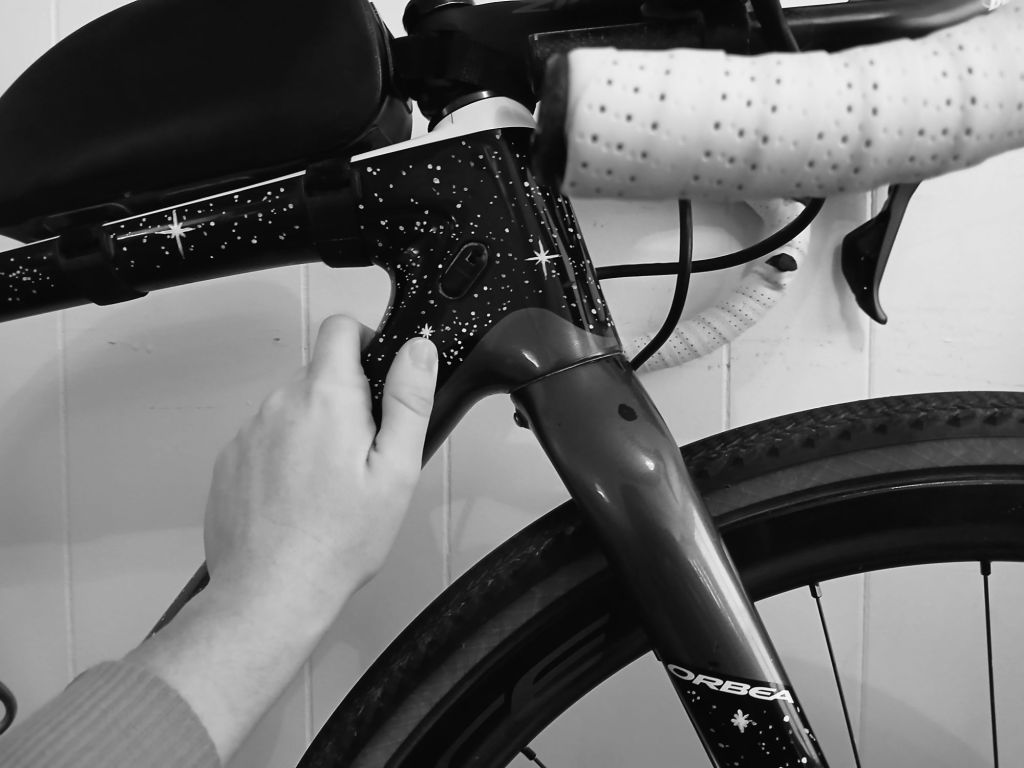
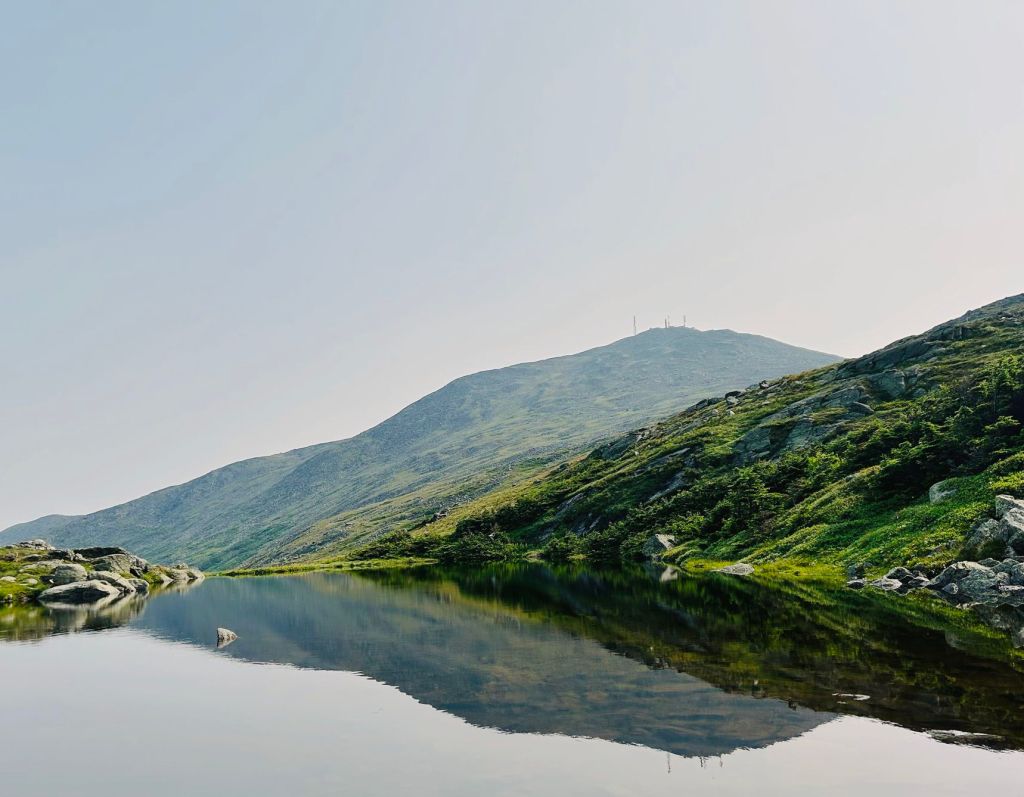




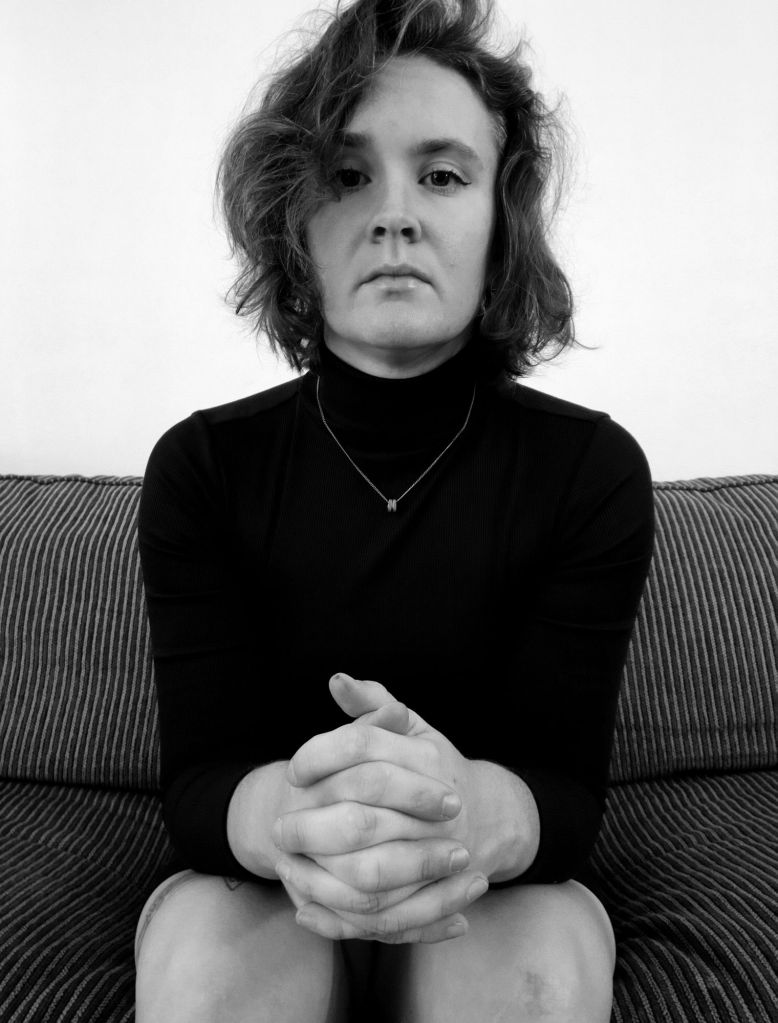
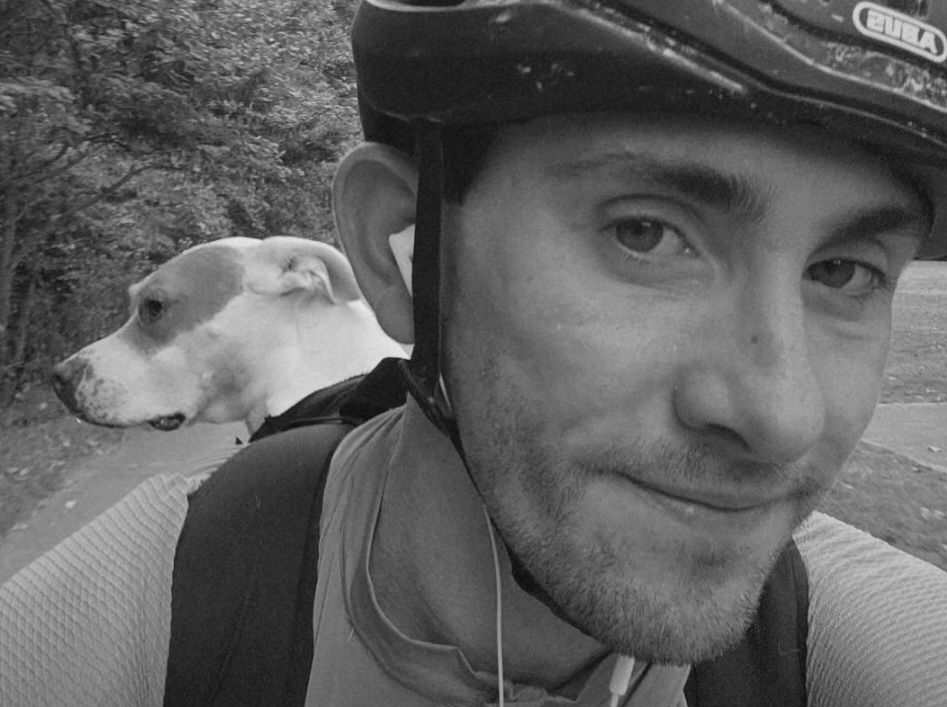

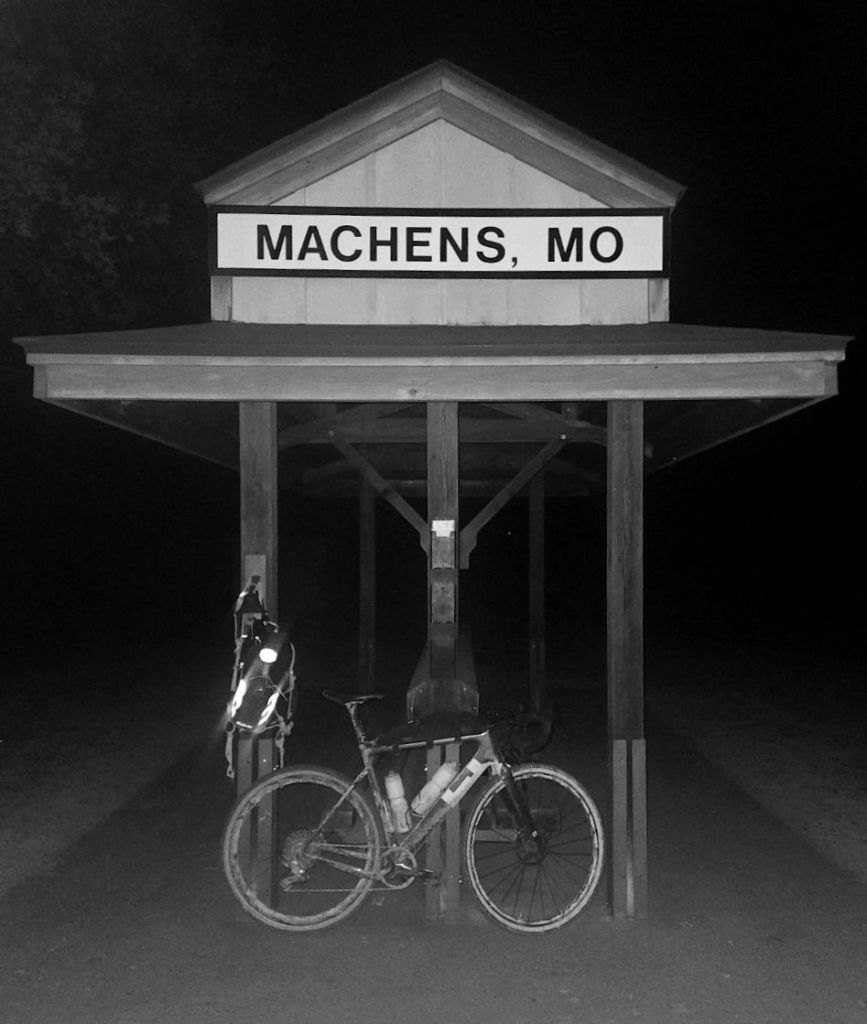
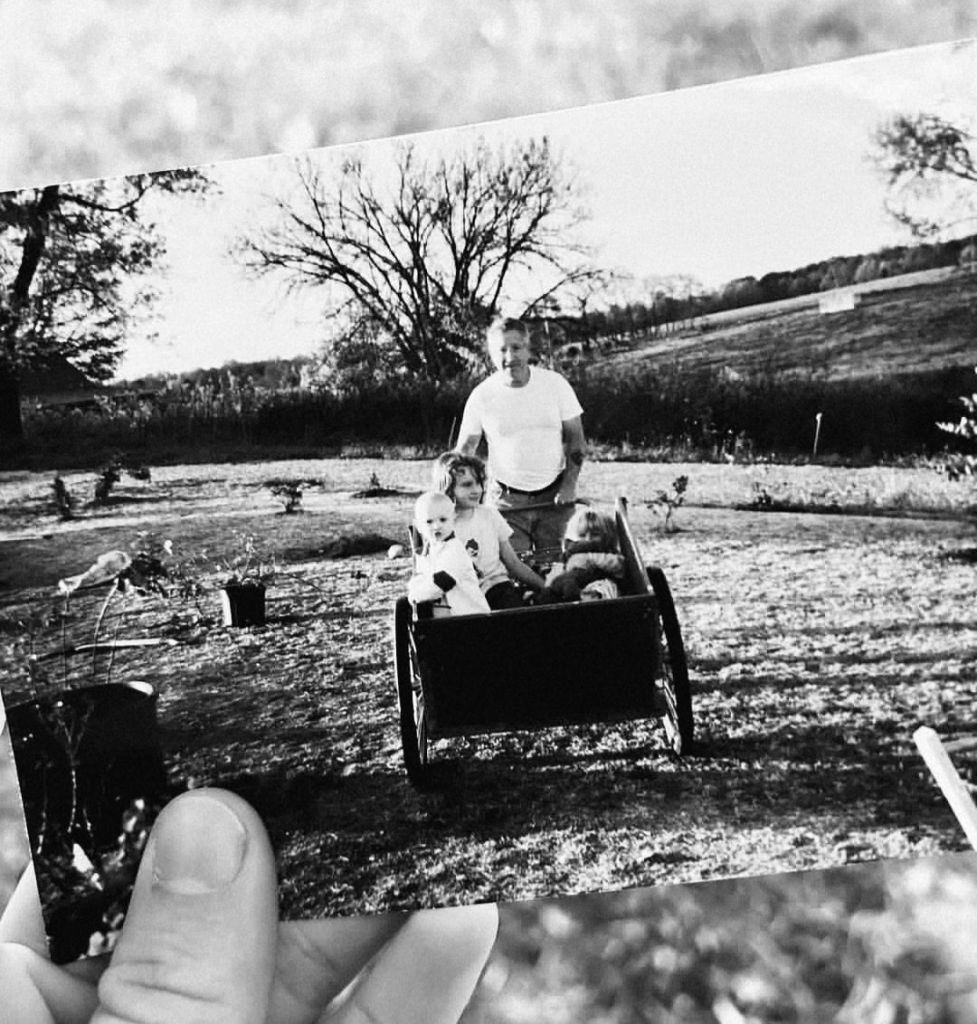

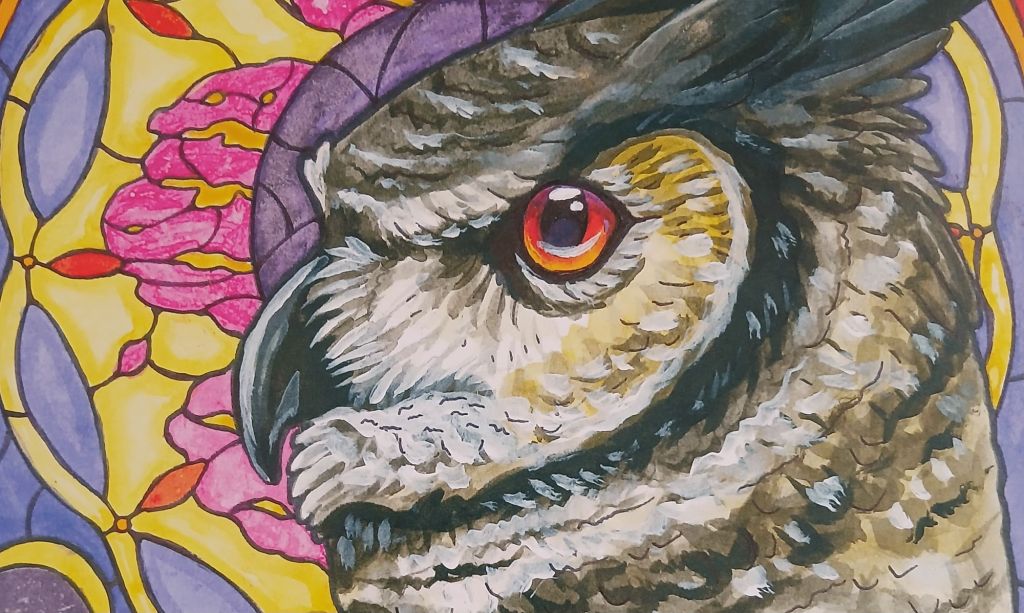
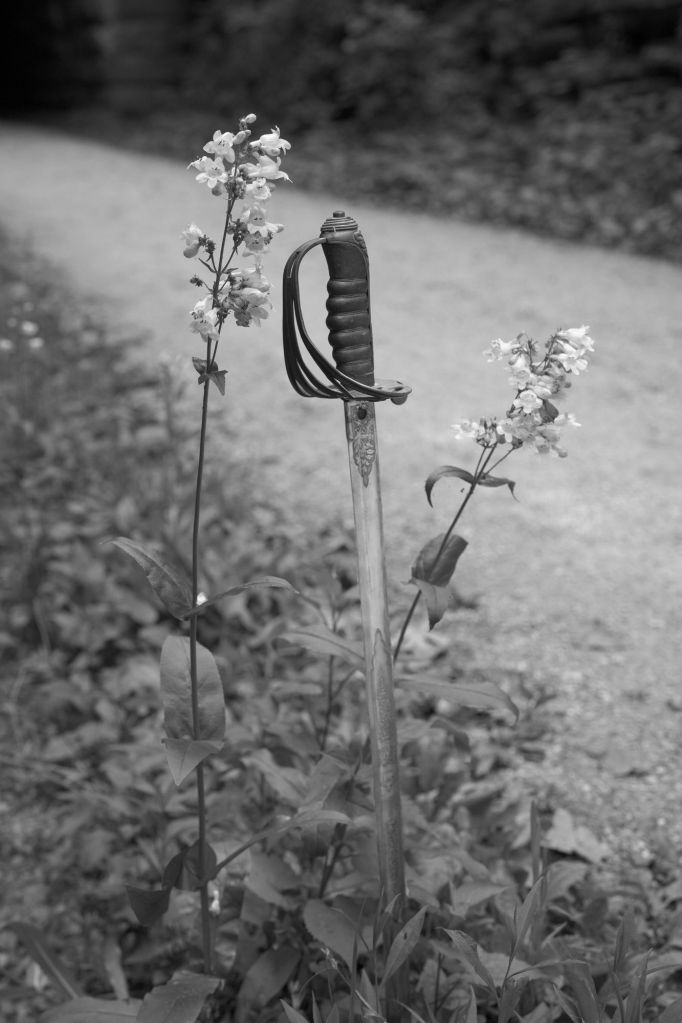
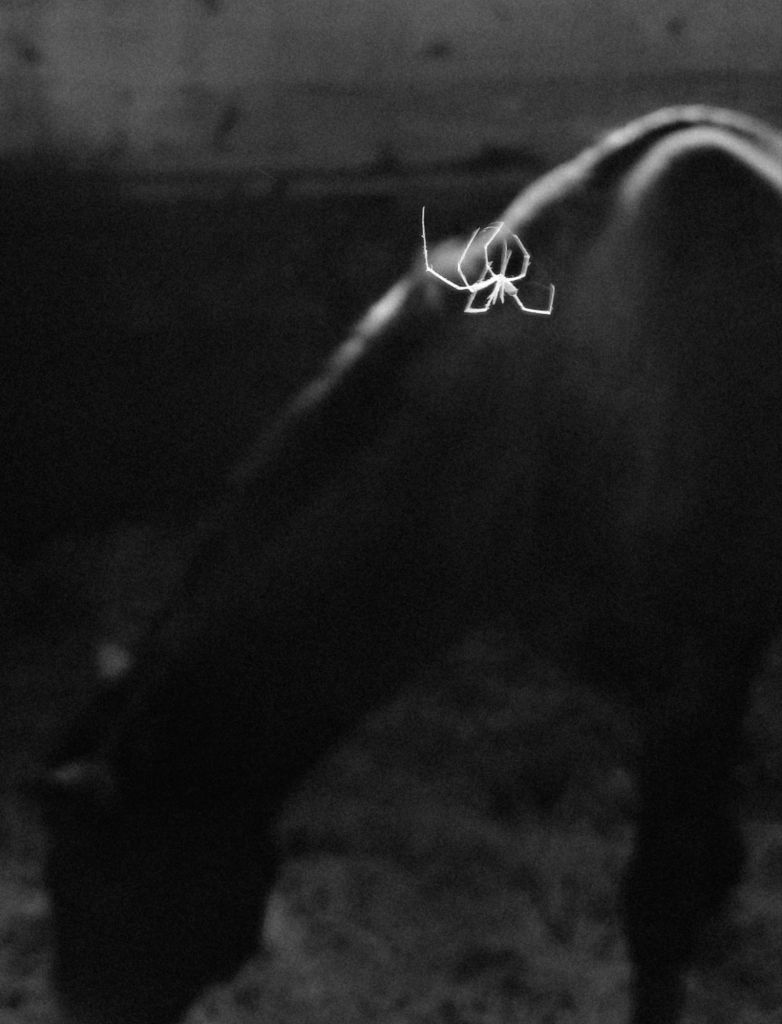
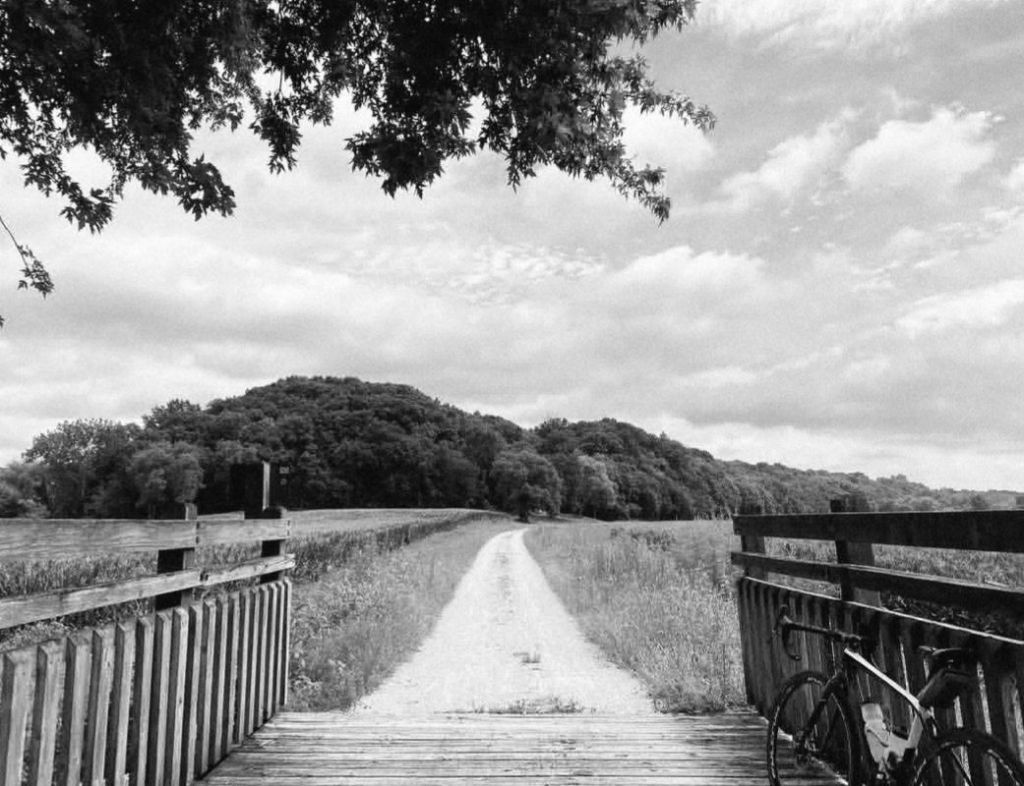
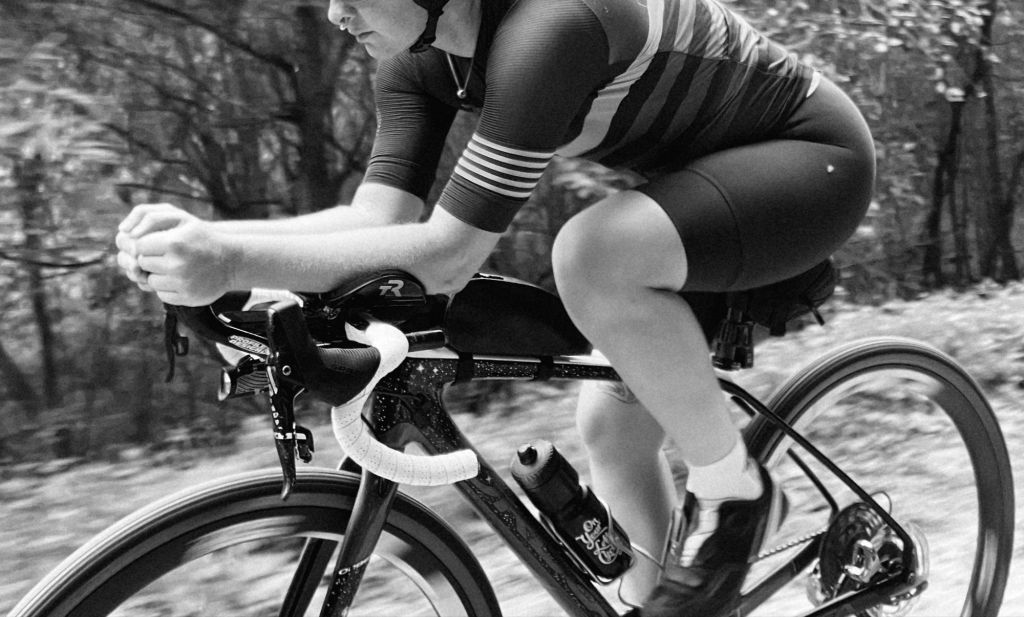
 I will the machine.