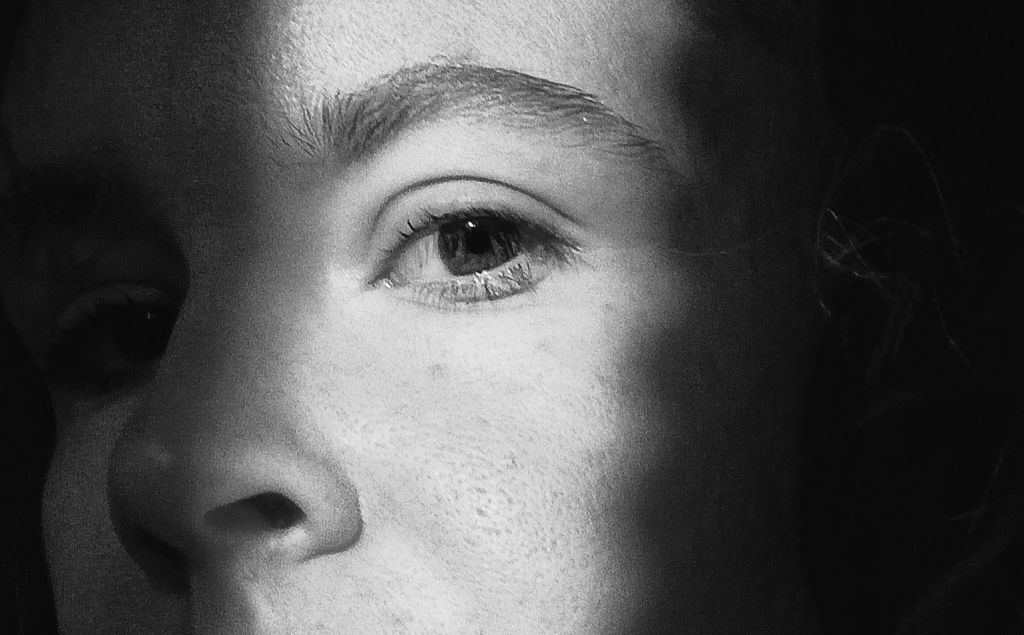
“You make everything a fight.”
Actually, I’ve realized I’ve tolerated too much again.
In summer of 2024, I moved out of my van and into a house with someone in a rural town. I had told myself that I always had the van as a backup in case that relationship didn’t work out. After having been threatened with removal and called “pathetic” for breaking down over the fact that I had to choose between abuse and homelessness, I used that insurance policy. I spent a couple weeks in a friend’s driveway before sending a cycling contact a text about my situation and was told “you can use the guest house.”
I had just started a new job after ten months of inopportunity. Two months in, my van became unsafe to drive and eventually broke down. I spent nearly three weeks taking the bike to work from the guest house while trying to organize a costly repair. Those 80-mile-per-day commutes crushed both me and my work performance, and my job cut my hours after my 90-day review. I came back to the house in shambles and asked the closest nearby support for help. I described the experience in tears to the homeowner, a friend, who had children near my age, and he told me they would not sit with me if I was going to only focus on the negative.
I was losing my already menial income again in a life where a van had already been the most stable “home” I had ever had. I was still grieving having to jump from temporary to temporary over and over, trying to find a foundation that didn’t require concession to control, but in that moment it translated to “Hey, this is a boundary of mine.”
You aren’t a person I can go to when I am coming apart. Okay, I understand.
Over the course of the summer, he encouraged me to go to school, to enjoy this time of my life because I was “being taken care of.” I was told I was “brilliant.” I was invited over for dinner with his family and on bike rides. I was told I was an “investment,” and was gifted a new bike frame to, in his words, “get me on a bike that matches the kind of rider I am.”
I was “being reparented,” he said. A man who had a reputation for being a voice of the community, once platformed me next to him, and rooted for the underdogs of the sport, also knew how much weight those words carried to someone whose parents had historically been chronically untrustworthy at best, and outright manipulative on the regular.
I started to exhale.
Another month passed and I got back to work at a horse farm that quickly taught me that I was not recovered. I struggled with continued burnout while trying to maintain my ultra dreams with a 300-mile time trial across the state that failed. I was still living in the guest house rent-free with a new roommate introduced to me by the homeowner. She was recovering from living in a small car for months, had no family support, and whose husband was in jail. She was offered a room to get back on her feet. The homeowner told me that if it didn’t work out, he would cue her to move on with “I have offers on the house.”
But I was reassured that I would not end up back in my van.
One day after about two months, I received a text at work from my roommate saying, “Come home please,” followed soon by a “Nevermind.”
When I got home roughly 30 minutes later, I saw two men leaning on my van with my roommate cornered in her car. I parked the loaner I had driven in the homeowner’s driveway and walked over.
“Please take your hands off my vehicle,” I said. My roommate’s husband, now out of jail, gave me the ol’ up-and-down as he stepped away and cloaked himself in smugness, while the 6-foot-something guy behind him had a general air of “Oh, f***.”
I locked eyes with her husband and asked “Do you want to explain what’s going on before I get it from her?”
“We’re just having an argument,” he replied in a small voice.
He wasn’t even supposed to be there. I told them both to step away so I could talk to the woman crying in her front seat. Her words told me a story of “not a big deal,” while her shaking voice and constant scanning for him while talking to me suggested “this is not safe.” She left with him that night anyway, and I told her to let me know if she needed anything.
It was a week or two later when he was arrested again for assaulting her in a Walmart parking lot.
He was inevitably released again under a protection order they quickly violated, and she texted me while I was at work that “they were at the house just getting food,” and “I don’t want you to freak out.”
The rule was clear.
Since verbal boundaries were not effective, I took my safety concern to the homeowner. He sat down with both of us and provided a lecture, and soda, about how we needed to handle this amongst ourselves because he didn’t want to deal with “roommate drama.”
“Why is my safety concern being labeled as drama?” I asked. Her husband had a clear history of theft and assault in public. I knew from a lifetime of exposure to domestic violence how those relationships don’t deescalate in private spaces, and she was not interested in respecting the space.
But a wave of low rage came across the homeowner’s face as they snapped “Why don’t you just tell me how big of a piece of shit I am.”
He let me know that he could sell the house so his wife could have a new car, but he wasn’t. And if I felt unsafe, I could just leave.
The next morning, he left cash for us to go work out our issues over pancakes.
He had previously told me this was “my house,” and that I was “the bearer of the law.” Because he didn’t want to be bothered, I delivered to her a 30-day notice to vacate myself, and she mostly avoided the house except for brief stops to pick up belongings. She showed up with her husband again, and I called the police to report him for trespassing. I had to leave for work, but the officer kept me on the phone while he viewed the man’s record and called for backup before going to the house.
He told me the previous warrant had been reinstated, and understood why I was concerned. He called me back later to let me know he was back in custody.
“Drama” was conspicuously missing in the officer’s language.
_____

The arrangement in the house was ever-moving. The homeowner and his wife understood rent was a tall order on barely $1k a month, and my pattern was one of being stuck in positions that expected self-sacrifice for low pay (see The Thoroughbred), or were built on inconsistent management structures that notoriously viewed me as a liability (I speak to problems directly, see… literally anything I write).
“I’ll get my pound of flesh,” he said when I verbalized the concern that I couldn’t bridge the gap. We worked out odd jobs for me to help around their house with, then the communication would stop. One day, he asked me to come over again for coffee, and among other things he said, “I’m not getting a return on my investment,”
and shortly thereafter,
“I’m spending too much time alone.”
Dear reader,
Because I write publicly about my own experience, the disclosure of others’ personal material does not weigh heavily on me. I live at depth. Oxygen is rich there. I feel a sense of honor to be a person others feel safe with in than zone.
So, when the homeowner eventually had me sit in his room, on a couch by the door, for another conversation where I said very little, disclosed how “women no longer look at me with awe,” and “my wife gave me permission to have a girlfriend,” I categorized it as objective.
He said I’m a friend. This isn’t pointed at me.
I received it the same way the two other times I remember hearing that same statement.
The comment about how I was nice to ride behind, how he thought horseback riding boots were attractive and was looking for me a pair (I no longer rode horses), calling me a “slut” when I shared I was dating someone within the local cycling scene, and references to how big he was were all innocuous beneath being called, “buddy,” “stud,” and “not prey.” I laughed most of it off.
He’s a little out-of-touch, but I can trust him.
I thought I was especially unobjectified by being told I was “harder than ten men,” with irritation when I was firm at an auto parts store for them not honoring a warranty. “I do business in there,” he then said.
He’s concerned I made him look bad?
I was raised by a 101st Airborne Brigade veteran, am almost unnervingly independent, and tend to be more suspicious of validation than flattered by it. I am serious, reserved, and view myself as “neutral” in presence and appearance in most contexts.
I also just did not want to see the boundary probes from somebody in control over the roof over my head.
He’s been helping me in a huge way.
And being transparent about my discomfort was a non-option because I had already seen how he responded when challenged.
I started to hold my breath.
_____
I used to get invites to rides early. Then, I got them 10-minutes before roll time.
They stopped when I asked for a little extra notice.
As was asked of me, I found a solid potential new roommate and sent the homeowner a text with the update. He replied, “That’s good news. We are also considering a couple offers. Was planning on talking with you.”
A couple of days later, I was summoned to his house and greeted with a general air of excitement over his new bike. He delivered the details of multiple options for the fate of the guest house, and transitioned into a monologue about his racing plans. He invited me to the race the upcoming weekend, and replied, “I can’t really focus on racing right now,” as the reality that the arrangement was ending was sinking in.
“Good,” he said.
And at some other point in a conversation about my housing transition, he stated “I am not getting my dream car, or chasing my dream girlfriend, I’m going to race my bike.”
The mention of the studio space in his own house he had previously mentioned as a safety net was presented now as an almost-forgotten afterthought. I also knew by now getting closer in proximity to this person was a very bad option.
Acknowledgement of my newest problem was condensed into once sentence amongst over an hour of his own goals.
“I’m sure the news doesn’t help.”
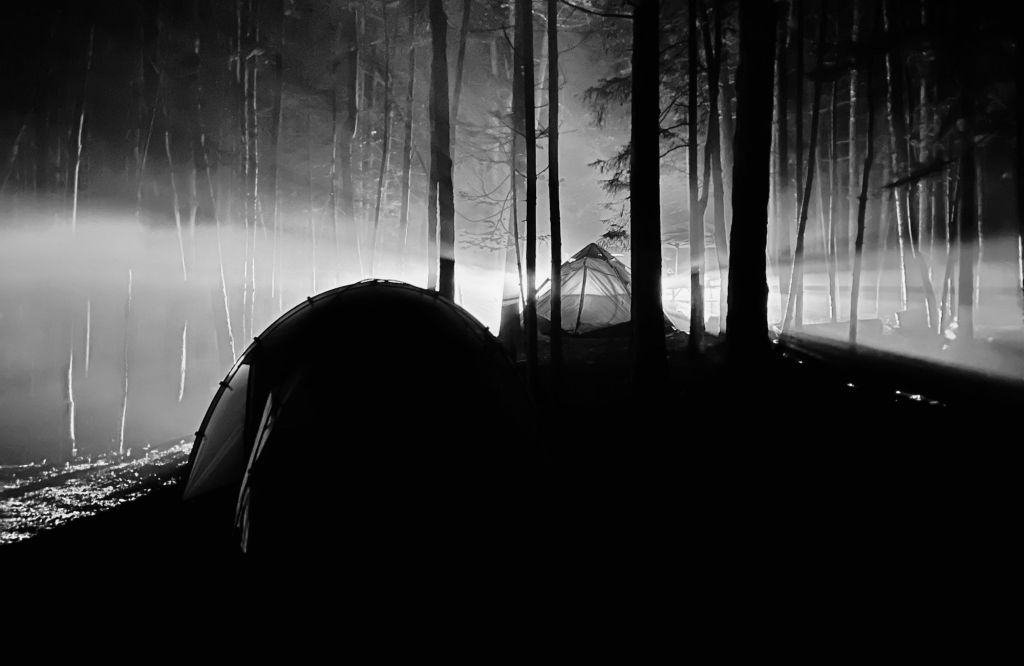
You have to notice where light isn’t to appreciate the entire image.
_____
That weekend, I did go to the race just to support my new partner.
The homeowner greeted us both once, and we returned the gesture. But later, he rolled up to us again, and says, “Are you mute today, Genna?”
That is bait. Do not take it.
“Yeah,” I said, flatly.
I could see his tension rise, and as I continued to stay unengaged in casual chat with someone whose decisions and words were now in stark contrast, he quipped,
“I just thought I’d say hello,” and rode away throwing one arm in the air.
I’m not really your buddy anymore.
_____
The willingness to trust is a manual practice after the environments of my earlier life. That work is why being more discerning when contradictions appear is a reflex.
The cold whisper at the back of my mind says I still believed too soon. I’ve been told I focus on the negative, yet the pattern of my own dissonance rests in everything I have given the benefit of the doubt.
When unspoken expectations surface, grand gestures start to feel less like support and more like trespass.
This is yet another thing I have to recover from.
And if you’ll excuse me for just a moment here,
while I continue to reach for more than countless rug-pulls have allowed,
I take that shit personally.
 I will the machine.