Before I can finish writing the story of another, I have to look at something about my own.
One day, when I was in elementary school, Papa took me to the park. I was spinning the faces of the tick-tack-toe game on the playground by myself when another little girl came up to me and asked what I was doing.
“Does it matter to you?” I snapped.
She looked at me with complete paralysis for a long moment, and then ran away. Papa heard the whole thing. He marched across the mulch and lectured me about how incredibly unkind I was, and made me apologize to her on the spot.
I remembered how badly I wanted to be one of the popular girls I admired in school. I connected that with how unwelcome they made me feel, and so I tried on that behavior for myself that day.
That was the first and the final time I tried to become someone I was not.
That memory stands out more vividly than most from that time period. And although I can’t be sure, I believe Papa’s quick motion to step toward my hurtful response, and forcing me to correct it on the spot, played a major role in me learning to both self-analyze and adapt reflexively.
He taught me to watch for my impact on others before my parents had the opportunity to poison my self-awareness with permanent doubt.
To the point that I started to turn that reflective surface back at them. I would narrate all of the ways they caused my siblings and I harm, and hoped they would be invested in correcting it the way I was taught to when I misstepped.
But it was intolerable to them, and I was punished for then seeking the right thing.
How disorienting.
_____
If someone was to say to you that they could see right through you,
what is the first thought that comes up for you?
That it’s some woo-woo shit?
Does it make you want to back away?
Are you curious about what they may perceive?
Could you then explain why?
Because the children of people who could not look at themselves, because they would not survive the clear image if they did, are forced to adapt in one of two ways:
Look away, from both the behavior that hurts them, and themselves,
or look closer.
And oh, how has choosing the latter both saved me,
and devastated me.
_____
I had to step back from someone important to me, again.
I do this a lot, and it’s almost always once I see that someone isn’t moving in a way that parallels their words.
And people do this a lot.
“I want this,” -> I will choose not to act on that right now.
“You’re so smart,” -> I will respond negatively to you not taking my advice.
“I’m a good person,” -> I will communicate to others that you are not.
And the space between,
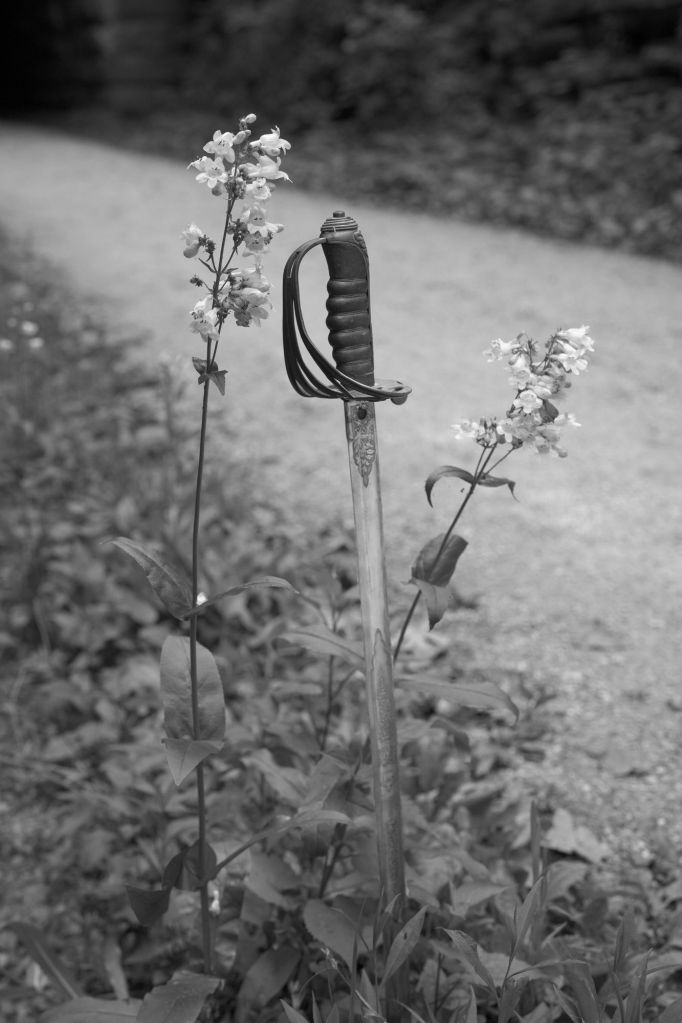
is where I draw my sword.
I had to learn sensitivity to behavioral patterns when I was so young in order to not lose my grip on what the truth was, and to predict the reactions of people that should have been a safe harbor.
Only recently have I learned that this sense can be used to recognize friends, too.
And so in spaces where I used to swing that blade at anyone who moved,
I just hold it up quietly and let them show me who they are.
And because the sword has two faces,
they see their reflection,
and I see mine.
And no matter how they choose to respond to their own clear image,
I never lose me,
even if I have to stand with only her for a while.
 I will the machine.