In March of 2023, I made a social media post sharing my intent on making the Trans-Am Nonstop bike race my next big target. Historically, I love putting the proverbial cart before the horse and talking big game about my plans at the risk of them falling apart because, well, I hold myself to them better that way. Still, it was an outlandish jump from single-day ultras and week-long bike trips with hotel stays where I had recognized my love for the long haul; I had come to understand there that going bigger just required more gear and the ability to evolve on the move. I learned how quickly the body adapts to excessive mileage as long as you’re eating plenty and sleeping decently. I set 2025 as my goal year to assure myself that I had plenty of time to train, save for quality gear, and because I’d be turning 30.
Here we are. Since that decision, I have learned through my fixation on mileage and speed data on my bike computer that numbers are limitations when they aren’t treated with due respect. Spend too much time trying to move too fast- overtrain. Set a strict date that doesn’t work out the way you hoped- unnecessary disappointment. Tell yourself you need to accomplish something by a certain age- realization that time doesn’t care about you or your goals. It’s all arbitrary, relative, and illusionary.
All of this to say that we’ve made it to the dawn of Trans-Am 2025 and what I thought I needed two years to get myself together for, I’d still throw myself at last-minute if I had the opportunity. Supporting yourself riding 120, 150, or more miles every day for weeks is not something you piece together by the seat of your chamois, but the instinct to gas it is still there. The resources aren’t there right now though, and that’s just going to have to be okay. We’ll work on it. Alternatively, I get to drive and work a camera for the media team of the race’s faster cousin, Race Across America, this summer and can probably learn a thing or seventeen before my time finally does come. I am already dreaming of how I’ll write about that experience. I also have the opportunity to film a short documentary of a rider in the pro field at Unbound Gravel.
But even while my big goals will sit on the backburner as I explore how to help tell the stories of others, I’m living in a hotbed of local gravel racing that I’m scrambling to get it together for. A whole host of events will happen within a two-hour drive from home in April and May, before I haul off for the aforementioned projects for most of June. We’ll see where the tailwinds push us and readdress the topic of ultra racing around then.
Spring 2025 Race Calendar
April 5th- River Road Classic, 65 miles
April 19th- Furry Fifty, 50 miles
April 27th- El Chupacabra Grondo, 62 miles
May 3rd & 4th- Tour of Hermann Gravel Challenge, two 100 milers!
May 10th- Muleskinner Gravel Classic, 68 miles
That’s a hot, HOT block of racing for someone who has been out of the game for a minute and is pushing the limits of a pretty clapped-out bike, but I’m hard pressed to sit anything out when it’s all basically on my doorstep.
~
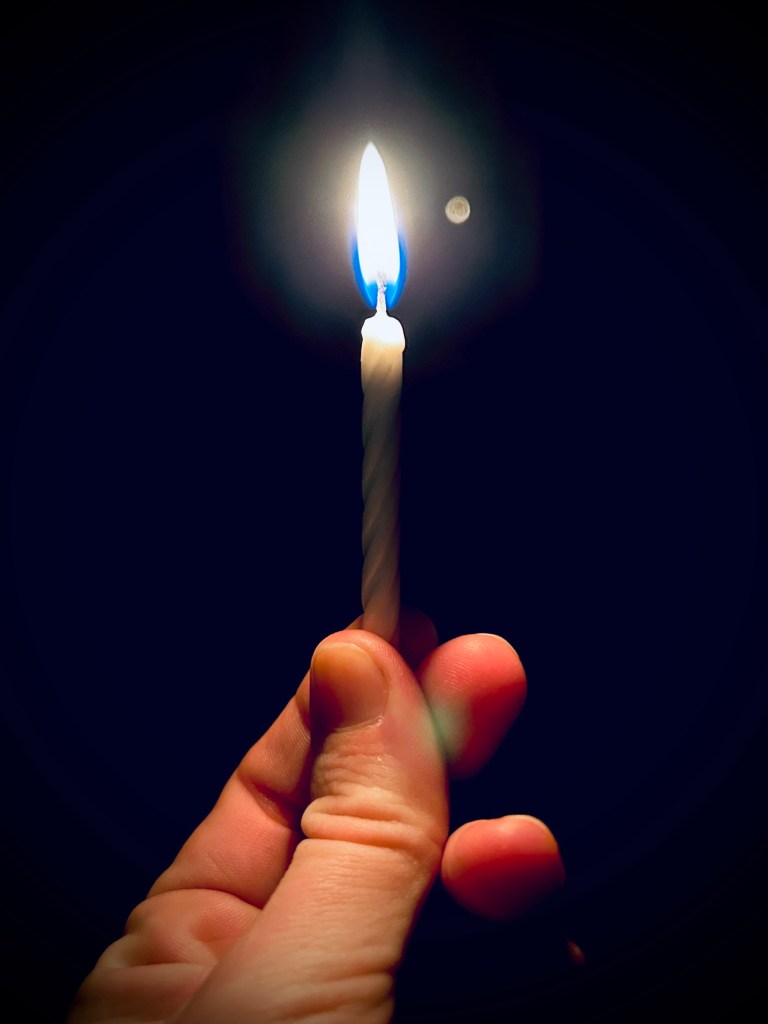
On my 29th birthday, I had a breakup. On my 28th, I experienced a mystery episode of severe abdominal pain that I suffered with all night and was driven to the emergency room for the next morning. Even though the occasion hasn’t meant much to me for a while, today I used it to daydream about the year ahead. I turned 30 today. I’ve been going grey since 19. With that comes a perceived loss of youth, but in some ways, I feel like I’m regaining one I didn’t get to explore fully the first time because I was too busy fighting. It’s taken this long to really unpack and let go and even though that work will never truly be complete, I’ve found myself capable of forgetting more often.
In May of last year I went down to Arkansas for an experimental new ultra race. The massively popular Rule of Three, established in arguably the most bike-centric city in the United States, introduced a 200-mile category and I wanted in. It had been a spring of seriously unsteady income but the organizers got me a sponsored entry and a host of friends helped me put the rest of the pieces together.
I took on the challenge with two objectives- add another ultra-distance merit badge to my proverbial sash and create a mini documentary of the experience with my phone. I found a handful of people also entered in the 200-mile event to ask one question, on camera- what are you in it for? Some seemed a little caught off guard by the question, and others delivered answers so nonchalant that I knew they were right at home on this horizon.
The race started at 4:00 p.m. the day before the standard 100 and 50-mile distances and we had a 30-hour cutoff to beat. At mile 70, around 1:00 a.m. after hiking my bike up a steep powerline cut that spit me out to a dead-end road, I called for a ride back to town. I was aware this race was going to be a little rowdier than anything I had ridden before, but I went into it knowing that I was ready to take that step up. My limit turned out to be the building unsafety I felt from the combo of loose dogs in the dark, no-trespassing signs my navigation insisted I disregard, 20-miles straight of mostly unrideable (for me) singletrack immediately followed by mud pits and criminally steep powerline cuts that all slowed me to a drag. My body was in great shape but my mind already wasn’t, and I accepted that this was just not my style of race and not a reflection of some deficiency of mine before a support car even got to me. I missed out on getting the video content and the full-circle story I was hoping for, and so I had to settle for a 90-second Instagram reel that I am fond of but am equally haunted by.
I still ache a little over abandoning the spirit of toughing that race out, but I had to call back that one question I had asked so many people before the race that I hadn’t taken the time to answer myself in entirety- what was I in it for?
To briefly touch on themes from my past posts, I’ve labelled myself (or maybe my imposter syndrome has) as a major underdog whose drive to excel in the sport of gravel and ultra-cycling is mismatched with the reality of my life. My circumstances pretty consistently tell me that welfare kids from hoarding houses that feel safe absolutely nowhere can’t access, let alone succeed in, big-time athletic environments that eat resources by the shovel and demand consistent social connections. Despite those voices I persist, much to the discontent of my easily broken heart.
And so I recognized easily that my answer to the big question was that I was in it in spite of everything- for the long haul and that one unsalvageable event wasn’t a threat to that. After a decade of chipping away at the confining factors that left me feeling so less than, I was rebelling again. I’ve experienced enough truly epic rides at this point that I didn’t allow one defeat to unravel that ideal for me, but it did remind me how fragile the pursuit of doing anything exceptional is.
I talk about it so often because as if that saga wouldn’t be trying for anyone, I’ve inadvertently associated my efforts on the bike with the vindication of my broken adolescence. And for better or for worse, I don’t really want to untie them.
I’m not sure I’ll ever write enough about the past to alleviate the weight of it, but ultimately it is time to direct these posts toward where I am now and where I hope to go, in spite of everything.
I’ve been living in a town of 1,600 people for six months and in that time have had the most difficult time finding a stable new job (there are plenty of unstable ones). My boyfriend, Jeremy, has been propping me up and insisting that I not fold for something that doesn’t truly work for me, but I couldn’t have predicted it would be this difficult to even get a call back, and so I’m starting to sweat that my financial hiatus from racing might have to be extended into yet another spring. In the midst of that mess, I’ve been mitigating my job-board doom-scrolling and obsessive “apply” button-smashing by writing more, painting more, and reaching out to individuals I know in fitness and media for advice on potential longer-term ventures that complement life on a bike. The van has been parked on the curb, driven only every couple of weeks, I got my ass kicked by covid for two weeks, and I’ve gone through the motions of indoor training, riding outside when I can, running a 5k or two a week around the entire town, and will begin strength training again soon. I have some local target races I’m clutching to keep my goal-oriented capital-type-A personality engaged, and rejecting the expectations that come with turning 30 next month. Trans-Am is still the long game we’re playing even if it kills me.
I have to remind myself daily that even though I’m deeply discouraged about how much I can’t do, I’m not allowed to let the mission slip away by not being ready when I finally can again. And as much as I am hellbent, maybe to my detriment, of creating this big story for myself, I am even more committed now to talking about it despite the massive political elephant in the room that might have me sounding a little tone-deaf. The loudness of all of those cogs turning literally keeps me up at night while I quantify the burden that passion has been on me, and I’m just going to let this life make whatever example out of me that it wants to.
Here lately, I’ve been going to bed at night and wandering Grandma and Papa’s house while the worries of my adult life wait outside. I wake up in the Blue Room; it’s 9:00 a.m. and Papa insists I’ve slept long enough. I walk down the hallway, past the laminated world map with the USSR still labelled on it, through the living room with the tan carpet and the slightly purple, maroon curtains, past the basement door where I threw up once, and into the warm kitchen. The morning sun touches that one corner of the linoleum floor again while the subtle smoke of breakfast dances above it. The woods through the window are glittering over the grass that was sometimes charred after Papa, by mistake or purposefully, let the flame in the burn pile get carried away. I open up the glass cabinets and remember the bowls with the stars on them, the mugs for coffee I hadn’t acquired the taste for yet, the tall, clear, angled glasses I would pour Diet Coke into for Grandma, slowly so that it didn’t fizz too much and go flat. I take the plate of eggs and bacon and grits and walk into the sunroom, where they both sit, and eat with them while Fox News blares on TV.
I ask Papa if I can play on the computer and then go swap between countless CD-ROMs. I run with Spirit the Stallion, giggle at the characters with Reader Rabbit, shiver as Mathra flies overhead on The Cluefinders, and run from a t-rex on Dinosaur Adventure 3-D. Inevitably, I can’t sit still anymore and head outside to run the trails Papa cut in the field with the bush hog and look for rat snakes under sheet metal. When I come back in he scolds me for eating directly out of the peanut butter jar, but forgets about it when I tell him I caught a catfish in the net he had made longer by duct taping a 2×4 to it. The fish had a hook stuck in its mouth and I still don’t know if he ever figured out I had stolen one of his poles, couldn’t get the fish off, and cut the line in panic.
In the evening, without fail, Papa calls that supper is ready, and I join them for another meal. Tonight it’s “shit-on-a-shingle,” ground beef and gravy over toast. I clean my plate and put it in the washer, and as the light outside fades, just before bedtime comes and I hear Papa push in the foot of his recliner from another room, something shrieks at me- “you’re so ungrateful.”
Through the ether, my peace is dispelled by the wrath of How Dare You, an invisible cobra that spits venom anytime I remember what I had and through it recognize what was stolen. It’s like she feels personally betrayed by the fact that I knew what love is, and is not, and the girl she flexes her brutish dominion over can’t find that in her heavy shadow. From light into dark, we both grow angrier, but surely I can’t understand her plight because I am so small and clueless and ungrateful and a spoiled brat toward everything she has provided for me too, right?
But dear reader I met Gratitude so early I lost memory of her first lessons, and her and Submission were never at the pulpit together. Gratitude was quiet, simple, and naked. She would often be in rooms and recognized only as the heat coming through the vents on a winter morning or that single streak of sun on the linoleum floor. She needn’t announce herself because those who knew her well could trust her to stay where she belonged, and understood the breathless language of her ever exiting the room. She didn’t leave when Suffering would scream, and merely tipped her hat when Grief walked in.
Gratitude answered to no one, and she was not to carry the burdens of service.
Nor was she a debt to be paid.
~
It’s been a year and a half since Papa died and almost 20 since I last lived with him and Grandma. A few nights ago I experienced the most vivid dream that he had come back to visit with everyone. I didn’t get many words with him before he said he had to go, but as he slipped away again I held his hands and said “thank you for being my dad.”
When I moved back in with my parents, Gratitude waited for me. She planted her feet and stared blankly despite my parents demands. She was stoic, feral, and indomitable. She wouldn’t come when announced on stage and said nothing each time the knife was held to her throat. She’d side-step every request, politely decline every invitation, and retreat into the cosmos somewhere between that moment and the next time Memory brought me back there and only on her perfect timing, came back to me in golden light.
And so now I leave the door unlocked for her to come in when she pleases, keep a mug just for her in the cabinet, and talk with her about how the smell of breakfast makes me shed tears more frequently than anything else. I tell her how on the day Papa left I had made the coffee I had acquired the taste for and left some of it as a toast to what we might have talked about over it, and then I thank them both.
I haven’t yet become familiar with a successful competitive athlete with a story like mine. I’m sure they are out there. I hope they are. My whole “why” in endurance sport is to serve as an example of what can be done anyway, when the social support (namely, family and more than a few friends) that is so frequently a factor, the proverbial village of helping hands that it takes to reach a high level, is absent. The worry that maybe it can’t is the noisy, nocturnal rodent in the ceiling that I can’t seem to run off.
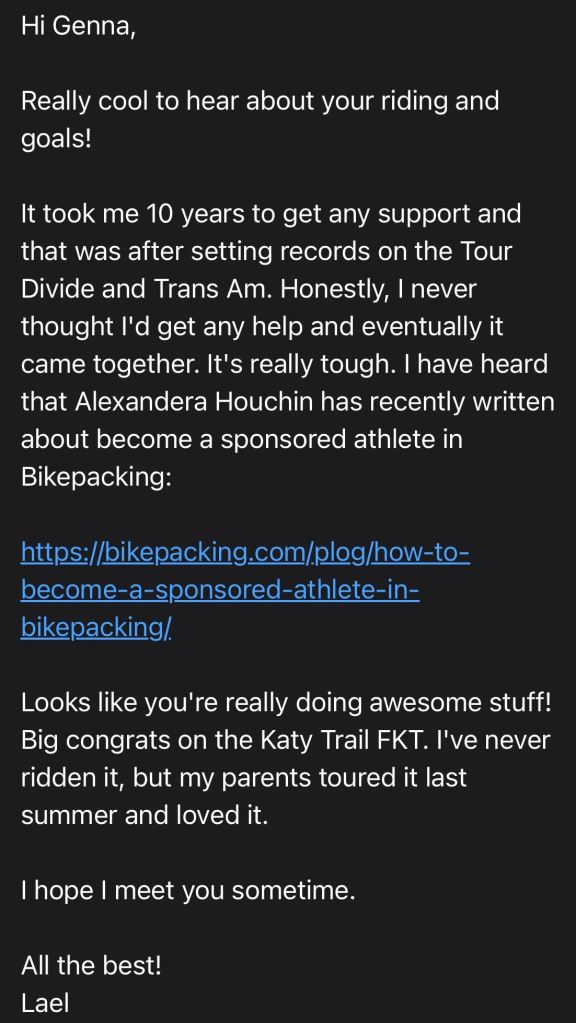
In April of 2024, I sent a handful of emails to prominent female cyclists with questions about how they found sponsors, teams, struck the balance between responsibility and the pursuit of more, and I got exactly one reply. It was from Lael Wilcox, ultra-endurance rider, Trans-Am winner, and now Around-the-World record breaker.
I had been following Lael passively for a while. Having grown up without any real role models, always fervently inspired and guided by something internal instead, I never identified any idols in my adult life either until recently. Something in my shift from interest in single-day podiums to point-to-point, multi-day events got me paying more attention to the voice and storytelling of those types of figures. From my very brief experience with bikepackers, people that embark on self-guided, self-supported, self-motivated, solo-survivalist passages are on a different wavelength than those that chase extreme output for a few hours to a day and then retire to climate control and hot showers at the end of the night. For myself, high-octane racing was the pure essence of sport in all of it’s golden and shadowed corners; bikepacking was temporarily stepping into an entirely different life.
Although Lael’s epic accomplishments were unfathomable to me and dwarfed my solo expeditions that only lasted a few days and a handful of states, reading about her beginnings felt a little more relatable than I was used to. Stories of working in restaurants to save money for races and riding to them, riding to the start of already stupid-hard events was familiar. And having felt the frenzy of covering ground daily, the silent thruster that seemed to draw more power the deeper into the fatigue and the muscle soreness I got, being fast over days, weeks, somehow seemed less daunting than being fast for 100-miles.
It inexplicably looked more possible.
And so, when Lael set off from Chicago to break the women’s world record, with the campaign of it also becoming a global community ride for anyone to join her at any time, I started smacking the ceiling repeatedly with a broom every time that animal started scrambling, knowing it wouldn’t rid me of it but at least to get it to shut up every few hours. I kept eyes on her 170-mile-per-day average on Strava for the next three months.
In the meantime, I continued having the most unpredictable year since I had moved away from my home city. Through hardship I had always trudged through by having some sort of beefcake ride or race plan on the horizon, and had historically been able to scrape just enough resources together to make them happen. But this was the year of rug-pulling, and every single plan I had for the summer fell apart like a sculpture of toothpicks. I did take one big leap-of-faith and moved back into a house with my new boyfriend and began the decompression ritual that comes with letting go of a life on-the-fly, and before I could dare to pencil much in on the calendar again, Lael was back stateside, cruising the coast of California toward the start of historic Route 66- her beeline to the finish of her record attempt back in Chicago.
I now lived further from her track through Missouri than I had when she announced her plan, and I started pulling wires. My new boyfriend, Jeremy, was familiar with my wildness on a bike anecdotally, but hadn’t seen the intensity in use yet. I told him that Lael was on the way, and that I wanted to meet her, and that I wanted to do it in ultra-inspired fashion- a 450+mile round-trip bike ride from home to a strategically-planned intercept point, ride 75 miles with her to just west of St. Louis (if I could keep pace on a loaded bike), and be home in five days. I needed a lot to line up just right. I needed to predict her timeline that was not publicly posted, I needed the job that I had just started and had tried to ghost me to pay me so I could afford a couple cheap hotels, I needed the weather to stay temperate, and I needed my engine to run right for back-to-back days of hard riding I hadn’t been training for.
And it all did. Flawlessly.
I was ready by a Saturday to roll out on a Monday. Saturday night my overthinking habit served me in an unusually positive way- I realized my tracking math was wrong and I needed to leave a day earlier. After shit, anticipatory sleep, I began rolling south on Sunday morning, bound for the bunkhouse just east of Jefferson City, MO on the famous Katy Trail.
The day was easy despite relearning to handle a bike with weight on the handlebars. 40 miles of rolling, buttery pavement dropped me at my first luxury gas station stop of the trip, and from there it was all flat, crushed limestone for 50 more to the spur into the dead-on-Sunday state capital. I hit the Subway downtown for an actual meal ten-minutes before they closed, and headed back to the trail for the last 13 miles to the bunkhouse.
For just $10 a night, the Turner Katy Trail Shelter provides two floors of beds, a shower room, basic kitchen, and secure bike storage. The only drawback is that you have to pack in your own bedding. I had crushed a fitted twin sheet into my bar bag and precariously buckled a travel pillow onto my saddle, but with the night dipping down into the mid-40’s that night, I was kept awake for all but a few hours by shivers and a hyper-awareness of wandering brown recluses.
Monday. This was the day I made the unknown haul to Rolla from Jefferson City (85 miles), through territory with no activity on cycling heatmaps. For expediency I knew I had to risk state routes as the backroads would all be unpaved, steep, and slow. It turned out to be the most beautiful stage of the trip as I entered the Ozarks and was met by rolling golden grass and rock walls, dipped in and out of river-valley towns, but the climbing only became steeper and denser as I neared Rolla. Over the crest of the last major climb, a cyclist who introduced himself as Matt ran me down and greeted me with “don’t usually see roadies out this way, they’re scared of the hills.”
Yeah buddy. I told him about the mission I was on and he led me on a safer route to my hotel. We exchanged Strava handles and I carried on up the road.
I checked into my hotel and immediately checked Lael’s location via the satellite tracker she had been carrying for her entire trip. She’d crossed the Oklahoma border into Missouri the night before, and stayed overnight just east of Joplin, roughly 170 miles away. She was now only about 60 miles from me. I had chosen Rolla as my meet point for two reasons- it was the closest town on her path that I could get to fairly directly, and it was my guess that she’d end her day’s ride in or near there based on her daily average. Her route across the world was visible from the start, but her stopping points were unknown without talking to Lael yourself. By this point, it was still early enough in the afternoon that I started to predict that she might just blow right through town in the dark. I needed to take care of my needs after 188 miles of heavy riding, so I cleaned up, grabbed some Steak-‘n-Shake from next door, and recapped with loved ones on the phone, refreshing the tracker anxiously every 20 minutes. I unloaded my gear from my bike and laid out a fresh skinsuit, and boiled with anticipation as I prepared to jump out onto the road and meet Lael Wilcox in the dark.
At 9:04 p.m., September 9th, Lael crested the hill in front of my hotel as I stood over my bike with lights flashing. An escort vehicle following with its hazards on was a surprise to me, but as a hyper-vigilant person, it let me fully engage with Lael in conversation and not sweat passing cars. I asked her if the driver was Rue, her partner and photojournalist that had been documenting her ride.
“No, it’s some locals that wanted to escort me to St. James because the roads are bad.”
I hardly expected the worst roads she had ridden in the world, based on safety or surface, would have been in Missouri, USA. She insisted they had been great. Through the small-talk I heard the urgency in her responses. I had assumed that by this point in her effort, having only days to go in her globetrotting ride, Lael would be quite casual; instead, I recognized a similar intensity that I spend much of my life in. She was present, but she was on. I learned she was now trying to reach Chicago by day 108- two days earlier than her goal time. As we cut the darkness, I told her the bullet points of my life on a bike, that I lived in a van for five years to keep the dream alive, and that she was the only email that was returned.
“Really?” the sharpness broke with what sounded like genuine surprise. “I really try,” she said. We talked briefly about finding sponsors in the ultra-endurance world, and she asked me what kind of racing I did prior.
I said, “Criteriums, cyclocross, primarily gravel after that, but I don’t really jive well with most of that crowd.” She cracked a laugh.
She told me she got exactly 7 hours of sleep every night, and that it came easily. As one who sweats everything, is kept up late into the night and hawks my alarm on race mornings, I was envious of that off switch. I avoided as many of the questions that I would have expected her to hear on loop throughout her trip as I could, while riding at her shoulder at 20mph along the frontage road of I-44, but made it a point to ask the most pertinent one to me at the time- “Where are you stopping tonight?”
“Sullivan!” she declared through the wind.
40 miles further up the road. My stomach dropped, but I was hell-bent. I told her I had planned to ride a chunk of the next day with her and asked what time she guessed she might start again in the morning, and started running all of my internal clocks. 30 minutes after meeting one of the few people I have ever genuinely revered, I bid Lael goodbye and let her know that I hoped to catch her in Sullivan in the morning. She went right, I went left and turned around at the entrance of a gas station.
“Genna!” I hear from the window of the pickup that had been behind us for ten miles as it turned behind me. How the heck did this person know my name?
It was Matt, the chance cyclist that had found me earlier in the day. Intrigued and inspired by the story I had told him about Lael and that I was on a mission to ride in her wake, he had come out to insure an uneventful ride out of Rolla. Like a plot device come to life, he and his excited daughter gave me a fast lift back to my hotel so I could more quickly get to bed and prepare to go find Lael again first thing the next morning. Like a cheesy sitcom joke, sleep didn’t come easily.
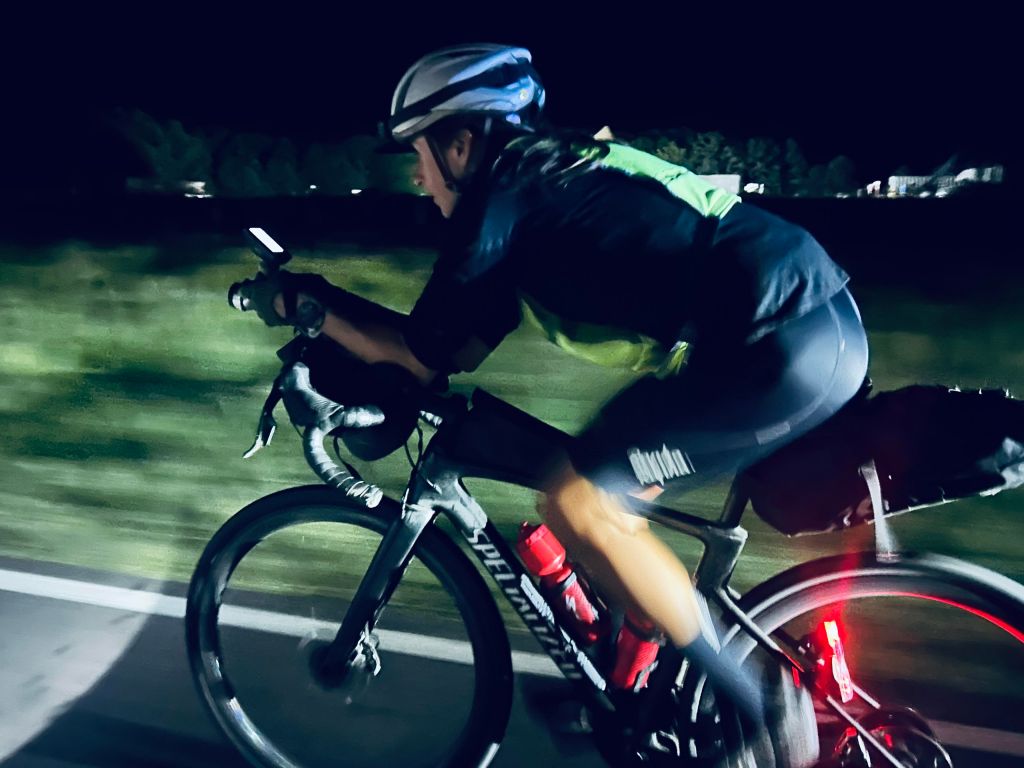
I was on the bike and headed to Sullivan by 4:50 a.m. It was 49 degrees, completely dark, with some fog hanging in low spots on the road. I put the one t-shirt I had brought with me on over my skinsuit for minor protection from the crisp draft I was very underprepared for, with the spirit of “deal with it, bitch, we gotta go.” I kept the pace higher than usual for a loaded ride, caught between trying to keep the engine warm, and trying to cover the 40 miles fast enough to relax my sore legs for a moment before trying to keep up with a world-record-chaser. I got to town at 8:20. I took my goofy shirt off and refilled my bottles in a park bathroom across the street from Lael’s hotel, then decided a few minutes later to grab a quick breakfast from the gas station. I hawked the tracker watching for the moment it went live again so I didn’t miss her exit. I rolled over to the hotel entrance with a container of biscuits and gravy and sat on a bench. I opened the lid and took a bite, and then looked at the tracker again.
It was on, and showed her headed east away from the parking lot. My heart stopped and instantly shot through my throat. I threw my barely-touched breakfast in the trash can, grabbed my bike, and hauled out of there in full aero-tuck with a growling stomach. Crushing it through town, I took my phone out of my pocket and checked tracking again. I was gaining. A few minutes later, headed away from businesses and out toward the frontage road again, I noticed I was now ahead of her location and I slowed to stop. I rolled onto the edge of the road and pulled out a Little Debbie fruit pie from my handlebar bag, and ate it while I waited for Lael to appear over my shoulder again. The tracker showed her stopped at and intersection for a while, so I took a moment to breathe in some relief.
It was then that I figured out the tragic delay in the tracker that undid the story from here forward. Another update, and she was somehow ahead of me again. She had been the entire time, and all of my waiting put me what was ultimately ten minutes back. Still, I got back in the saddle and flat cooked the pace for nearly an hour, full-throttle over every roller, hunkering down in every straight, pulling my phone out every few minutes to see if it was doing any good. Eventually, I encountered road crews doing repair work. I asked a worker in passing if another cyclist had come by recently, and he said “yeah, about ten minutes ago.”
I kept the pedal to the floor into St. Clair, losing all confidence but still hoping the silhouette of another bike would appear over the crest of the next hill. Once I found traffic again, now at the end of my range for holding that speed with a packed bike, I turned off into a Casey’s parking lot, officially giving up the ghost. I grabbed a Red Bull from inside to trip the brain’s reward system and distract myself from my disappointment, my perceived screw-up. I sat down on the curb and stared at my phone. I gave myself a few minutes to pick myself apart, and then a large group of cyclists rolled up from the road. They began talking to me, asking me where I was headed and where I had come from, and I told them. Many of them hadn’t heard of Lael or her ambition at all, and after a few minutes, I became aware of how much more interested they were in who I was and what I had accomplished just to meet her than they were anything else. Someone chasing a world record had just surged through town not long before, but they just wanted to know about me.
I said goodbye to them and started the last 30 miles to my next hotel. I rolled into Eureka physically sound, but emotionally frayed. I sat down at a Mexican restaurant and ordered a jumbo margarita on the rocks, queso, and a chicken quesadilla I had to force myself to eat. As is the way of the ponderer, I let my guard come down and asked myself the internal questions about how I, a person that historically removes herself from the path of others and carries a nearly unbearable tension when approached by strangers, could only recognize the true intensity of what I myself was doing through the recognition from strangers. I had accomplished my mission to meet a legend, albeit briefly, but I hadn’t gotten to ask her the larger questions and learn more about her process to the top.
I was denied any more opportunity to draw comparisons.
I was gifted the freedom to continue to wonder. To not count myself out because what advantages someone else may or may not have had.
I punched the end of the broom through the ceiling and heard that obnoxious animal hiss, and saw golden daylight through the hole.
~
That evening on the phone, while soaking my sore legs in the tub, I told Jeremy that I was ready to be home. I laid out my plan to cover the distance of the last two days of my trip all at once. At 6:00 a.m. the next morning, I headed away for 189 miles home, on fatigued legs, at a large calorie deficit, and with an extra large band-aid on my rear tire to cover a gash that you could see the inner tube through.
I finished the ride just after sundown, faster than I had ever ridden that kind of distance, with a loaded-down bike. 462 miles inside four days, alone.
Haunted by something that just won’t let me stop pushing.
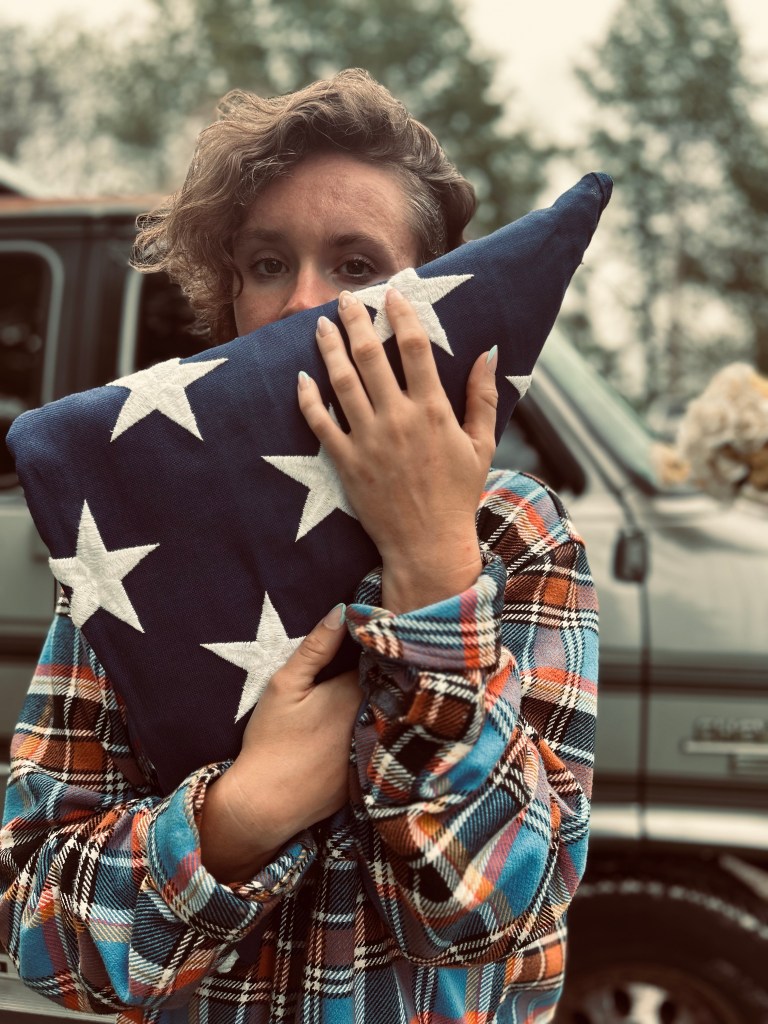
I am compelled to begin with a disclaimer. I refuse to write on the surface of things and the story I tell here is intense. I am a decade removed from the life I talk about ahead, which lends itself to forgetting detail. You’ll have to excuse me, I was a kid. I am obligated to write it as I experienced it, and the natural consequence is that others that have had their hands on it may not be portrayed in the most flattering light. I don’t deal in gentle things, but I know gentleness from its absence. I forward an apology to the aforementioned, even as the major characters have long been aware of my intent with my writing. I owe a particularly strong apology to Papa, for not getting over myself and giving this the same fervor and time that I do to everything else so you could read some of it before you left. The rare grace you gave me before your time came grants me extra courage to continue anyway. I hope today finds you well, but I also hope it finds you honest. I’m breaking a chain of generational abuse by doing so myself. Some may consider my tone rather graceless, if not scathing, but there is nothing soft about what I had to endure as a child and I don’t obligate myself to make it comfortable. The first gift I was given in life was the ability to recognize harmful behavior from the adults I should have been able to trust. The second was the instinct I had to successfully remove myself from it and forge an identity that runs under its own power, and is fueled entirely by will. I’ve chosen to use them both. That was the original opening to this, but I already feel pushed to make an addendum. “Be attentive to the repercussions that might cause for your future. The story you tell is from your perspective, and not deemed the whole truth,” is the response I received after sending my dad a heads up that this post, which I have been struggling with since February, was going to be made. I made it clear months ago that this was imminent. Dear reader, I’ll leave the interpretation of that response up to you, but I must first point out that I have lived the repercussions already. That’s what this is about. Content warning: These passages contain themes of abuse, suicide, domestic violence, and other subjects that could be uncomfortable for some. Reader discretion is highly encouraged. ~ There was an accident when I was an infant. I was taken to the hospital with symptoms of shaken baby syndrome, and consequential cranial hemorrhaging, after I had been left at home with my dad for a day. As evidenced by this writing, I made a miraculous recovery. Prognosis for brain injury in infants is generally very poor, and if survived, often results in a person going through life unable to reach appropriate developmental milestones, and requiring assistance in basic care for the rest of their lives. I was removed from my parents custody and placed under legal guardianship with my maternal grandparents. My mom and dad lived on adjacent land so there was never much physical distance, and they remained a part of my life. I remember my mom using this event as cannon-fodder against my dad in their countless, high-octane fights throughout my childhood. I obviously had no memory of it to harbor any feelings about it myself, and I have to recognize the weight of the distrust and anguish my mom would have endured in the event of such harm coming to her child. From all accounts I ever heard though, it was just an accident. Not the result of malice, just negligence. I’d also consider it a precursor. Come with me now to picture day, first grade. I remember my deep blue velvet dress. It’s still my favorite color. I get off the school bus at my parents house and walk up to a locked front door. I go around the house to find the side door is also locked. There isn’t a car in the driveway, but after my mom’s collision with a dump truck with my grandma and I in the car (which I credit for my inability to sleep in a moving vehicle now), it was usual for my dad to drive the only family car to work. At this point on the timeline I had reasonable free-choice of if I was dropped off there or at Grandma and Papa’s but… did I mess up this time? Am I in trouble? I panic, despite their house being in my direct line-of-sight. I run across the road and try to climb through the barbed-wire fence that borders their property. My dress becomes snagged, and my legs are scraped through my tights as I begin to cry uncontrollably. This might be my first memory of a helplessness and entrapment that would become a central theme of the years to come. I free myself from the fence, and run through the tall golden grass with my backpack swinging, across the cow pastures at the corner of McPhillips and Black Chapel Road, to the house of those who always came to my rescue. I burst through the front door sobbing, quickly consoled by my grandparents who, if I remember it correctly, might have laughed at how big of a distance six-year-old me perceived that 1/2 mile or less of unobstructed Indiana open field. I never felt unsafe when I was there. Not when I ran outside in rural darkness and heard the shrilly barks of coyotes nearby, and not when I was brought there when my parents were on another tirade and I needed to get away. They consoled me in the sunroom where I looked over that field through north-facing windows- the same windows where I would narrate the movements of the cows through Papa’s binoculars in a Steve Irwin accent, where I would look past the barbed wire at my parents house that was not truly home. The house that my last memory of was as it was being hollowed out by fire. ~ My grandpa, Jerry, was always known as Papa to me, even into adulthood, and from this point on I’ll refer to him as such. He passed away rather abruptly in May of 2023, on the day we had planned for me to visit his house for the first time after a long pause in communication. I was the honored officiant of his services and his folded casket flag sits on display in my van. With all of the difficult text to follow, understand that this is the most painful and fresh part of the story as I’ve lived it so far. He historically hadn’t been that supportive, much less interested, in my obsessive pursuits on the bike or really anything else I did that wasn’t chasing money, but the day before his stroke he had saved the link to my GPS unit to his desktop to follow me on a multi-day ride. It was like tragic poetry to discover that only after we could no longer talk about it. I don’t know if he could understand me, but when I got to his house after he was already in a coma and on hospice, I made sure to let him know “I made it.” Our relationship had been severely strained, and I had imposed no-contact in 2018 after I had finally grown tired of his consistent down-talk of most every choice I made as a young-adult. He was from a different time, obviously, used to being in command of things and would reiterate often how “people only visited when they needed something.” He was an incredibly intelligent man, but if I may mirror his critical judgement here- was others’ approach only in times of need a cause? Or was it an effect, a consequence of ye who would cast out sharp criticism before fully listening to someone’s story. You might already be able to tell who I take after the most. I learned so much from him, including to never take advice from someone who could not hear others out (or someone whose life you didn’t want to emulate). At the visitation for my grandfather on my dad’s side, Papa and I spoke for the first time since that break. There was no tension then, just the warmth I remember from when we weren’t on opposite teams. I don’t know if he gave as much thought to our falling out as I did. I was the one who was “too sensitive,” after all. (And thank goodness for that.) We made plans for dinner in the coming weeks, and caught up in a Cracker Barrel as was tradition. Before I got in the van to make the drive home to St. Louis, I told him- “The reason I have not visited is because I have felt like I couldn’t,” and softly yet sternly explained that I needed him to trust me to take care of myself, that I knew me better than anyone else ever could. It was a bold assertion toward someone with an iron spine and general dominance like he had, but he didn’t argue with me. Hundreds of imaginary disputes I had with him in my head during our period of silence, borne out of innumerable memories of not being given enough space to speak, were in that one moment dispelled. I prefer to think that he began to respect the rigidity I exuded that could have only come from one place. That was the last time I ever talked to him in person. Dear reader, I took the step to salvage a relationship that was deeply troubled yet still valuable in a style I had never had exemplified to me, one that follows a format of “this is the problem I have, and this is what I need from you to fix it.” I was intimidated by Papa. He was notorious for speaking over you, always knowing better than you, fairly tactful with others but never with those he had power over. Not communicating with him for a couple of years was me tripping that outlet when I had finally been overloaded with the condescension. He never called. We may never have spoken again had I not been so bold as to tell him exactly why I had stepped away, with a precision that didn’t leave room for volatility. I would have accepted any outcome so long as I made that move forward; any further argument would have resulted in recurrence because I would not entertain another senseless dispute. Instead I was rewarded with a sense of levelling at long last. I found peace at his passing only because I took that risk. We had emailed back and forth in the months between and we exchanged the “I love you,” that I had heard every night before bed at his house in elementary school, and never once remember hearing from my parents. He told me once that his determination that I belonged with them was a mistake. I have to agree. I began to live with them full-time in fifth grade while visiting my grandparents farm on weekends at my choosing, but it wasn’t a smooth transition. My parents kept moving, before and after. I was uprooted so often in elementary school that I became withdrawn socially, shutting down almost entirely by the time I was about 14. We’re all aware that kids are fairly no-holds-barred with their commentary, and I became known as the girl that always moved. There one month, gone the next. Friends were so temporary, it didn’t make much sense to me to find them. Being plucked from familiarity and habit so frequently wired me to anticipate it, and even now I look for the activities and spaces where people aren’t present. Everywhere, I find holes in my social adjustment. Customary “polite” phrases and language were things I hardly paid attention to before even two to three years ago, and now I still question their legitimacy. I became a person that has frequently answered “how are you?” transparently, realizing how a response that isn’t robotic can lead to discomfort in others and I wonder, honestly, whose problem that really is. Keeping my head down, minding my business, sometimes totally engrossed in my own internal world because circumstances programmed me to turn inward is still frequently misread as rudeness. Between second and sixth grade I had been to five different schools, a couple of them multiple times. My mom never seemed settled anywhere we lived, and neither was I. In seventh grade we finally moved into the house where they still live as of the time of this writing, but even with roots established, the ground I walked on cracked. Over the years my mom became more dependent on my dad as her vision deteriorated from an incurable, uncorrectable genetic eye disorder that she and all but one of her four siblings also have. (It is unknown if I inherited the mutation and/or if I’ll be subject to this degeneration in time.) By this point, she could no longer drive, and was officially considered legally blind and thus disabled. This dealt a blow to her mental health, but that wasn’t the only factor. Let’s walk back again for a moment, to when I first clearly remember my world being… wrong. We were in a two-bedroom duplex and I shared a room with my younger sister. My brother, the youngest, stayed in my parents room. That was the year when I can clearly recall the condition of our living space becoming more cluttered, and it was the setting I most vividly remember my mom’s desperate screaming of my dad’s name as the warning before items were thrown, furniture overturned, holes punched in the drywall. I couldn’t tell you what the fights were about. Not once. It didn’t matter. I still hear it because I was both deeply afraid and profoundly furious. The violence was never toward me (although I do remember my dad grabbing my siblings by fistfuls of their hair) but I was overloaded enough that one afternoon I removed the screen from the bedroom window and climbed outside, clocking in my head how long it would take to walk to my grandparents’ house- this time eight miles away. My parents walked in and discovered my alternative exit and I was chastised for it. No apparent concern, no question as to why I felt I needed to get out. I was just a disobedient child. How irrational. How inconvenient. It was that same apartment where my mom was struck with a coffee mug during another of these disputes, and my dad was taken away in handcuffs. Subconsciously, there was somehow no relief for me when he was gone. He never had been the person I was most afraid of. Arrive at seventh grade. We had moved to the house where we would remain for the rest of my school career, and where the depths of my parents deep torment, and my perverse response to their authority, would give fault lines new names. Mrs. Beals, my teacher for four of nine class periods, was solid granite during the school day. She fostered my strengths as a student writer and offset the busted confidence that resulted from an unsafe and unstable life at home. She might even be to credit for effort from me academically at all. We were pen-pals for years afterward. I fell deeply enough into a fog eventually that I never returned her last letter, and she passed away after double-writing me to check in. I still regret that. The year after that, the seismometer was gauging constant waves. I was automatically enrolled in advanced-placement English and literature classes as a result of above-average scores on relevant testing from the year prior. I had a meeting with the counselor about this, because I knew this meant I would have to focus more, actually work, and not float myself along haphazardly. It meant I had to commit myself, at home. A home where I was anticipating a screaming match and another broken television every time I walked through the door from the bus. I couldn’t. I would fail. I suffered that entire year and it wasn’t until the interruptions of my classes for meetings with social service counselors that the teachers I had for those two periods seemed to get some context on things and lightened my load at the very end of the year. This, dear reader, is when I started giving it absolute hell, yet not in the constructive sense, and it is notoriously the most difficult part for me to write concisely about because I am still so vehemently angry at how much the world, and my parents, seemed to be placing all responsibility for me on me without meaningful or consistent intervention. I have to sit in that discomfort and relive it to tell the story, because in my fighting back against injustices in my home, I was blamed. By my parents, by my peers, by the social service figures that were in and out of the picture for the entirety of my high school life by my own doing. My reactions were more heavily reprimanded than their source. I was the whistleblow and by default expected to be above it all. I’ll do little here to conceal my frustration about that. My perspective from 16 to 28 has not changed, and not because I haven’t matured psychologically, but because I was right. And for the sake of innumerable other minors with abusive caregivers that can’t advocate for themselves in a system that gives them no rights, one that does nothing before physical violence comes against you, I feel universally required to be loud about it. My mom told me to “just wait,” until I was older, with a burned-in bitterness that has prevented any real relationship development between us since. I understand now. I understand how not to be. How not to treat those I care about. How I did and do not have a hand in my own mistreatment, but I have both hands on the ghoul it tried to create and I’m breaking its arms so it can’t reach anyone past me.
Freshman year. I’m my mother’s first teenager. It was around this point where rather than trying to remove myself from the radius of my parents fights, I started stepping into them. I recognized my mother’s pattern of making snide, pointless, passive-aggressive jabs at my dad, not excluding statements like “well I don’t put our kids in the hospital,” serving only to inflame their relationship with virtually no room for resolution. I became conditioned to predict her aggressions. I knew what her loud, audible sighs meant. I knew that the narrowing of her stare would be followed with hateful dialogue. I knew that when the case workers and family counselors would visit, she’d switch off her antagonism and present a sweet facade of wanting to be supportive and to resolve tensions. It was intentional. And when those figures left, I could expect the silent treatment and every breath I took to be monitored. She knew I was the one who brought them there. With every quip, every punishment she dealt for countering her reactivity, she was making an active decision to deny my siblings and I a healthy home, and I took that personally. I started reading her behavior and adjusting mine so finely that I wired myself to no longer cry when we argued, because that was her cue to double-down. I still rarely cry in front of other people, and handle emotional events with an uncomfortble level of stoicism. Every day I dreaded both getting on the bus to go to school, and to come home. Class and social functions meant regular meetings with envy. I observed the stresses of many of them being trivial and their fun rooted in the mundane. I couldn’t understand it; everything was serious to me, all of the time. Pep rallies, after-school extracuriculars and functions where parents showed up and showed genuine, sometimes competitive pride for their kids was something I could not get anywhere near. I was always watching what I wanted so badly- freedom, opportunity, warmth, safety- from behind glass walls. Ever-aware that it existed, but never able to touch it. When I did worm my way into running track and playing soccer very briefly, my incredibly fragile confidence was blown by the unrelenting comparison to everyone around me and the accelerated jealousy-borne treatment I received from my mom when my dad would simply pick me up from practice. I didn’t finish a season in either sport. She always stopped just shy of force- her narcicisstic strategies left it open to me to quit things out of sheer brokenness so she could still say it was my choice. The lack of support (at best) and outright sabotage (at worst) haunted me in the throws of bike racing as an adult, and I still feel the thickness of that envy for those chasing athletic pursuits with a village around them, or at the very least, are able to stress more about their performance and not the milestones they completely missed by acts of aggression by a parent. This has steered me toward the niche of “self-supported” racing in recent years and riding ultra-distance, where I don’t pay any mind to who isn’t around to cheer. Where both friend and foe are too far away to have any influence. I turned my displaced energy toward drawing, a time-pass she had no power over. My senior year I spent half of the school day in the art room, under the mentorship of a teacher, Mr. Shiner, that I initially thought I needed to avoid. I heard his dry humor from the halls before I ever entered that room, and I was too fragile for it. I misjudged us both. I don’t remember what the struggle that particular day was, but I had explained an issue at home to him one afternoon and saw the empathetic frustration wash over his face too. He and Marcus, the only individual from social services that I ever trusted, helped me hold on to the part of me that knew that everything I was forced to face was not a reflection of me, and they kept pushing my strengths regardless of my resistance. Meanwhile, my mom made sure to never give me real praise for my talents. The closest I ever got to that was giving her one of my best pieces to her for her birthday anyway, partly as a peace treaty for the flower pot I gave my grandma for Mother’s Day in kindergarten instead of her. She never let go of that. I was five. In the house, my mother’s dysfunction also took on a physical form. The corners of every room began to collect stuff, and eventually trash. Piles of clothes and paper and boxes and food wrappers and even keepsakes were shoved into piles that walking paths were forged through to keep it somehow passable. There wasn’t a surface on the furniture that was free of debris. The kitchen sink was always piled to the top with soiled dishes and the garbage cans would be consistently overflowing. Pets lived outside year round because they “didn’t belong in the house,” (and frankly they’d have eaten something toxic) until thay’d be taken elsewhere while I was at school and I’d be lied to about it, distraught that they were missing. Eventually the carpet was ripped up in every room and nothing replaced it. It was cancer in the living room, and heart failure in mine. Meals mere more often than not fend-for-yourself. It was this that got most of the attention from social services, but somehow the fault for the condition of the house was still partly directed back to the person blowing the whistle on it. Because “I wasn’t perfect either.” Professionals, ignoring power dynamics ina home where the adults are notoriously unreasonable and unstable. If I had such a problem with it, it was on me to fix it. I tried. My mom even bribed me with money to clean the whole house. Even one room was an all-day undertaking and it was all or nothing with her. I would burn out quickly. If she was in a giving mood, she’d reward me anyway. If not, she got some free improvement at my expense. I don’t know if she could even see how bad it was at that point or not, but I know she wasn’t willing to face it herself regardless. She definitely couldn’t accept how severe of an implication the environment had on the rest of us. I also don’t think she understood the implications of threatening my brother with “being taken away by CPS,’ when his unmanaged anxiety made him intentionally miss the bus, or getting us excited for weekend trips, the only reprieve from the constant tremors at home, to eventually sabotaging them intentionally by picking a fight the day before. To this day, dear reader, dealing with disappointment is my Achilles heel because of that. Pause for another disclaimer. Please understand- I do not condemn my mother for the severity of her declining psyche and the depth of her depression. She made two seperate suicide attempts and I watched her be taken away in the ambulance both times. I do not place blame on her for the events in her own past and genetic factors that resulted in the intense internal fights she did and still does live with. I have always understood that she was an objectively ill individual that needed more help than she was getting from a severely broken mental health system, and that the behavior from Papa that put me at odds with him was 10-fold when she was growing up. I’ve spent a lot of time having the same venting sessions about him on loop with her, to the point that I realize that was the only real way we ever related to one another. I’m not going to do that anymore. I do, however, hold her accountable for her repetitive and unchecked projection of those struggles on her own children and failing to forward even the most basic acts of care toward me while I was still in the house. I fault her for be unwilling to listen. I blame her for the resentment she allowed to build and spinning lies to make herself appear less culpable. I’ve perceived a habit amongst much of my maternal family (I hardly know my parternal side) to exhibit accelerated emotional reactions before any objective thought at all, something I’ve taken to heart and walked backward with. Both of my parents were responsible for observing my desperate campaign for a home where they weren’t working against my security, and choosing to blame me instead. The powerless scapegoat was a primitive route to deflection. It was automatic. Looking their destructive habits in the eye would have meant disrupting the entire house, and required a level of self-awareness nobody found important. My dad and I have been able to deconstruct much of this around bonfires in the yard since then, which is why you don’t see as much flack given here. I don’t know if my mom is capable of recognizing how far her faults have reached, but she’s shown me she isn’t willing to rebuild anything to code. I’ve planted my feet firmly in the space that exists between condemnation and submission. I have carried the consequences of her actions for long enough. One of the most vivid dialogues I remember from the time when my mom and I were at the height of our clashes was when the one family counselor my mom actually seemed to like said to me “Genna, we can’t just ride in on a white horse and save you.” A mental health professional, coming into a very clearly dysfunctional home and implying the daughter that is old enough to interpret the problem but has no legal autonomy that she shouldn’t expect rescue is so severely flawed. A system I turned to for help, in that moment, out of desperation because I was suffering, told me I was asking for too much. It says “deal with it.” It says “you’re a part of this whether you like it or not.” No, I’m not. I never was. If that isn’t the message you were trying to convey, it’s a shame that someone in the role you had didn’t possess enough tact to find other words. And if this ever gets around to you, I hope you’ve changed that rhetoric. I hope you haven’t dismantled the hope of other kids by continuing that cynicism because you don’t deserve a position that exists to serve if you have. Even if you can’t remove someone from their plight, that quote doubled the weight of mine. The brokenness of that statement is why I feel so responsible to advocate for the descendents of abusive family systems because their words and experiences are quashed before the age of eighteen. And afterward, from what I have experienced, it’s worse, because overnight much of society expects you to shove it away and move on. I turned eighteen in February of 2013. In January, I had gone to both of my high school counselors with an overwhelming anxiety that when I became of legal age, my parents were going to throw me out. “It will probably blow over,” they said. Dismissed again. In March I was kicked out, before I had even reached graduation, and moved in temporarily with a boyfriend I had only had for a few months. There was nothing the school could do for me then. I barely passed my classes, and didn’t attend my gradutation ceremony because there was nothing I could be proud of, and I wasn’t giving my parents one more opportunity to not show up.
We start asking kids what they want to be when they grow up in the single digits, but we talk over their cries for help. I have seen society as a whole exhibit a disturbing level of contempt for children. So many expectations for their behavior, and even without outright abuse as was my case, those expectations are sometimes divvied out by parents that are less-than-capable of modeling the behaviors they are demanding. There’s an unspoken theme of “you should be better than we are,” with the only roadmap being one of dead ends. Because I was not being beaten or presenting any signs or dialogue of physical abuse, I had to live in that electrically charged, unstable environment until I had rights. I tried removing myself once and was sent to a youth shelter for one night. I was brought back home and the projection from my parents again was instantaneous. The air I breathed was always thick with discourse that I was the problem, and never with concern for the experience I was having. In uncontained frustration, I threw my glasses on the ground and broke them, only exasterbating their perception of my delinquence. I remember, distinctly, the responses from others who knew what was happening inside my house, and still presenting so much pressure to just be grateful it wasn’t worse, and that it would all be over once I hit the magic number. I grieve for the kids that fall into that belief. I got incredibly lucky to have gotten away from that history without being emotionally explosive as I had modelled to me. I steered myself away from that only by internalizing how bad it felt and turning toward anything and everything that looked different- not because I was saved. Despite that success, there will always exist deficits and barriers for me both psychologically and opportunistically. I still walk on eggshells, carrying an unrelieveable tension in my mind and body, because over half of my life so far was spent in the blast radius of nuclear people. I assume most that know me think poorly of me unless directly stated otherwise. I still present enough as a childlike but not childish person that questions about parents come up regularly in my life. There is no simple, easy, or brief response to be given and so I feel equally pushed to overexplain and change the subject at the same time, because the world doesn’t like someone speaking ill of their parents but I refuse to be dishonest. I live with a chronic self-blame and fear of asking for help because doing so historically meant being told how inadequate or irresponsible I was for needing it to begin with. More recently, asking for help has been countered with “what’s in it for me?” And so I am now classified as hyper-independent. It’s not sustainable. Navigating young adult life without family support or example is something I’ve only been able to find contentment in by rejecting everyone else’s voice and making sacrifices many would find unreasonable for the sake of giving myself the chance to foster adolescent G’s dreams, late. Only in the last couple of years have I finally found some quiet, some still air where I can look inward, backward, forward, and truthfully unfold it in more detail because I want to, and not simply to endure. To this day my mom never calls unless it’s to deliver bad news, only interested in any connection when she wants someone to comiserate with. I’ve given her grace for as long as I’ve been willing, but too much acceptance gets me right back in that dark loop that I am not willing to walk anymore. Sometimes forgiveness means dismissing reality, and letting it go because she’s my mother is the opening line in a memoir for someone far more complacent than I am. I believe my initial removal from my parents home and resulting bond with my grandparents served to block much of the development of one with her. The personality traits I share with the man that dealt her heavy blows compounded that fracture. I have done the best I can to respect her injuries, but I have known for a while now not to fight where there is no longer space for me. I was not welcome as my mother’s eldest daughter; I understand myself more as some sort of shadow sister. ~ I wonder almost daily what potential I could have fulfilled if I had gotten a better start, if I hadn’t needed to defend myself against my caregivers and got to instead spend that energy on what pursuits I wanted for my own life. I don’t know if those would have been different that what I have now- I’m consistently entertaining the idea that the lack of guidance and only having examples of who not to be set me up for the unpredictable yet wildly rich path I am on now. I’ve had the privilege of parking my van in the liveliest places, asking for little more than a place to just be, in peace. My little house has been the best place for me because I don’t want much more- I only wish for jovial figures that pass across night windows, in the forms of people that have real hope for my arrival home. I deserve that. In the years since, I have learned to allow people to be different than those I have known. I have taught myself to feel things and asking myself “is that the person I want to be today,” and responding accordingly. I understand how to tell uncomfortable truths, and letting the response I receive be all that I need to know about someone. I’ve insisted on listening to others’ stories of abuse and not looked for their role in it, because doing so serves to alleviate responsibility from the abuser. I’ve learned not to beg others to care, yet still honor why I have felt the need to. I stand like concrete beside myself and no matter who or what interrupts my path forward, I don’t yield. That’s how I am okay. And if you, dear reader, are the survivor of abuse of any breed, say it to yourself at least one more time. It isn’t your fault.
“As once I was, I shall never be. As now I am, I shall ever be.” -Jerry Lewis Olliff, aka “Granitehead”
Good morning, Vietnam. Thank you, to each and every one of you, for being here today. I hope this afternoon finds you well, but I also hope it finds you honest. That’s what it takes to have an audience with Papa. Throughout this presentation I have included excerpts from my own personal writing ‘I Will the Machine’- I can’t think of a more genuine way to fulfill the honor of commanding the memory of him. Personally, I don’t like a world without his sharp commentary very much. Potentially to everyone’s dismay, I hope to take some of that for myself. I had asked him in an email over the winter if he would give me the grace to write about him as it pertained to telling my own story and he replied, I quote, “just don’t cuss me out.” Well, game on.
My name is Genna. I’m Jerry’s granddaughter, and daughter of his fourth child, Beverly. He asked me last summer to do this, as he did for my grandmother, aware of his mortality but with a muted confidence in his voice that his time wasn’t coming soon. He said that if I was to accept, that we would talk about it more. That was the last time we met face to face, and we never were able to talk about it. Still, he is in this room with us, and while I speak to you with words guided only by my own spirit now, I am speaking to him today as well. I am 28-years-old, and even as he stood in as a second father to me, I didn’t have enough time as a comprehending, mature adult to develop much more than a childlike, but not childish, perception of him. My memory of him is frozen, firmly anchored in the time when he and my grandmother were home to me. We went a spell without communicating in the past several years, mostly by my choosing, because I am, by my own quote, “a desperate engine that will not stop”, a human locomotive that barrels forward regardless of the will of anyone else, and sometimes that left us both billowing steam as our iron wills clashed. After he attended the visitation of my paternal grandfather last year, what was ultimately the only important thought was shared- we missed each other. I now live in Missouri and coming back home isn’t as easy as it used to be, but soon after we met for dinner and caught up. I provided him the explanation for my absence and… he conceded. I let down my pride, and he met me there. Since then, we had emailed back and forth about this and that, and in one of those messages I wrote “I miss you, and I am always worried about running out of time.” That was March 27th. On April 29th, I received the message about him being in a bad way while I was riding my bicycle on the Katy Trail, a rail-trail that follows the track of the abandoned Missouri-Kansas-Texas Railroad, to Jefferson City, Missouri. It was an exciting plan for me, 300-miles round trip, and I had previously talked with Papa about my love for that trail, how I had ridden it end to end, and broken the women’s fastest-known-time record with four fresh stitches in my knee. Telling him that story was the first time in a really long time that I had seemed to exceed his expectations for me. I had sent him a link to my GPS this time and let him know that the following weekend I’d be at his house to watch the Kentucky Derby, getting back to a tradition that had been tabled for too long. By the time I was riding back from Jefferson City, two days later, we were all coming to grips with the reality that Papa was going to be boarding toward heaven soon, on that long black train to be with my grandma. My friends and family, asking my heart to work so hard while it was breaking is my inspiration for this writing. The ghosts of the Missouri-Kansas-Texas engines assisted me home that day. Feel the rolling on the rails as we listen to ‘Country Train’, James Last, a song that has stuck with me since the last time I heard him play it on a roadtrip. It has no lyrics, so use this opportunity to gather your own memories and I will open the floor to anyone who would like to share a story, an apology, or simply something you may have wanted to say before and ran out of time. If you knew Papa well, you might consider this as your chance to get your words in without any rebuttal. If anyone has anything written that you haven’t already given to me, you may bring it to me now to read on your behalf.
-‘Country Train’ plays-
Firstly, we have a story from Andrea, grandaughter: Papa had accepted an invitation to a hotdog roast at her home, in nearby Central. When dessert time came, the fixins for s’mores were brought out, with extra-large marshmallows replacing the standard size. Papa, overzealous as he sometimes was, combined two of those with his portion, and the immediate consequence was him wearing molten marshmallow as an unsolicited boutonneire. “I’ve never made a s’more before,” he said. I suppose he had s’more to learn. Leanne, daughter, shares this: Both she and Papa were seated on his tractor- he was teaching her to drive it. He paused. Suddenly, the task at hand was significantly less important in his mind than dismounting to chase a black racer snake through the grass in an attempt to catch it, leaving Leanne on the tractor to watch. He evidently lost. It’s safe to say any atheticism in our family did not come from him if he can’t win a footrace with something that has no legs. I will now turn the mic over to Travis, Papa’s former colleage at Rohm & Haas, for his contribution.
If anyone else would like to speak, please rise.
Papa was honest, critical even, and rather unfiltered except for the sake of humor. For example, when you asked him what happened to the pointer finger that he was half-missing, you couldn’t easily get the real or consistent answer on that one. The story I remember the most clearly was that he traded it in a transaction for a trained hunting dog the owner wanted an arm and a leg for, so he just settled for a pup. I am unaware if that story came before or after the beagle he aptly named “Stubby.” When asked by someone else, he said he lost it in some unholy story about grabbing a buck by the- WAIT, he asked me not to cuss… Aw, heck.
I spent my most impressionable and vulnerable years with Papa and Grandma. With 14 acres of land to run unabashedly, I drew energy from the golden hours, the cedar trees, the bellowing bull frogs, and the shrill of wild but shy coyotes. It was picture day, first grade. I remember my little blue dress being caught in the barbed wire fence across the road when the bus dropped me off at my parent’s house, but nobody was home. I freed myself, and ran panicked and crying and tripped through the tall grass of my grandparents’ field toward their house. It was only a half mile or so wide but I felt small enough to be carried away by a red-tail if it saw me. The earth between the barbed-wire borders of McPhillip’s road was where stability lived; since then my feralness was fostered there too. I flung my distressed little self through the door of their house, where they quieted me and I was again sitting in the sunroom gazing through north-facing windows. I looked out past the field, and the evil fence, at the house that I had arrived to, but didn’t quite recognize as home- the house that my next memory of is watching from that same window as it was being hollowed out by fire. In all of the time that I spent at his house, running loose on his property with just myself or with my cousins and my little sister, Sierra, until his long-draw “supper’s ready!” I asked him questions about everything. If he didn’t know the answer, he would find it. My curiosity matched his. I had travelled with him on many a road trip, and heard so many classic stories between him and the people he met or reunited with on our trips, and although he won’t be here to read or spectate when any more of my own story is written or told, I’ve long wanted it to be one that fascinated him on equal grounds. He was a challenge to impress, and for that reason I’ll never be complacent either. Papa, I take this opportunity to challenge you openly, again. You’ve said a number of times that I’m too sensitive. This isn’t a unique criticism, but it was more difficult to brush off from you, because you are one of the few people in my life who I really wanted my pursuit of happiness to vicariously please. That sensitivity was information for you, that you mattered. Your approval mattered. Hearing you laugh at my wit, taking pause as you processed something unexpected I had said, and feeling that I was trusted with the sanctity of my own wellbeing despite doing everything the wrong way… mattered. It all comes from the same place. Sensitivity could be seen as weakness in a tumultuous world like ours, but I think that is also what it takes to shake the room. I’m not interested in armour. I taught me to be kinda soft, you taught me to be kinda viscious, when to not take any… scat. It is the reason I could so meticulously choose my words for this. The willingness to forgive, relive, to gather and show our humility is the reason we are here right now. The only other thing that we needed to graple with the suddenness of this is you. You were right, when you repeatedly took pause after leaving the bathroom and said “there is something about an Aqua Velva man”. I am convinced that you single-handedly kept that aftershave on the shelves for almost 100-years. You are the reason we all got into trouble, but not more than you could get us out of. You are the reason my sister, my dad, and I pulled roughly 1000 vinyl records I told you I wanted to save out of that collapsing old house. You are the curator of hoards of text on our family tree, unprompted nature fun-facts, out-of-context letters from a time long-gone, and obscure recipes from down south. You might be the inspiration, or the last straw, that drove a couple of people in this room to jump out of perfectly good airplanes. You’re the reason we had a mother and a grandmother like Kate. And according to you, you’re the reason the saying goes “close only counts in horseshoes and hand grenades.”
-Pause-
None of us were ready. I am convinced he wasn’t either. However, may we each take a breath and release our tension, knowing that he is home, with the magnolias in bloom and the spanish moss swaying in a gentle Georgia wind, reuinited with Grayson, Grandma Sauls, Kate, Stubby, everyone he ever or never met whose grave he found as he followed our ancestry, his oceans-wide tally of friends gone before him, and his missing finger.
We will listen to another song by James Last, ‘Music from Across the Way’, chosen specifically because he marked this song on the sleeve of his record with a checkmark and “good” next to it. I choose to believe that this was you, Papa, having just a little bit of say-so. This isn’t Burger King, but have it your way.
 I will the machine.